






Manila Bulletin
 Spotlight Features
Answering a different call: How a firefighter found purpose in farming
Spotlight Features
Answering a different call: How a firefighter found purpose in farming
Spotlight Features
Answering a different call: How a firefighter found purpose in farming
Answering a different call: How a firefighter found purpose in farming
By Pam Pascual
Published Apr 15, 2026 05:13 pm


For 41-year-old Erhlan Cerdon, farming became more than a livelihood—it became a source of purpose and service. A registered nurse and firefighter at the Bureau of Fire Protection, he returned to agriculture by establishing Hesed Farm in Mulanay, Quezon.
Although his parents were palay farmers, Cerdon had no hands-on experience growing crops. It was only after years of pursuing other careers that he decided to venture into farming.
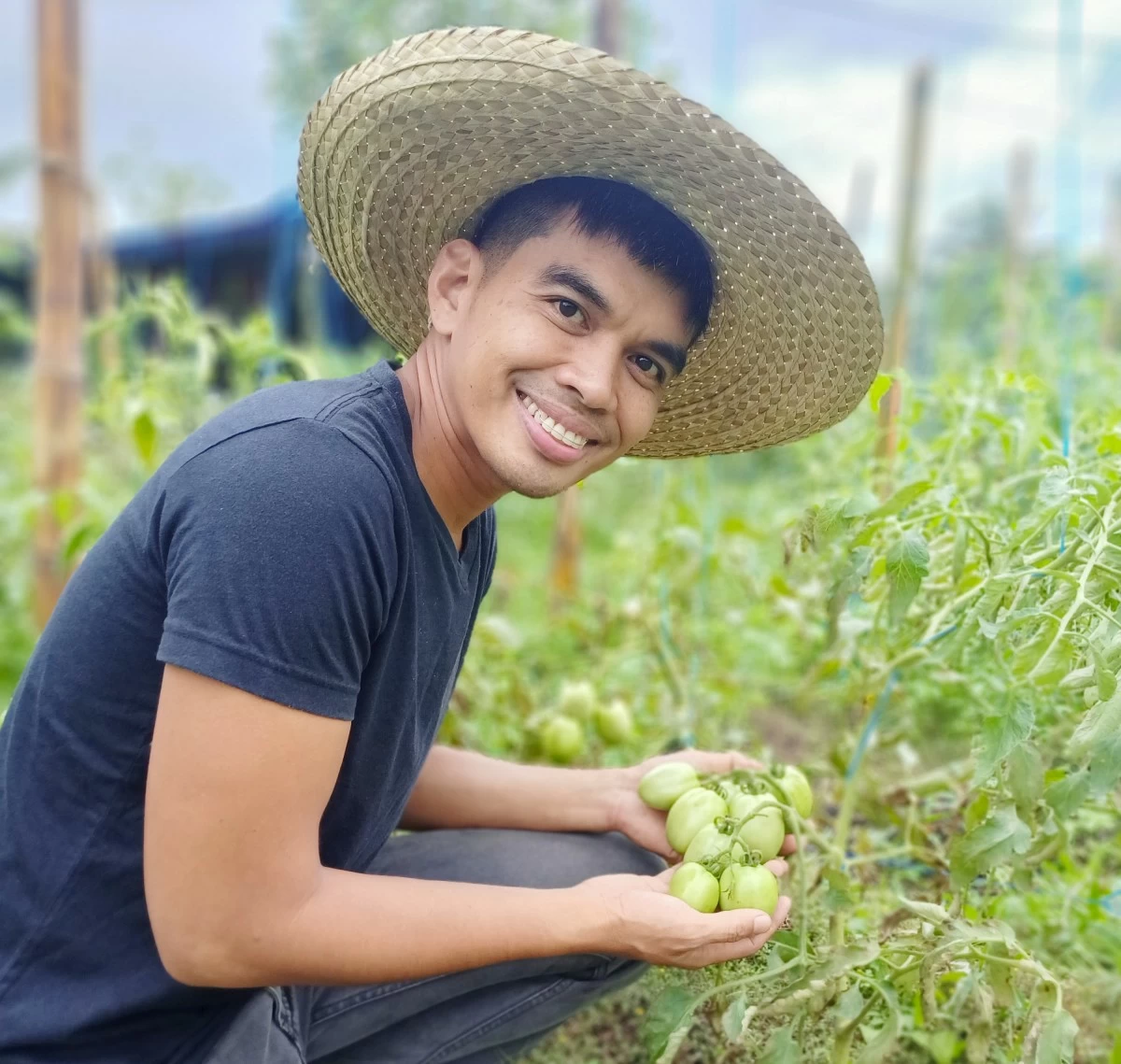
QUEZON TOMATO FARMER – Erhlan Cerdon, owner of Hesed Farm, holds freshly harvested tomatoes with a smile.
“I once came across articles showing the strong potential of high-value crops, so I decided to give it a try,” he shared.
In 2020, he acquired a 2.6-hectare property, of which one hectare is currently planted with high-value crops, while the remaining 1.6 hectares are planted with coconut and banana trees.
“I invested in the land as part of a long-term goal and plan—to eventually settle there after retirement. Farming has always been a long-term commitment for us,” he said.
Balancing fire service and farm life
While farming, Cerdon continues to work full-time in the fire service. He visits the farm whenever his schedule allows to personally tend to his crops.
Since his work assignment is currently in Laguna—far from the farm in Quezon—he relies on the help of his sister and brother-in-law to manage daily operations. However, as they also run other businesses, they cannot fully focus on the farm, prompting Cerdon to look for additional farm workers.
Despite being away from the farm for days at a time, careful planning and time management have allowed him to achieve good harvests.
Farming is trial and error
As a first-time high-value crop farmer, Cerdon encountered several challenges. In 2023, he conducted extensive research, following step-by-step guides on planting high-value crops.
His first attempt with squash failed twice due to low profitability. He then shifted his focus to tomatoes, planting around 200 seeds—which turned out to be successful.
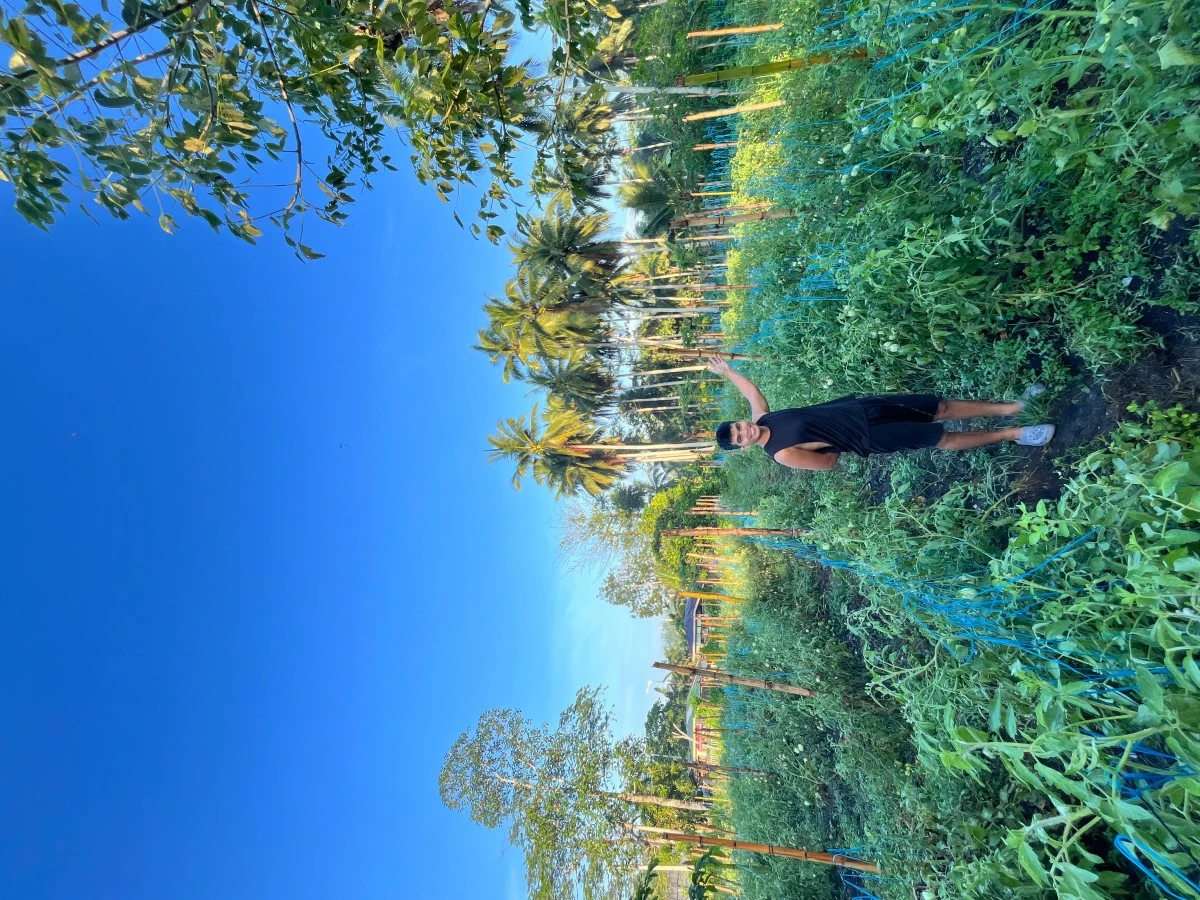
DEDICATED FARMER – Erhlan Cerdon, a firefighter and farmer, stands proudly at Hesed Farm with his growing operation behind him.
“The results were good. Our capital at that time was around ₱2,000, and we were able to sell the produce for more than ₱8,000. That’s when I realized that tomato farming had strong potential,” he recalled.
His first successful trial was in August 2023, followed by a second planting in January 2024. While the second trial produced good harvests, it fell short in terms of profit due to low market prices.
“In January, tomato prices were low. That’s when I realized how important timing is—knowing when to plant so your harvest matches good market prices,” he shared.
The business side of farming
On the marketing side, Cerdon employs a mix of strategies to sell his harvest. He secures bulk buyers, delivers produce directly to the market, and accommodates buyers who visit the farm. To expand his reach, he also promotes his harvests online.
Over time, he learned the importance of having multiple buyers rather than relying on just one.
“Sometimes, buyers take advantage of the situation. For example, we initially agreed on ₱100 per kilo, then it dropped to ₱80, and eventually ₱50 per kilo. I was trapped because I didn’t have other buyers, so I had no choice but to agree,” he explained.
“Kamatis Serye”
Beyond his work and farming, Cerdon is also active in content creation, posting farming vlogs on Facebook. His wife, Jean Plevy Cerdon, helps him create content and manage Hesed Farm’s digital presence.
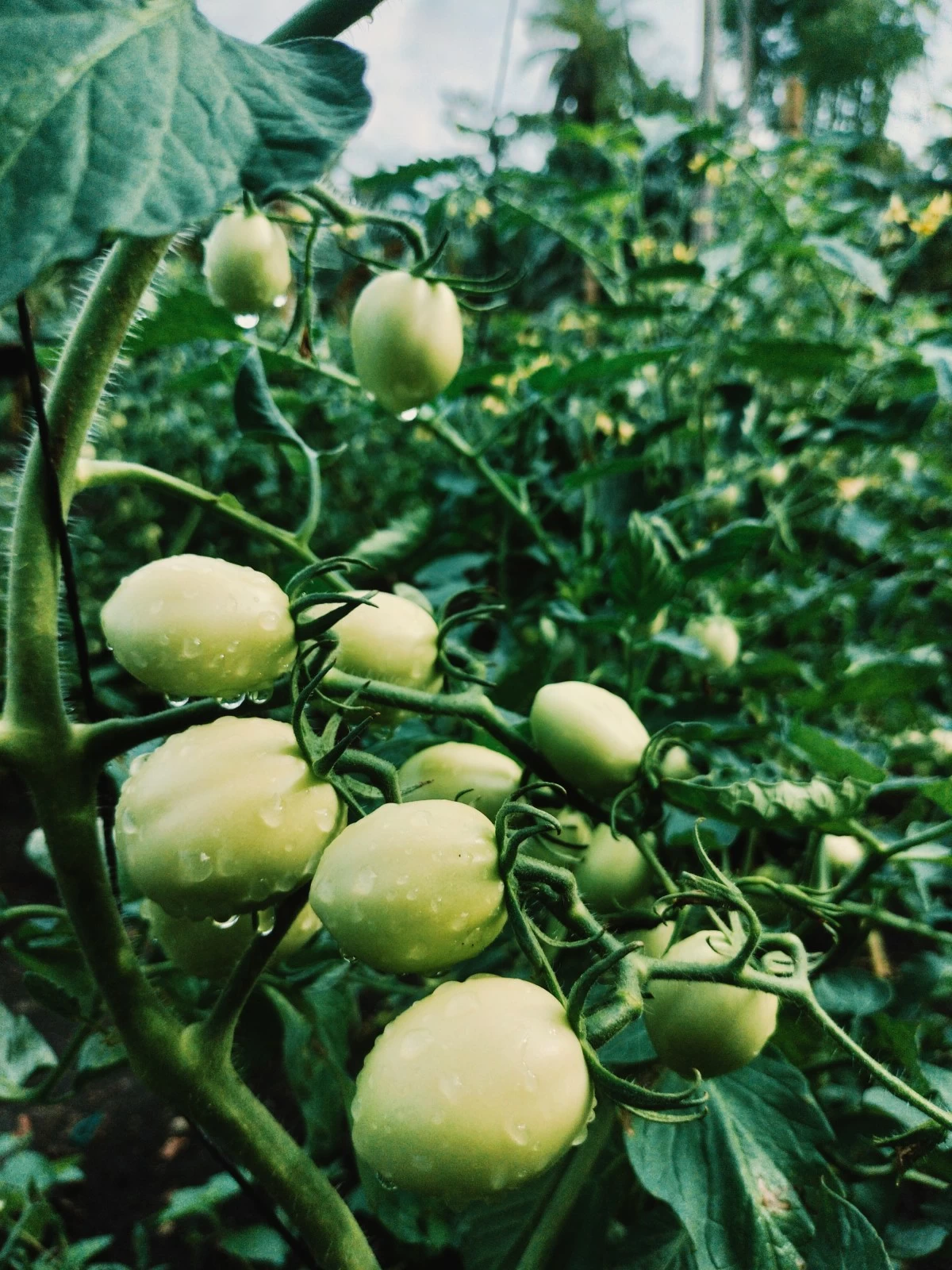
He is best known for his “Kamatis Serye,” where he shares his tomato farming journey—methods, challenges, and lessons—while also seeking advice from more experienced farmers.
“We want to show that anyone can venture into farming as long as they have the willingness to do it, the willingness to learn and study farming, and the courage to take risks—financially, time-wise, and in other aspects,” he said.
Lessons from the field
Cerdon learned that farming requires a mindset very different from his life in uniformed service.
“As a uniformed personnel, when instructions are given, you simply follow them—no questions asked. You do it regardless of the reason,” he explained. “But in farming, especially when dealing with people, you can’t apply that same approach. You need much more patience. You can’t just remove workers when things don’t go well—you have to understand them.”
He added that patience is not only required with people but also with crops.
“It takes two to three months before you see the results of your hard work and before your capital returns. Farming really teaches patience.”
Advice to his younger self
He shared that as early as 2014, while already in public service, he felt a strong desire to return to the province and start farming. However, the lack of capital delayed those plans until 2020, when he was finally able to buy land.
“It would have been better if I had started earlier. That’s also my advice to the younger generation—start farming early if you can,” he said.
Through his journey, Erhlan Cerdon continues to show that farming—much like public service—is built on patience, discipline, and a deep commitment to long-term purpose. (Photos courtesy of Hesed Farm)