






Manila Bulletin
 Philippines
National
Año exit raises questions on security transition amid WPS tensions
Philippines
National
Año exit raises questions on security transition amid WPS tensions
Philippines
National
Año exit raises questions on security transition amid WPS tensions
Año exit raises questions on security transition amid WPS tensions
Published Apr 15, 2026 02:42 pm


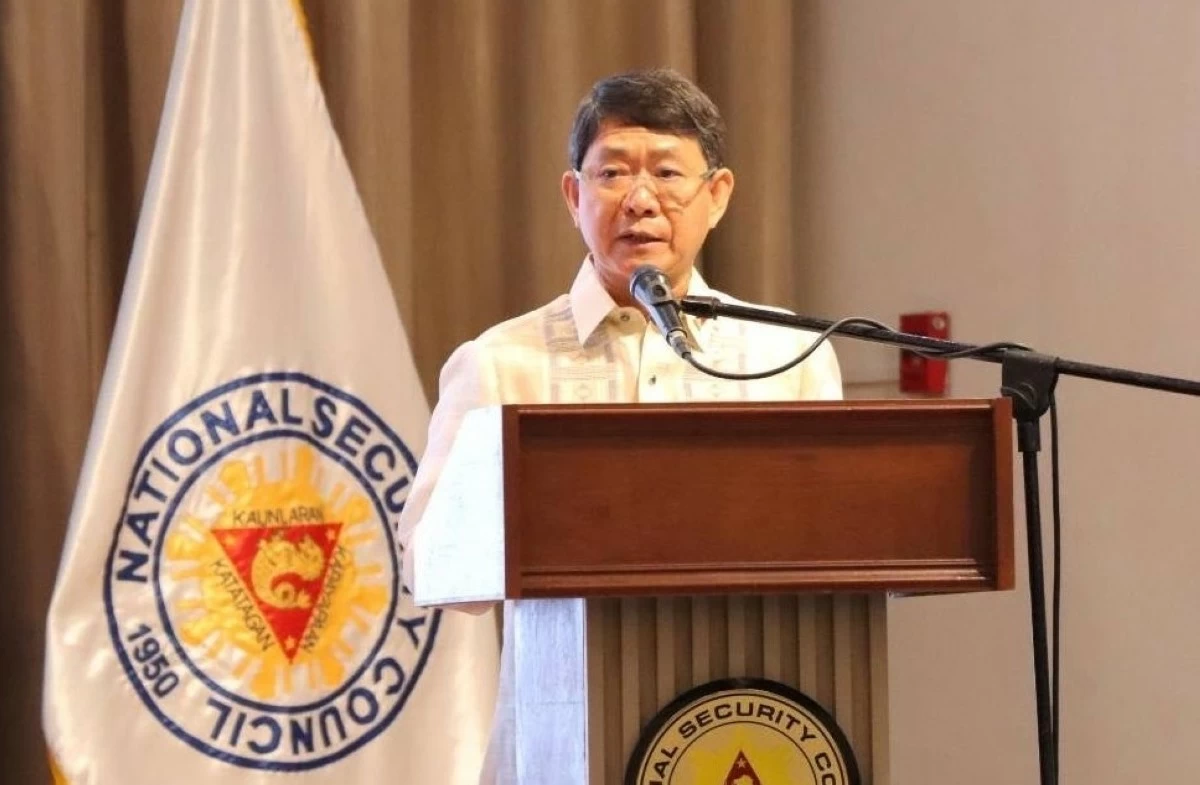
National Security Adviser Eduardo Año (Photo: National Security Council)
National Security Adviser (NSA) Eduardo M. Año on Wednesday, April 15, officially announced his permanent retirement from government service, stirring questions inside the security sector as tensions persist in the West Philippine Sea (WPS).
In a statement sent to reporters, Año cited health reasons that require his “full attention and care” as the primary driver for his departure.
“I hereby confirm my permanent retirement as National Security Adviser and Director General, National Security Council (NSC) due to health reasons that require my full attention and care,” Año said.
“Public service has been the defining mission of my life, and it has been my utmost privilege to have served the Filipino people in times of both challenge and opportunity,” he added.
Año’s career spans decades in uniform and civilian posts. He served as Commanding General of the Philippine Army in 2015, and became the Chief of Staff of the Armed Forces of the Philippines (AFP) the following year.
From 2018 to 2022, he led the Department of the Interior and Local Government (DILG) under the Duterte administration, where he helped steer the controversial anti-insurgency campaign through the National Task Force to End Local Communist Armed Conflict (NTF-ELCAC).
He had been the national security chief since January 14, 2023.
The resignation of Año came at a time when Manila continues to confront maritime pressure from China in disputed waters. Año had been a key figure in inter-agency coordination through the National Task Force on the West Philippine Sea (NTF-WPS).
“In recent months it has become apparent that I must prioritize my health and well-being,” Año said. “To ensure continuity, stability, and the highest standards of service in safeguarding our national security, I believe it is time to step aside and allow others to lead.”
He added that “an orderly transition is underway,” and said he was confident “critical operations and ongoing initiatives will continue.”
“I extend my deepest gratitude to His Excellency President Ferdinand R. Marcos, Jr. for the trust and confidence he has placed in me,” he said.
He also cited the work of the Armed Forces of the Philippines, the Philippine National Police, and the Philippine Coast Guard which have been central to recent patrols and resupply missions in contested waters.
“Together we have faced complex threats and worked tirelessly to uphold the sovereignty, safety, and well-being of our nation,” Año said.
While Año's exit left a gap as security agencies juggle external threats and internal operations, he expressed confidence in his successor, Eduardo Oban Jr., a former Armed Forces chief and defense official.
“I remain confident in the strength and resilience of our institutions and in the capable, steady leadership of General Eduardo Oban, Jr. (Ret.), who will carry forward the mission of protecting our nation,” he said.
“I have full faith that, under his leadership, our national security institutions will continue to uphold the highest standards of excellence and integrity,” he added.