ADVERTISEMENT

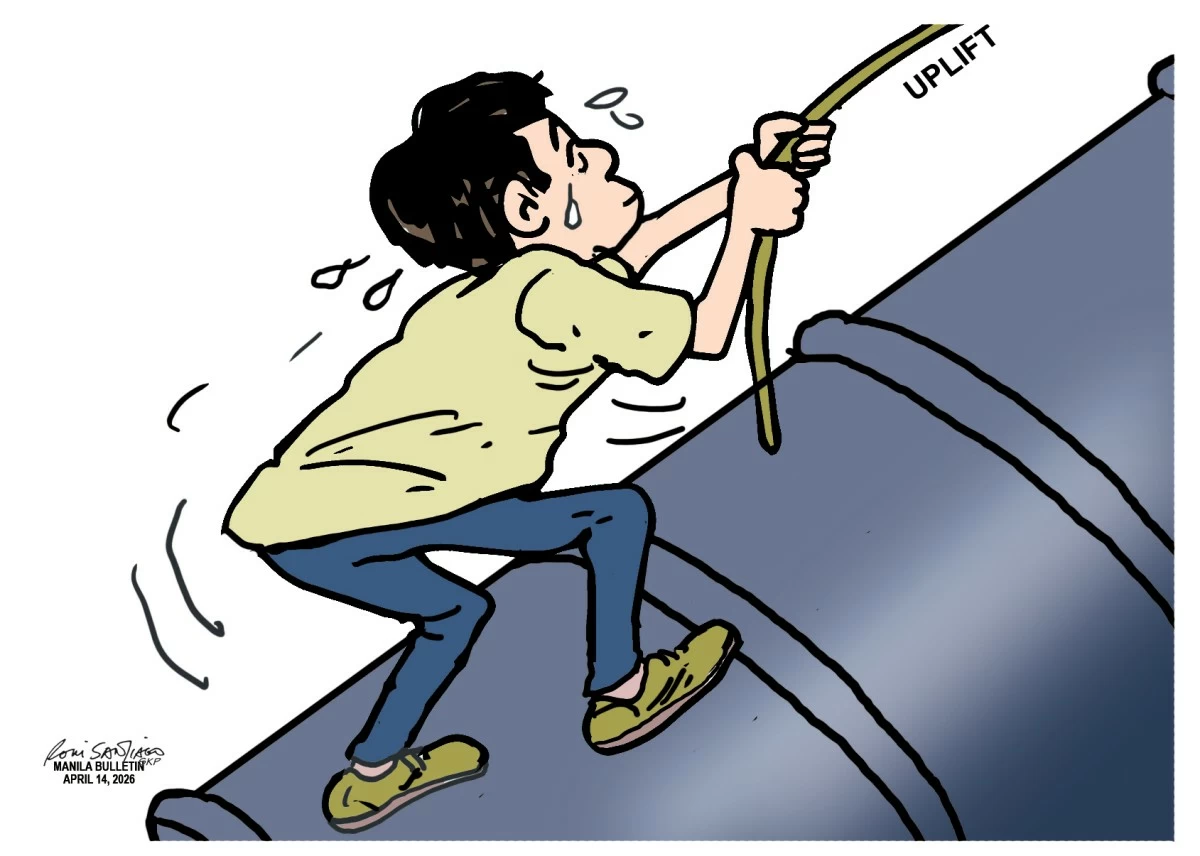
UPLIFT: Pragmatic crisis response for people's welfare

Published Apr 14, 2026 12:05 am  |  Updated Apr 13, 2026 04:41 pm
The government’s response to external shocks is often judged not by the scale of its spending but by the precision of its intervention. In this regard, the April 9 announcement by Ferdinand Marcos Jr. of targeted relief measures under the Unified Package for Livelihoods, Industry, Food, and Transport (UPLIFT) committee reflects a calibrated and pragmatic approach to a rapidly evolving crisis triggered by renewed conflict in the Middle East.
At the core of the initiative are two key components: the grant of a service contracting subsidy to 50,000 public utility vehicle (PUV) operators, and a 20 percent fare discount for commuters. These measures are clearly designed to stabilize public transportation, a critical artery of the Philippine economy,—while easing the burden on ordinary Filipinos already reeling from rising fuel costs and inflationary pressures.
Unlike broad-based ayuda or traditional dole-out schemes, the UPLIFT interventions are purposeful and sector-specific. They recognize that shocks such as surging oil prices do not affect all sectors equally. Transport operators face immediate cost escalations that threaten their viability, while commuters—especially minimum wage earners and informal sector workers—bear the brunt through higher daily expenses. By directly addressing both supply (PUV operators) and demand (commuters), the program strikes a balance that promotes continuity rather than mere temporary relief.
Targeted support ensures that limited government resources are deployed where they are most needed and where they can generate the greatest stabilizing effect. This approach is a welcome departure from past practices where blanket subsidies often led to inefficiencies, leakages, and fiscal strain.
However, the unfolding geopolitical situation underscores the need to extend this calibrated strategy to other vulnerable sectors.
Agriculture, for instance, remains highly sensitive to fuel and input cost increases. Farmers and fisherfolk require support mechanisms such as fuel subsidies, access to affordable credit, and investments in climate-resilient technologies to sustain productivity and prevent food price spikes.
In trade and industry, particularly among micro, small, and medium enterprises (MSMEs), rising energy and logistics costs can erode already thin margins. Targeted assistance—whether through tax relief, credit facilities, or supply chain support—can help businesses stay afloat and preserve employment.
The energy sector itself demands close attention. While the government has declared a national energy emergency, more granular interventions are needed to cushion consumers and encourage efficiency. Investments in renewable energy and incentives for conservation must be accelerated to reduce long-term vulnerability to global oil price volatility.
Tourism, which is still in recovery mode, is another sector at risk. Higher travel costs could dampen both domestic and international demand. Strategic promotions, infrastructure support, and targeted incentives can help sustain momentum.
Housing and urban development also warrant focus, particularly for low-income families whose budgets are squeezed by rising costs of living. Measures that ensure affordability and access to basic services will be crucial in maintaining social stability.
Finally, there is a compelling case for extending support to members of the Social Security System (SSS) and the Government Service Insurance System (GSIS). Temporary relief measures—such as loan payment moratoriums or flexible terms—can provide much-needed breathing space for workers navigating uncertain economic conditions.
The UPLIFT initiative demonstrates that government action need not be indiscriminate to be effective. On the contrary, precision, timeliness, and responsiveness are the hallmarks of sound policy in times of crisis. As external pressures mount, the challenge is to sustain this targeted approach across sectors, ensuring that no vulnerable group is left behind while preserving fiscal discipline.
In an increasingly volatile world, resilience is built not only on resources but on the wisdom to deploy them well.

Related Tags

Editorial UPLIFT
ADVERTISEMENT
.most-popular .layout-ratio{ padding-bottom: 79.13%; } @media (min-width: 768px) and (max-width: 1024px) { .widget-title { font-size: 15px !important; } }

{{ articles_filter_1561_widget.title }}

.most-popular .layout-ratio{ padding-bottom: 79.13%; } @media (min-width: 768px) and (max-width: 1024px) { .widget-title { font-size: 15px !important; } }

{{ articles_filter_1562_widget.title }}

.most-popular .layout-ratio{ padding-bottom: 79.13%; } @media (min-width: 768px) and (max-width: 1024px) { .widget-title { font-size: 15px !important; } }

{{ articles_filter_1563_widget.title }}

{{ articles_filter_1564_widget.title }}

.mb-article-details { position: relative; } .mb-article-details .article-body-preview, .mb-article-details .article-body-summary{ font-size: 17px; line-height: 30px; font-family: "Libre Caslon Text", serif; color: #000; } .mb-article-details .article-body-preview iframe , .mb-article-details .article-body-summary iframe{ width: 100%; margin: auto; } .read-more-background { background: linear-gradient(180deg, color(display-p3 1.000 1.000 1.000 / 0) 13.75%, color(display-p3 1.000 1.000 1.000 / 0.8) 30.79%, color(display-p3 1.000 1.000 1.000) 72.5%); position: absolute; height: 200px; width: 100%; bottom: 0; display: flex; justify-content: center; align-items: center; padding: 0; } .read-more-background a{ color: #000; } .read-more-btn { padding: 17px 45px; font-family: Inter; font-weight: 700; font-size: 18px; line-height: 16px; text-align: center; vertical-align: middle; border: 1px solid black; background-color: white; } .hidden { display: none; }
function initializeAllSwipers() { // Get all hidden inputs with cms_article_id document.querySelectorAll('[id^="cms_article_id_"]').forEach(function (input) { const cmsArticleId = input.value; const articleSelector = '#article-' + cmsArticleId + ' .body_images'; const swiperElement = document.querySelector(articleSelector); if (swiperElement && !swiperElement.classList.contains('swiper-initialized')) { new Swiper(articleSelector, { loop: true, pagination: false, navigation: { nextEl: '#article-' + cmsArticleId + ' .swiper-button-next', prevEl: '#article-' + cmsArticleId + ' .swiper-button-prev', }, }); } }); } setTimeout(initializeAllSwipers, 3000); const intersectionObserver = new IntersectionObserver( (entries) => { entries.forEach((entry) => { if (entry.isIntersecting) { const newUrl = entry.target.getAttribute("data-url"); if (newUrl) { history.pushState(null, null, newUrl); let article = entry.target; // Extract metadata const author = article.querySelector('.author-section').textContent.replace('By', '').trim(); const section = article.querySelector('.section-info ').textContent.replace(' ', ' '); const title = article.querySelector('.article-title h1').textContent; // Parse URL for Chartbeat path format const parsedUrl = new URL(newUrl, window.location.origin); const cleanUrl = parsedUrl.host + parsedUrl.pathname; // Update Chartbeat configuration if (typeof window._sf_async_config !== 'undefined') { window._sf_async_config.path = cleanUrl; window._sf_async_config.sections = section; window._sf_async_config.authors = author; } // Track virtual page view with Chartbeat if (typeof pSUPERFLY !== 'undefined' && typeof pSUPERFLY.virtualPage === 'function') { try { pSUPERFLY.virtualPage({ path: cleanUrl, title: title, sections: section, authors: author }); } catch (error) { console.error('ping error', error); } } // Optional: Update document title if (title && title !== document.title) { document.title = title; } } } }); }, { threshold: 0.1 } ); function showArticleBody(button) { const article = button.closest("article"); const summary = article.querySelector(".article-body-summary"); const body = article.querySelector(".article-body-preview"); const readMoreSection = article.querySelector(".read-more-background"); // Hide summary and read-more section summary.style.display = "none"; readMoreSection.style.display = "none"; // Show the full article body body.classList.remove("hidden"); } document.addEventListener("DOMContentLoaded", () => { let loadCount = 0; // Track how many times articles are loaded const offset = [1, 2, 3, 4, 5, 6, 7, 8, 9, 10]; // Offset values const currentUrl = window.location.pathname.substring(1); let isLoading = false; // Prevent multiple calls if (!currentUrl) { console.log("Current URL is invalid."); return; } const sentinel = document.getElementById("load-more-sentinel"); if (!sentinel) { console.log("Sentinel element not found."); return; } function isSentinelVisible() { const rect = sentinel.getBoundingClientRect(); return ( rect.top < window.innerHeight && rect.bottom >= 0 ); } function onScroll() { if (isLoading) return; if (isSentinelVisible()) { if (loadCount >= offset.length) { console.log("Maximum load attempts reached."); window.removeEventListener("scroll", onScroll); return; } isLoading = true; const currentOffset = offset[loadCount]; window.loadMoreItems().then(() => { let article = document.querySelector('#widget_1690 > div:nth-last-of-type(2) article'); intersectionObserver.observe(article) loadCount++; }).catch(error => { console.error("Error loading more items:", error); }).finally(() => { isLoading = false; }); } } window.addEventListener("scroll", onScroll); });

Sign up by email to receive news.