






Manila Bulletin
 Environment and Sustainability
Philippines rolls out NBCAP Roadmap to strengthen blue carbon ecosystems
Environment and Sustainability
Philippines rolls out NBCAP Roadmap to strengthen blue carbon ecosystems
Environment and Sustainability
Philippines rolls out NBCAP Roadmap to strengthen blue carbon ecosystems
Philippines rolls out NBCAP Roadmap to strengthen blue carbon ecosystems
Published Apr 14, 2026 10:37 pm


![The NBCAP Roadmap was formally handed over to the DENR during the Philippine Mangrove Conference 2026 in Quezon City on March 26, 2026. This milestone underscores the country’s commitment to coordinated, science‑based, and accountable action for blue carbon ecosystems. Photo from NBCAP Philippines. [From left: Germaine De Ruña, project manager, NBCAP, Zoological Society of London (ZSL) Philippines; Criselda Castor, section chief, Coastal and Marine Division, DENR; Lloyd Cameron, economic and climate counsellor, British Embassy Manila; Edwina D. Garchitorena, country director, ZSL Philippines]](https://mb.com.ph/manilabulletin/uploads/images/2026/04/14/93653.webp)
The NBCAP Roadmap was formally handed over to the DENR during the Philippine Mangrove Conference 2026 in Quezon City on March 26, 2026. This milestone underscores the country’s commitment to coordinated, science‑based, and accountable action for blue carbon ecosystems. Photo from NBCAP Philippines. [From left: Germaine De Ruña, project manager, NBCAP, Zoological Society of London (ZSL) Philippines; Criselda Castor, section chief, Coastal and Marine Division, DENR; Lloyd Cameron, economic and climate counsellor, British Embassy Manila; Edwina D. Garchitorena, country director, ZSL Philippines]
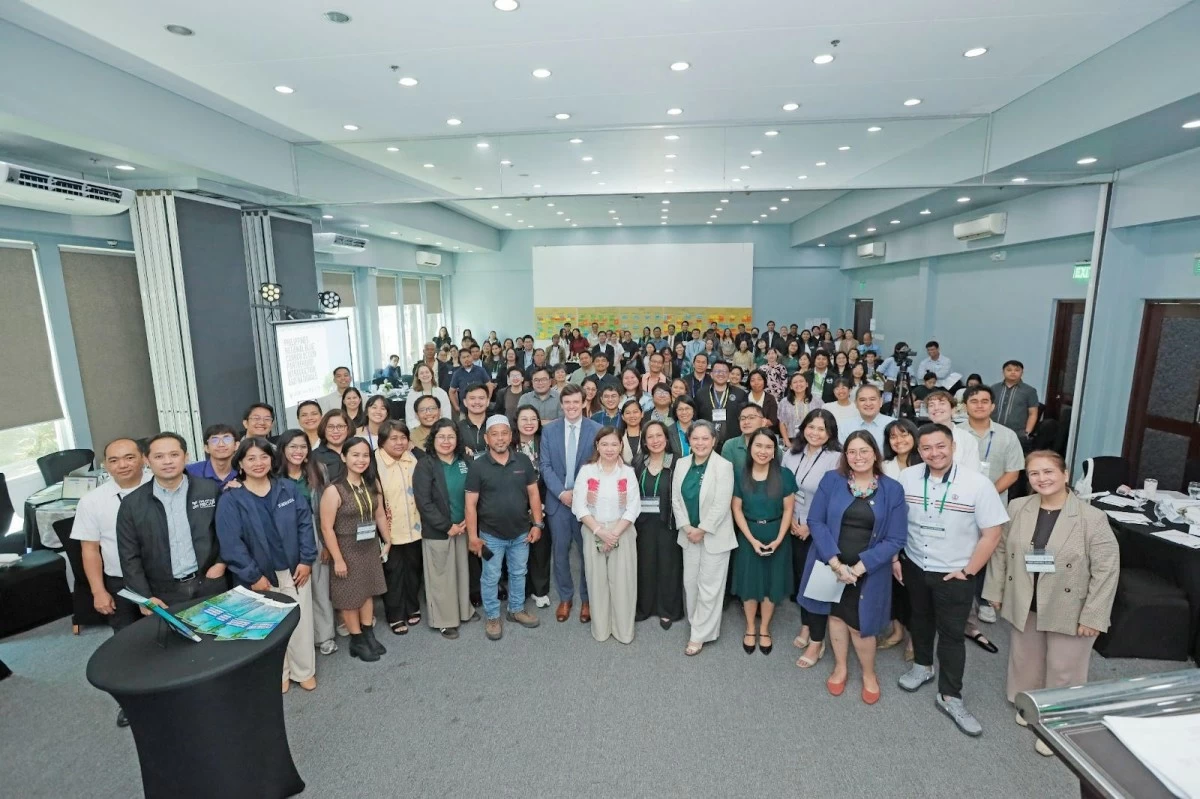
The National Blue Carbon Action Partnership (NBCAP) Roadmap was formally turned over on March 26, 2026, during the Philippine Mangrove Conference, marking a significant step in strengthening the protection and sustainable management of coastal ecosystems.
Led by the Department of Environment and Natural Resources (DENR), the initiative outlines a multi-sector strategy aimed at benefiting 42 million coastal Filipinos by 2030 and beyond.
Blueprint for Blue Carbon Action
Blue carbon originates from coastal ecosystems such as mangroves, seagrasses, and tidal marshes. Although these habitats cover less than 0.5 percent of the ocean floor, they store more than half of the ocean’s carbon, capturing it up to 40 times faster than forests and retaining it for thousands of years.
Beyond carbon storage, these ecosystems protect coastlines from storms and erosion, support fisheries and biodiversity, improve water quality, and provide livelihoods while helping communities adapt to climate change.
“Blue carbon ecosystems are critical natural infrastructure underpinning the Philippines’ blue economy. By aligning governance, science, livelihoods, and investment, the NBCAP Roadmap sends a strong signal to global investors and partners that nature-based solutions are key to a climate-resilient economy,” said Alfredo Giron, head of Ocean at the World Economic Forum.
The Philippines is home to about 327,000 hectares of mangroves, along with extensive seagrass beds and tidal marshes. These ecosystems protect coastlines, sustain livelihoods, and store vast amounts of carbon. When degraded, they release greenhouse gases and threaten biodiversity.
“The handover of the NBCAP Roadmap to the DENR represents a turning point in advancing blue carbon action and strengthening the Philippines’ leadership in coastal conservation in the region,” shared Edwina Garchitorena, country director of ZSL Philippines.
The Roadmap is built around four pillars: science, technology, and innovation; policy and governance; communications and community engagement; and finance and sustainable livelihoods. These pillars aim to guide conservation efforts, reinforce legal frameworks, and support communities in building resilience.
Roberto “Ka Dodoy” Ballon, founder and chairman of Kapunungan sa Gagmay’ng Mangingisda sa Concepcion (KGMC), said protecting coastal ecosystems also safeguards livelihoods.
“When we protect mangroves, seagrasses, and tidal marshes, we also protect our fishing grounds—making sure our families and future generations have an abundant, safe, and healthy future,”he said.
Hurdles to Action
Mariglo Laririt, assistant director of the Biodiversity Management Bureau at DENR, acknowledged the challenges in implementing the NBCAP Roadmap, including coordination across government units, securing technical and financial support, and raising public awareness about the concept of blue carbon.
She emphasized, however, that these challenges “do not make the roadmap’s implementation impossible,” describing the effort as both necessary and urgent.
Laririt said the next steps include convening the Leadership Steering Committee (LSC) and Technical Working Group (TWG) in April. The NBCAP structure and roadmap will then be formalized through a DENR administrative order or an executive order, alongside a work plan and early actions to sustain momentum.
Dr. Severino Salmo III, professor and university scientist at the University of the Philippines Diliman, said science and community collaboration are essential in protecting coastal ecosystems.
"The NBCAP Roadmap provides a clear framework to translate knowledge into action for resilient coastal ecosystems and communities," he said.
At the core of this effort is the Blue Carbon Quantification Protocol (BCQP), developed by Filipino experts. The Roadmap aims to establish it as the national standard for carbon assessment, reducing costs and strengthening local capacity.
The Roadmap also seeks to integrate blue carbon into national carbon policy, support local initiatives such as coastal greenbelts, and advance the proposed Blue Economy Bill by strengthening legal safeguards and enabling community-based carbon financing.
By 2030, it aims to expand sustainable livelihoods, protect critical ecosystems, secure funding, and empower communities through coordinated conservation efforts.
The DENR is urging stakeholders — including the Department of Public Works and Highways (DPWH), the Department of Agriculture-Bureau of Fisheries and Aquatic Resources (DA-BFAR), the Department of the Interior and Local Government (DILG), the Department of Tourism (DOT), and the Department of Transportation (DOTr) — to collaborate in protecting these ecosystems and the communities that depend on them. (By Zabrina L. Hong)