






Manila Bulletin
 Philippines
National
Exercise 'Balikatan:' 17,000 troops from PH, 6 other nations to join 'expanded' war games
Philippines
National
Exercise 'Balikatan:' 17,000 troops from PH, 6 other nations to join 'expanded' war games
Philippines
National
Exercise 'Balikatan:' 17,000 troops from PH, 6 other nations to join 'expanded' war games
Exercise 'Balikatan:' 17,000 troops from PH, 6 other nations to join 'expanded' war games
Published Apr 14, 2026 05:24 pm


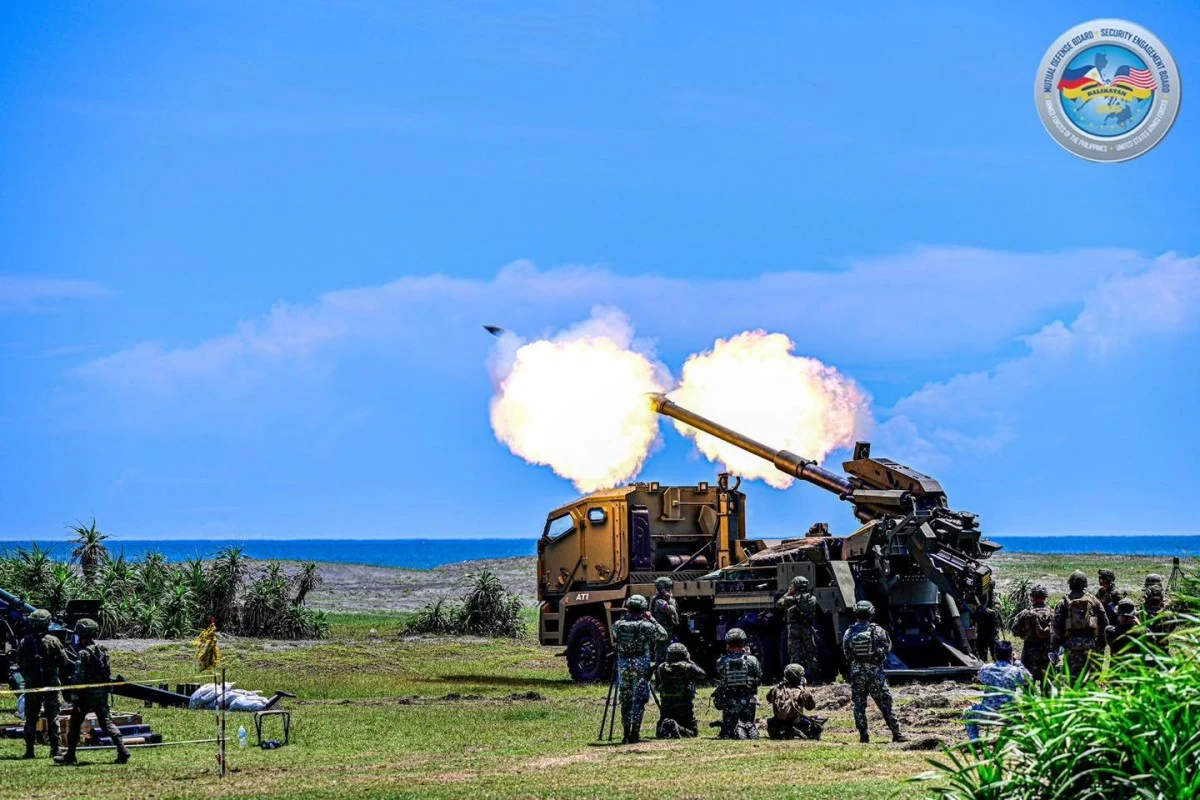
More than 17,000 troops from the Philippines and six other countries are set to take part in the 41st iteration of the annual Exercise Balikatan, scheduled from April 20 to May 8.
The Armed Forces of the Philippines (AFP) on Tuesday, April 14, confirmed the participation of its counterparts from the United States, Australia, New Zealand, Japan, France, and Canada in the war games, marking one of the largest combined military drills in the region in recent years.
Balikatan spokesperson Marine Col. Dennis Fernandez said this underscores the growing scope of the exercise, which has evolved from a bilateral Philippine–US training activity into a wider interoperability exercise involving allied and partner forces.
The exercise will focus on joint planning, combined operations, and disaster response readiness.
These will span multiple unified command areas across the country including the Northern Luzon Command (NOLCOM), National Capital Region Command (NCRCOM), Southern Luzon Command (SOLCOM) Western Command (WESCOM) in Palawan and the western frontier, Visayas Command (VISCOM) across the central islands, Eastern Mindanao Command (EASTMINCOM), and Western Mindanao Command (WESMINCOM).
Military planners said the expanded footprint of the drills reflects broader coordination across the archipelago, with scenarios expected to test joint readiness across land, air, and maritime domains, as well as cyberspace.
According to the AFP, the annual drills will be conducted as the US military pledged to maintain its focus on the Indo-Pacific despite a significant surge of American forces in the Middle East due to ongoing tensions in Iran.
Washington recently deployed additional carrier strike groups and thousands of paratroopers to the Middle East but US Balikatan spokesperson Colonel Robert Bunn insisted US' “ironclad” alliance with Manila remains a priority.
Balikatan has also increasingly been linked to regional security developments, including heightened tensions in the West Philippine Sea, where China continues to maintain its presence.
Bunn said systems such as the Tomahawk missile system and NMESIS (Navy-Marine Expeditionary Ship Interdiction System) could also be included, although further details were not disclosed.
Further, a highlight of this year's edition of Balikatan is Japan's more active combat role in the exercises, as the Japan Self-Defense Forces (JSDF) is set to fire a ground-to-surface missile during the drills.
According to Fernandez, Japanese troops will fire a Type 88 ground-to-surface missile to sink one of the designated target ships in a counter-live fire exercise. Japanese radar systems earlier provided to the Philippines will also be used to support air and maritime defense operations.
Other scheduled events include multinational maritime drills in Northern Luzon from April 23 to May 1, integrated air and missile defense exercises in Subic, Zambales from April 26 to 29, and a maritime strike activity in Paoay, Ilocos Norte on May 6.