

ADVERTISEMENT

Carmona Filipino Food Month forum highlights good activism, food security

Published Apr 14, 2026 05:53 pm

CARMONA CITY, Cavite – Filipino Food Month is not only a celebration of local flavors but also a platform to promote food security and community empowerment.

This was emphasized in Tagpuan: Filipino Food Month Forum, organized by the local government unit through the City Information, Tourism, Culture and Arts Office (CITCAO) at the Carmona Public Library on Tuesday, April 14.
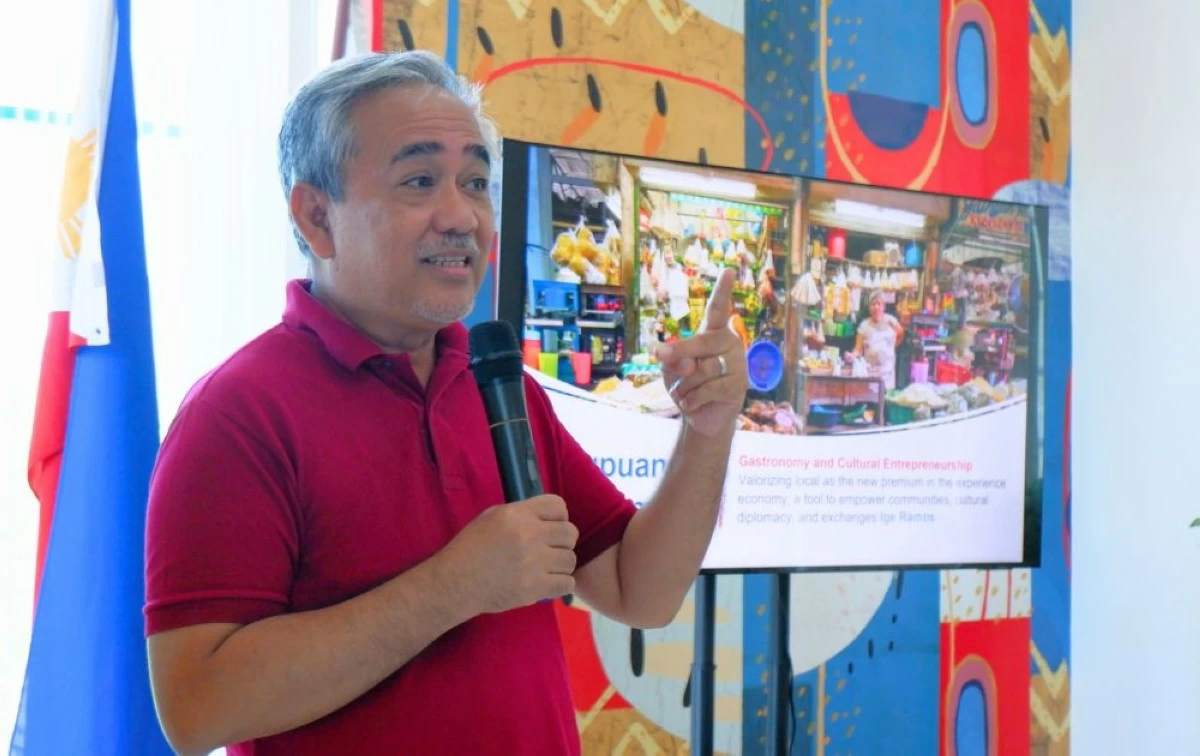
Food writer Guillermo “Ige” Ramos speaks at Tagpuan: Filipino Food Month Forum at the Carmona Public Library on April 14 (Carla Bauto Deña/MANILA BULLETIN)

Caviteño food writer and Ugnayan Center for Filipino Gastronomy founder Guillermo “Ige” Ramos served as resource speaker for the forum attended by hospitality management students.

Discussing gastronomy and cultural entrepreneurship, Ramos underscored the value of supporting local farmers and entrepreneurs as part of what he called good activism.

“Subersibo ako sa pagkain. Hindi ako kumakain ng fast food. Pero kumakain ako sa mga karinderya; kumakain ako ng mga fishball. Kasi bakit ko ibibigay 'yung pera ko sa multinational kung makakatulong naman ako sa kapwa ko Pilipino na isang kahig isang tuka (I’m subversive when it comes to food. I don’t eat fast food. Instead, I eat at local eateries, I eat fish balls. Why would I give my money to multinational companies when I can support fellow Filipinos who work hard just to get by?)” Ramos said.
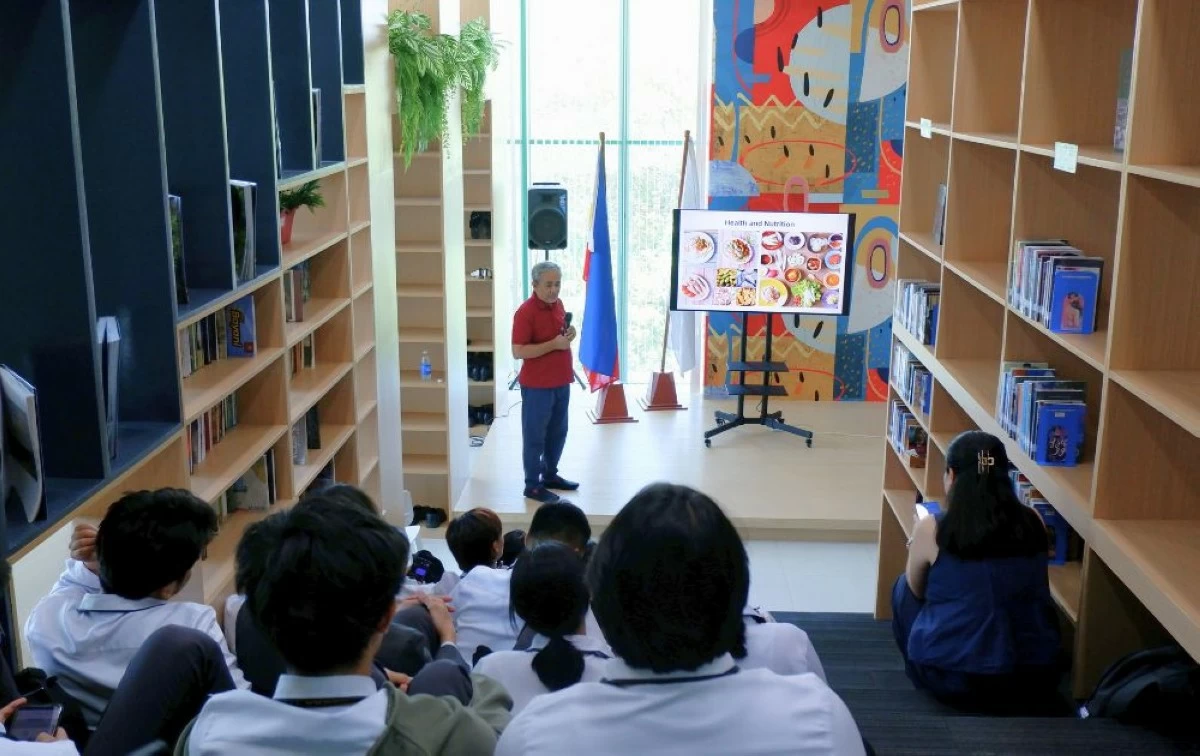
Food writer Guillermo “Ige” Ramos speaks at Tagpuan: Filipino Food Month Forum at the Carmona Public Library on April 14 (Carla Bauto Deña/MANILA BULLETIN)

Ramos emphasized the need for Filipinos to stop viewing food as a status symbol, with products from multinational companies perceived as higher quality than local fare.

He added that many Filipinos also see a divide between food for the rich and the poor, with air-conditioned establishments perceived as “for the rich,” even if they offer fast food.

“'Yung tingin natin sa tuyo, gulay, lugaw, pagkaing pangmahirap. Pero kung titingnan natin, yung pagkaing pang-mahirap ang fast food at pagkaing pangmayaman 'yung mga gulay na nakikita natin sa palengke (We tend to see dried fish, vegetables, and porridge as food for the poor. But if you really think about it, fast food is what’s cheap and accessible, while the vegetables we see in markets are actually the more valuable kind of food),” he said.
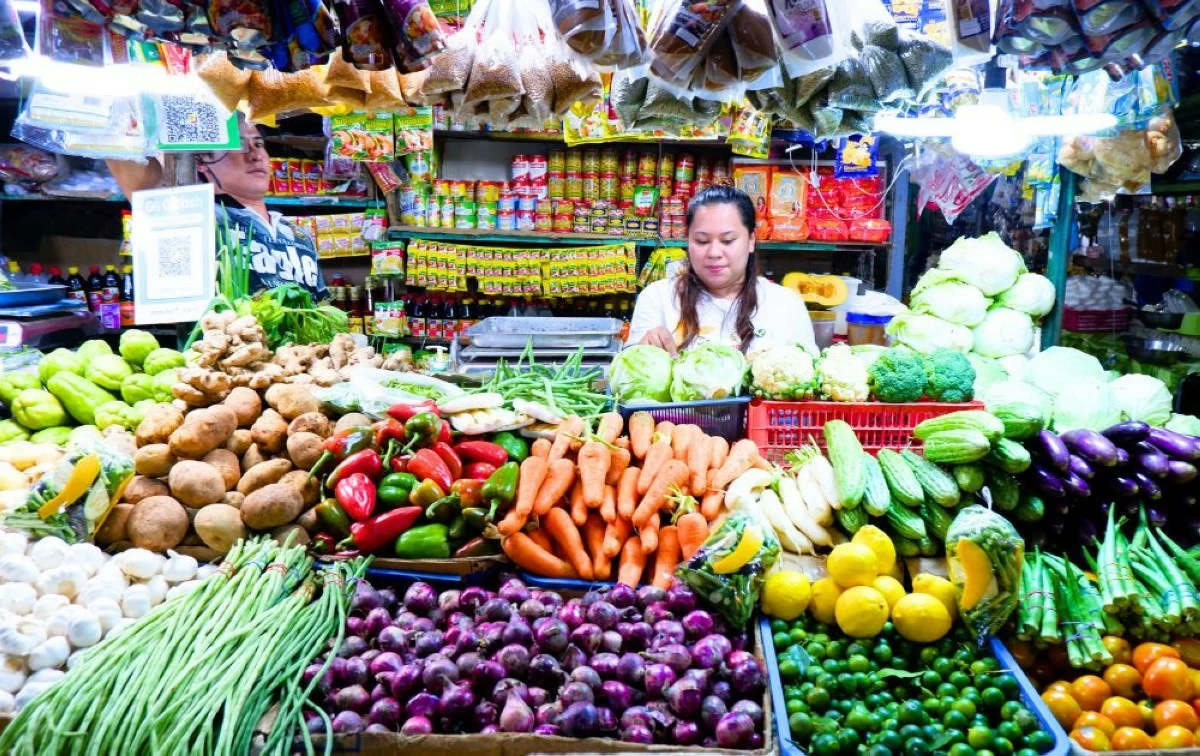
A vegetable stall at the Carmona Public Market (File photo by Carla Bauto Deña/MANILA BULLETIN)

During the second part of the event, the food writer held a pocket launch and book signing for his latest book, Bukambibig (Word of Mouth), the second installment in his Lasa ng Republika series.

The book is a collection of 14 essays that challenge the common notions about Filipino cuisine.
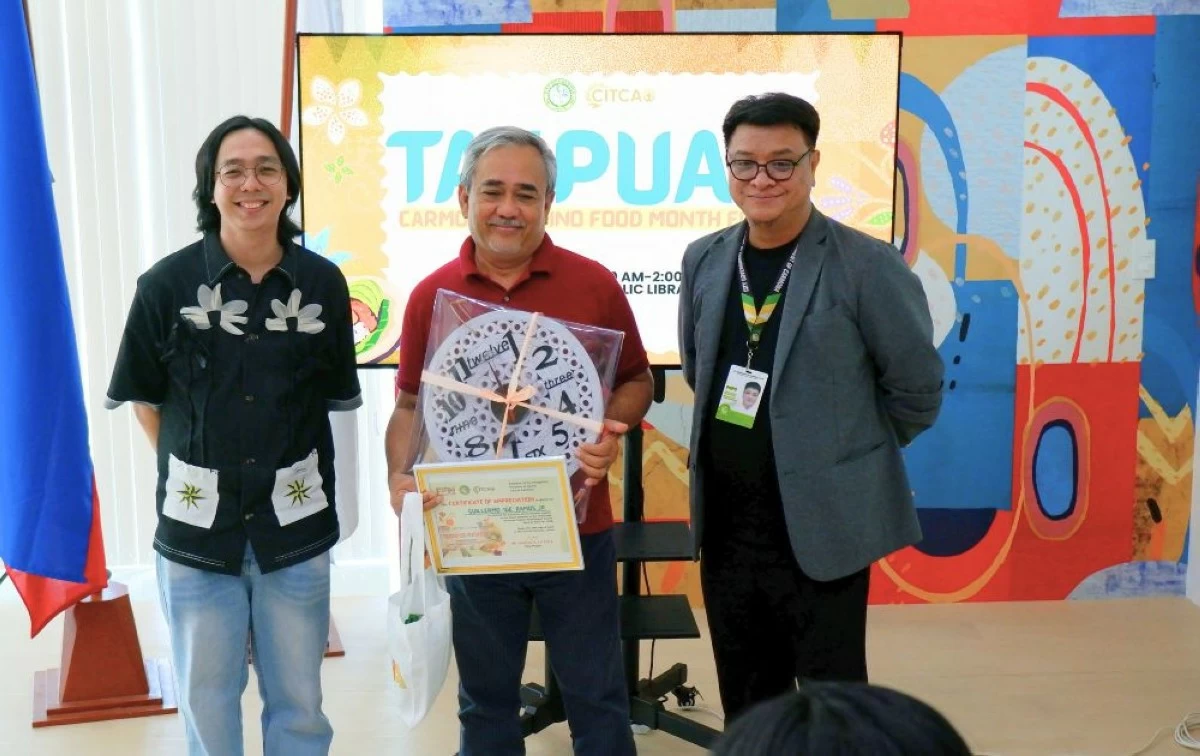
Food writer Guillermo “Ige” Ramos speaks at Tagpuan: Filipino Food Month Forum at the Carmona Public Library on April 14 (Carla Bauto Deña/MANILA BULLETIN)

Food rooted in local history

Ramos said there needs to be a shift in what Filipinos view as superior food. For instance, local public markets are full of organic and unique products that are not only fresh and delicious but also tell the story of the city or town.

He added that supporting local as the new standard in the experience economy can empower communities, helping farmers and small businesses sustain their livelihoods while strengthening food security.

“Valorize local products and raise the profiles of artisan food producers… Because there’s such a demand for heirloom cuisine, artisan food producers will ask the farmers to plant better crops. Poverty alleviation and better quality of life in the most sustainable manner,” he said.
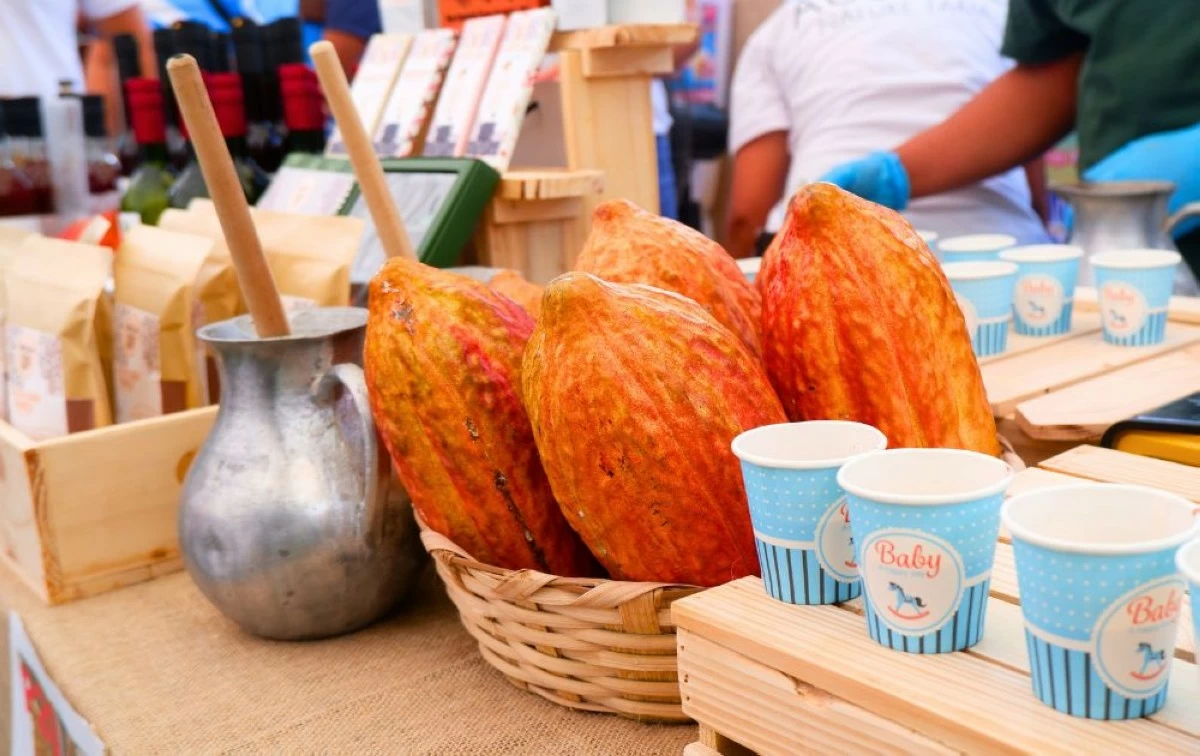
Local cacao products showcased in Silang, Cavite (Carla Bauto Deña/MANILA BULLETIN)

Talking about Caviteño cuisine, Ramos mentioned Cavite City’s tamales, Rosario’s tinapang salinas, Alfonso’s tablea, and Imus longganisa, among many others.

In Carmona, CITCAO head Jose Paolo D. Diaz said the city’s local gastronomy is deeply rooted in its agricultural past.

A well-known local delicacy is “binalot,” which is a traditional meal of rice, viand (commonly adobo), tomato, and egg wrapped in banana leaves.
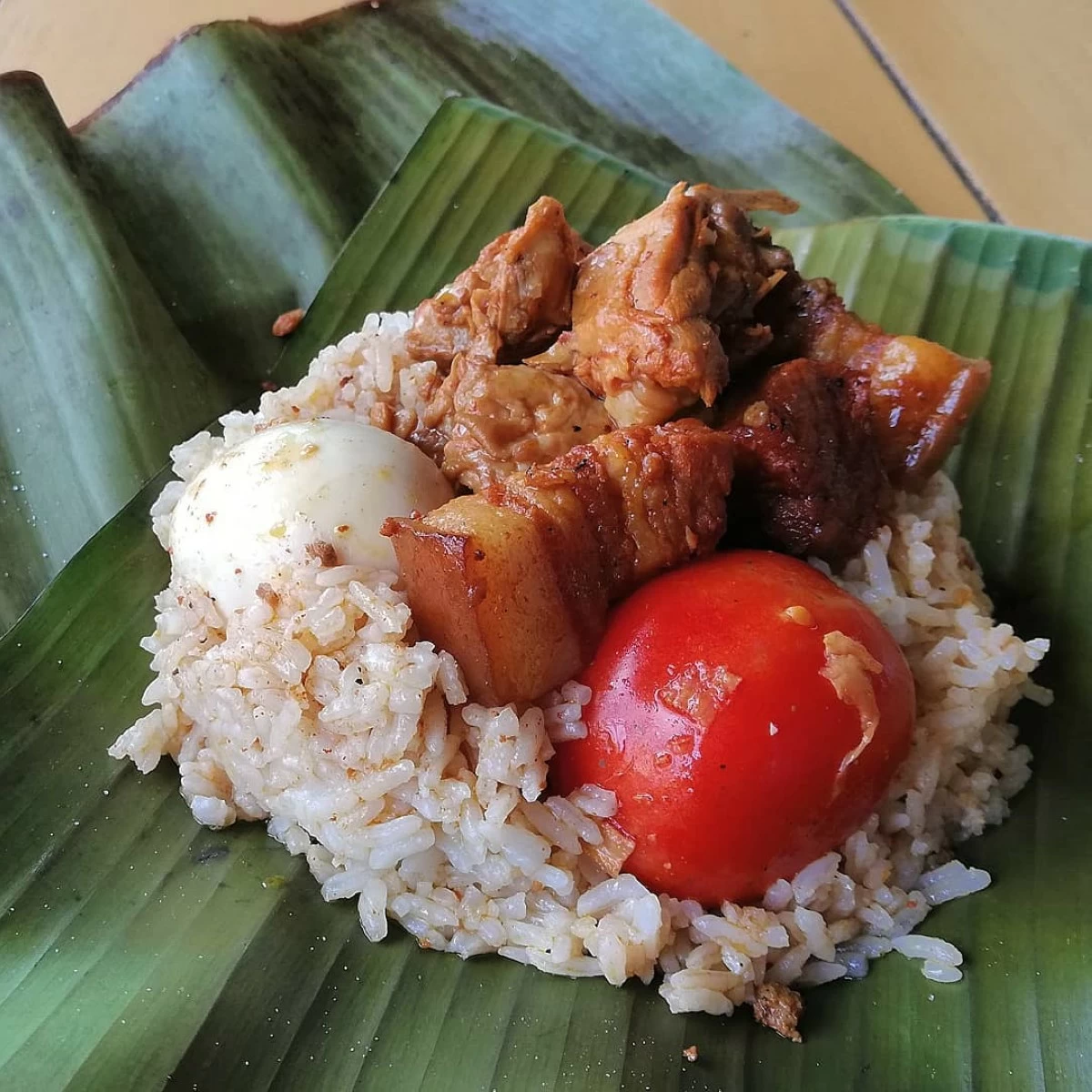
Aling Nene's Special Binalot, a local delicacy of rice, viand, tomato, and egg wrapped in banana leaves (Photo from Aling Nene's Special Binalot's Facebook page/MANILA BULLETIN)

Diaz explained that binalot was a practical meal prepared by farmers, who chose dishes like adobo for their longer shelf life while working in the fields.

Rice farming was Carmona’s main industry during the Hispanic colonial period, as reflected in the Sorteo Festival, a triannual event that began in 1861 to raffle communal farmlands among bona fide residents.

Building on this agricultural heritage, Ramos encouraged the audience to appreciate the concept of slow food, which emphasizes food that is slow, clean, and fair, and the antithesis of fast food.

Ramos encouraged the audience to appreciate the concept of slow food, which emphasizes food that is slow, clean, and fair, and the antithesis of fast food.

“Makatarungang pagkain. Hindi tayo nangloko ng magsasaka, hindi natin inisahan ang mangingisda, hindi natin binalewala 'yung efforts ng mga nagtitinda sa karinderya (Fair food. We do not exploit farmers, we do not take advantage of fishermen, and we do not disregard the efforts of those who run small local eateries),” he said.
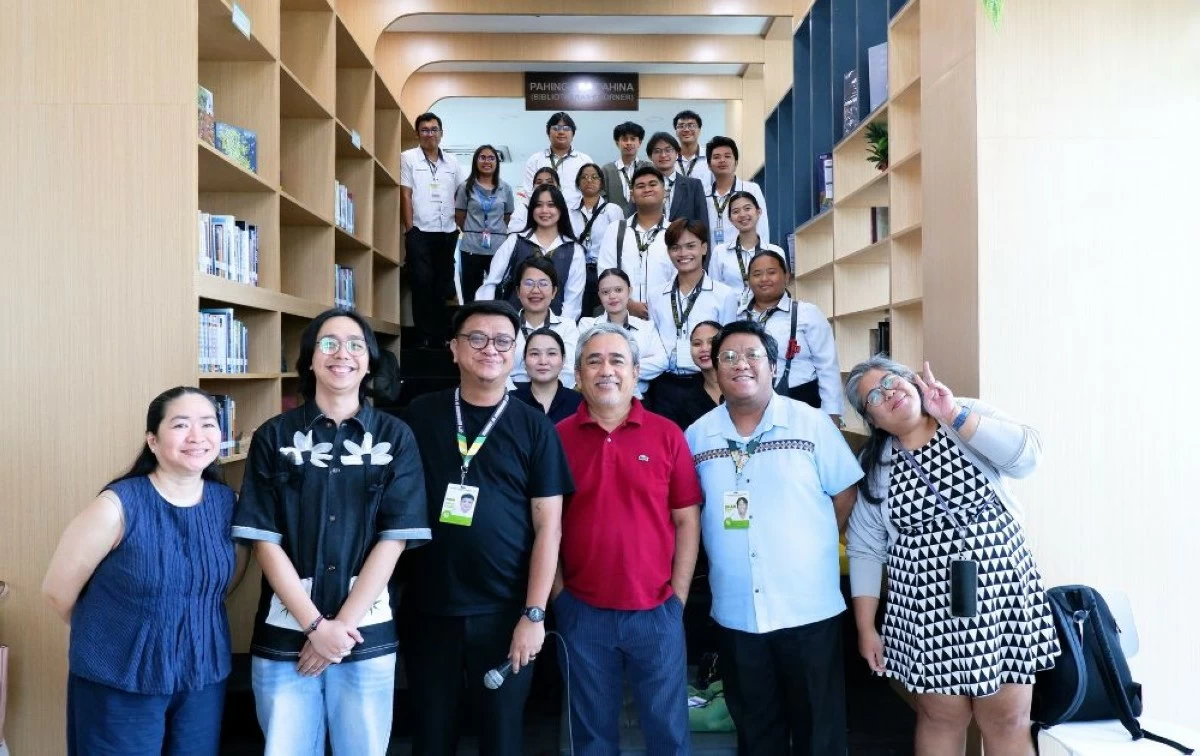
Food writer Guillermo “Ige” Ramos speaks at Tagpuan: Filipino Food Month Forum at the Carmona Public Library on April 14 (Carla Bauto Deña/MANILA BULLETIN)

Related Tags

METRO NEWS Cavite Filipino Food Month Carmona City
ADVERTISEMENT
.most-popular .layout-ratio{ padding-bottom: 79.13%; } @media (min-width: 768px) and (max-width: 1024px) { .widget-title { font-size: 15px !important; } }

{{ articles_filter_1561_widget.title }}

.most-popular .layout-ratio{ padding-bottom: 79.13%; } @media (min-width: 768px) and (max-width: 1024px) { .widget-title { font-size: 15px !important; } }

{{ articles_filter_1562_widget.title }}

.most-popular .layout-ratio{ padding-bottom: 79.13%; } @media (min-width: 768px) and (max-width: 1024px) { .widget-title { font-size: 15px !important; } }

{{ articles_filter_1563_widget.title }}

{{ articles_filter_1564_widget.title }}

.mb-article-details { position: relative; } .mb-article-details .article-body-preview, .mb-article-details .article-body-summary{ font-size: 17px; line-height: 30px; font-family: "Libre Caslon Text", serif; color: #000; } .mb-article-details .article-body-preview iframe , .mb-article-details .article-body-summary iframe{ width: 100%; margin: auto; } .read-more-background { background: linear-gradient(180deg, color(display-p3 1.000 1.000 1.000 / 0) 13.75%, color(display-p3 1.000 1.000 1.000 / 0.8) 30.79%, color(display-p3 1.000 1.000 1.000) 72.5%); position: absolute; height: 200px; width: 100%; bottom: 0; display: flex; justify-content: center; align-items: center; padding: 0; } .read-more-background a{ color: #000; } .read-more-btn { padding: 17px 45px; font-family: Inter; font-weight: 700; font-size: 18px; line-height: 16px; text-align: center; vertical-align: middle; border: 1px solid black; background-color: white; } .hidden { display: none; }
function initializeAllSwipers() { // Get all hidden inputs with cms_article_id document.querySelectorAll('[id^="cms_article_id_"]').forEach(function (input) { const cmsArticleId = input.value; const articleSelector = '#article-' + cmsArticleId + ' .body_images'; const swiperElement = document.querySelector(articleSelector); if (swiperElement && !swiperElement.classList.contains('swiper-initialized')) { new Swiper(articleSelector, { loop: true, pagination: false, navigation: { nextEl: '#article-' + cmsArticleId + ' .swiper-button-next', prevEl: '#article-' + cmsArticleId + ' .swiper-button-prev', }, }); } }); } setTimeout(initializeAllSwipers, 3000); const intersectionObserver = new IntersectionObserver( (entries) => { entries.forEach((entry) => { if (entry.isIntersecting) { const newUrl = entry.target.getAttribute("data-url"); if (newUrl) { history.pushState(null, null, newUrl); let article = entry.target; // Extract metadata const author = article.querySelector('.author-section').textContent.replace('By', '').trim(); const section = article.querySelector('.section-info ').textContent.replace(' ', ' '); const title = article.querySelector('.article-title h1').textContent; // Parse URL for Chartbeat path format const parsedUrl = new URL(newUrl, window.location.origin); const cleanUrl = parsedUrl.host + parsedUrl.pathname; // Update Chartbeat configuration if (typeof window._sf_async_config !== 'undefined') { window._sf_async_config.path = cleanUrl; window._sf_async_config.sections = section; window._sf_async_config.authors = author; } // Track virtual page view with Chartbeat if (typeof pSUPERFLY !== 'undefined' && typeof pSUPERFLY.virtualPage === 'function') { try { pSUPERFLY.virtualPage({ path: cleanUrl, title: title, sections: section, authors: author }); } catch (error) { console.error('ping error', error); } } // Optional: Update document title if (title && title !== document.title) { document.title = title; } } } }); }, { threshold: 0.1 } ); function showArticleBody(button) { const article = button.closest("article"); const summary = article.querySelector(".article-body-summary"); const body = article.querySelector(".article-body-preview"); const readMoreSection = article.querySelector(".read-more-background"); // Hide summary and read-more section summary.style.display = "none"; readMoreSection.style.display = "none"; // Show the full article body body.classList.remove("hidden"); } document.addEventListener("DOMContentLoaded", () => { let loadCount = 0; // Track how many times articles are loaded const offset = [1, 2, 3, 4, 5, 6, 7, 8, 9, 10]; // Offset values const currentUrl = window.location.pathname.substring(1); let isLoading = false; // Prevent multiple calls if (!currentUrl) { console.log("Current URL is invalid."); return; } const sentinel = document.getElementById("load-more-sentinel"); if (!sentinel) { console.log("Sentinel element not found."); return; } function isSentinelVisible() { const rect = sentinel.getBoundingClientRect(); return ( rect.top < window.innerHeight && rect.bottom >= 0 ); } function onScroll() { if (isLoading) return; if (isSentinelVisible()) { if (loadCount >= offset.length) { console.log("Maximum load attempts reached."); window.removeEventListener("scroll", onScroll); return; } isLoading = true; const currentOffset = offset[loadCount]; window.loadMoreItems().then(() => { let article = document.querySelector('#widget_1690 > div:nth-last-of-type(2) article'); intersectionObserver.observe(article) loadCount++; }).catch(error => { console.error("Error loading more items:", error); }).finally(() => { isLoading = false; }); } } window.addEventListener("scroll", onScroll); });

Sign up by email to receive news.