







AFP spots 28 Chinese vessels in WPS
Published Apr 14, 2026 03:27 pm


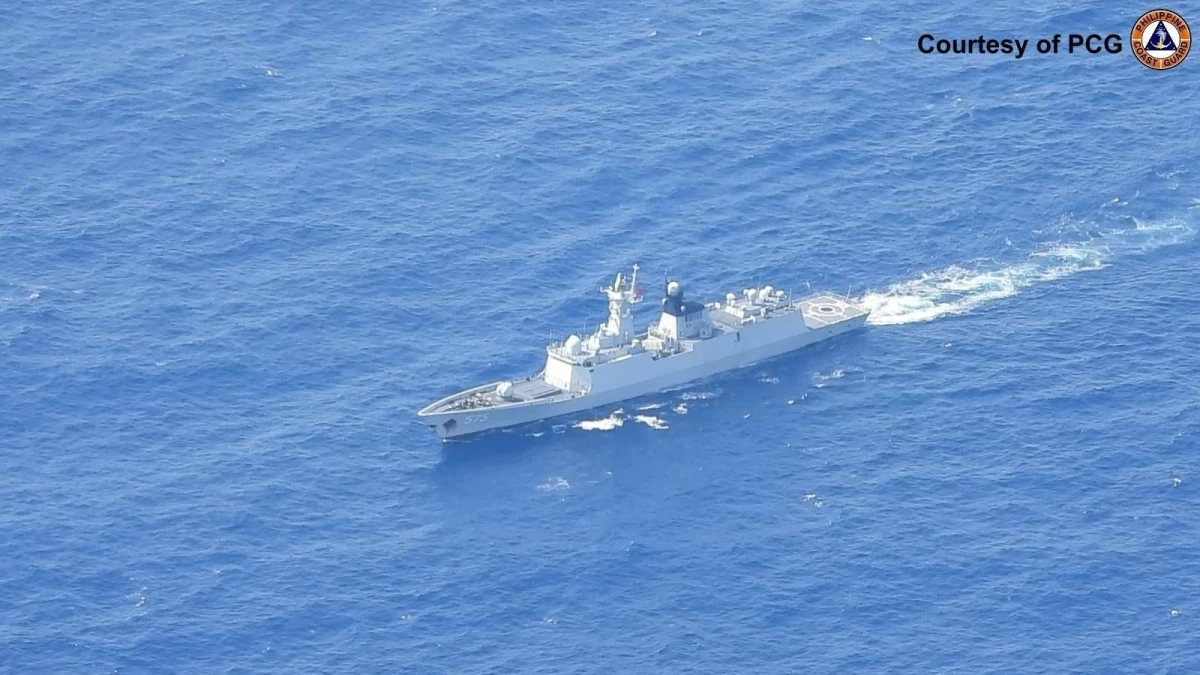
A People's Liberation Army-Navy (PLA-N) warship with bow number "575" is monitored operating in Bajo de Masinloc, West Philippine Sea during a maritime domain awareness (MDA) flight by the Philippine Coast Guard (PCG) on Oct. 28, 2025. (File photo: PCG)
The Armed Forces of the Philippines (AFP) monitored a total of 28 Chinese vessels across key features in the West Philippine Sea (WPS) during the second week of this month.
Data released by the military on Tuesday, April 14, showed the presence of Chinese People's Liberation Army Navy (PLA-N) and China Coast Guard (CCG) vessels from April 5 to 12 was concentrated in four major areas within the country's exclusive economic zone (EEZ) – Bajo de Masinloc (Scarborough or Panatag Shoal), Ayungin (Second Thomas) Shoal, Pag-asa (Thitu) Island, and Escoda (Sabina) Shoal.
According to the official monitoring report, the highest concentration of Chinese activity was recorded in Bajo de Masinloc where 10 CCG vessels were identified.
However, the AFP recorded the highest presence of Chinese warships in Ayungin Shoal where three PLA-N vessels were spotted alongside six CCG ships.
In Pag-asa Island, there was a PLA-N warship accompanied by four CCG vessels, while in Escoda Shoal, there was a PLA-N warship and three CCG vessels.
Rear Admiral Roy Vincent Trinidad, AFP spokesperson for WPS, emphasized that the military remains committed to documenting and exposing “gray-zone tactics” by China and ensuring that Philippine maritime operations remain unhampered.
The latest number was lower than the 49 Chinese vessels monitored in the WPS from March 15 to 22.
Encounter with Chinese fishermen using cyanide
In Ayungin Shoal, where the Philippine Navy (PN)-commissioned ship BRP Sierra Madre is grounded, the condition of Filipino marines and sailors remains stable despite confirmation that Chinese fishermen deployed by Chinese maritime militia vessels were deliberately using cyanide in the area.
PN personnel stationed at BRP Sierra Madre have reported repeated encounters with suspected Chinese fishermen allegedly using cyanide in the area, according to accounts shared by Filipino sailors.
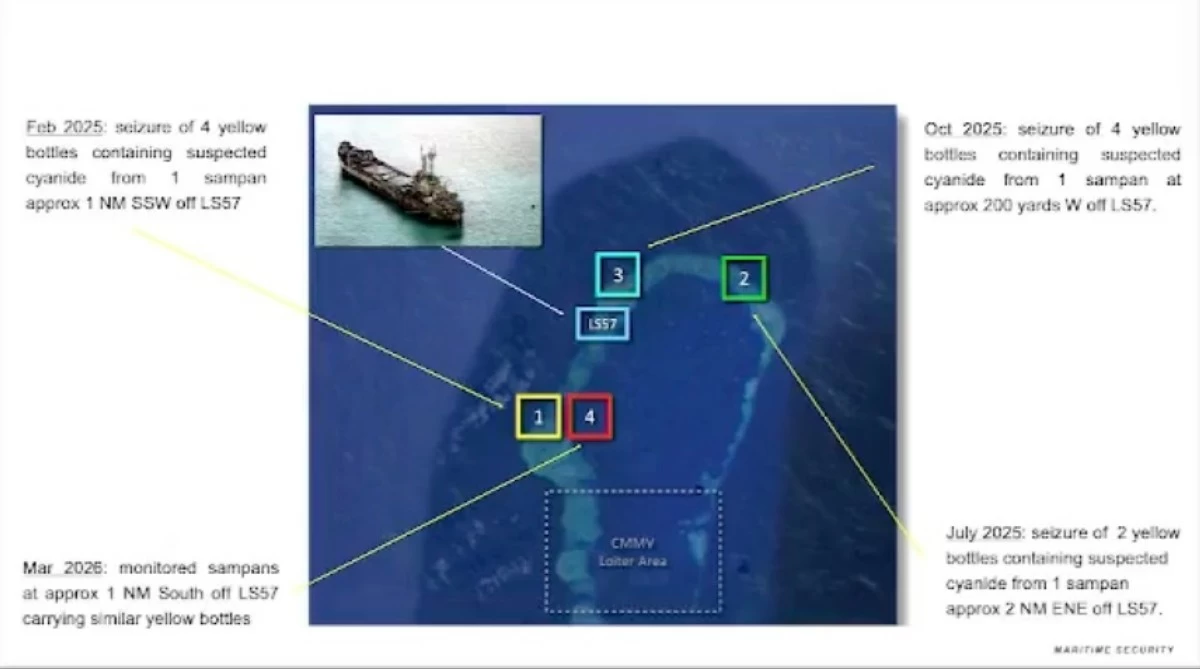
(Courtesy of Armed Forces of the Philippines)
These encounters occurred at least four times: first in February 2025 where troops reported seizing four yellow bottles from a Chinese sampan (traditional boat) operating one nautical mile south-southwest of BRP Sierra Madre.
A similar incident was recorded in July 2025, when two yellow bottles were recovered from another sampan approximately two nautical miles east-northeast of BRP Sierra Madre. In October 2025, PN personnel again intercepted a Chinese sampan about 200 yards west of BRP Sierra Madre, where four yellow bottles were confiscated.
Most recently, in March 2026, troops monitored a Chinese sampan approximately one nautical mile south of BRP Sierra Madre carrying similar yellow bottles. The containers were suspected to contain cyanide, a substance commonly associated with illegal fishing due to its harmful impact on coral reefs and marine life.
Two sailors assigned to the BRP Sierra Madre, whose real identities were withheld for security reasons, recounted that as part of their mandate to ensure the safety of the grounded naval outpost and its personnel, they deployed rubber boats to intercept the Chinese sampans.
In one instance, upon approaching the sampan, the troops observed several Chinese fishermen onboard. The PN personnel attempted to direct the fishermen to move away from the area where they were intercepted. However, the fishermen reportedly did not respond or offer any explanation.
According to the crew, they noticed containers on the sampan which they initially suspected to contain cyanide.
The fishermen allegedly avoided engagement and appeared intent on leaving the scene without communication. Based on their actions, the Navy personnel believed the group was deliberately targeting the waters around Ayungin Shoal, where the BRP Sierra Madre is stationed.
'Not manufactured'
Relatedly, the AFP firmly stood by the report earlier released by the National Security Council (NSC) regarding the interception of Chinese sampans carrying cyanide near Ayungin Shoal, dismissing claims from Beijing that the accounts were manufactured.
The Chinese Embassy in Manila has labeled the report a “cyanide stunt,” arguing that the Philippine government's claims lack any real credibility.
But Trinidad countered allegations of dishonesty by asserting that all AFP disclosures were rooted in verified evidence and documented observations. He emphasized that the military does not engage in fabrication, especially concerning activities that threaten the region's marine integrity.
‘No cyanide-related illness among crew’
Despite the seizure of bottles containing cyanide from Chinese boats, the AFP admitted that there is no confirmed case of cyanide-related illness among troops stationed at the BRP Sierra Madre.
"We have instances in the past that some of the men had to request medical evacuation but none of these were traced to the effects of cyanide," Trinidad said.
Forensic analysis by the National Bureau of Investigation (NBI), however, indicated that the suspected substance found in the recovered bottles from intercepted Chinese sampans could pose serious health risks. NBI Forensic Chemistry Division chemist Mujib Piang earlier said the material analyzed was potent enough to cause illness and could also corrode surfaces.
He warned that exposure to cyanide may lead to acute symptoms, while ingestion—either directly or through contaminated marine life—could result in severe illness or death. Consumption of fish exposed to trace amounts of cyanide may also cause nausea and dizziness if not properly prepared, he added.
The issue has since been raised in bilateral discussions with China, although NSC spokesperson Asst. Director General Cornelio Valencia Jr. said they are awaiting a response from the Department of Foreign Affairs (DFA) and the Chinese government.
Valencia noted that the government is documenting the incidents to support further study and ensure accountability for environmental damage in the area.