ADVERTISEMENT

Philippine tourism faces sharp slowdown as Iran conflict drives costs, cancellations

Published Apr 13, 2026 12:00 am  |  Updated Apr 11, 2026 04:15 pm
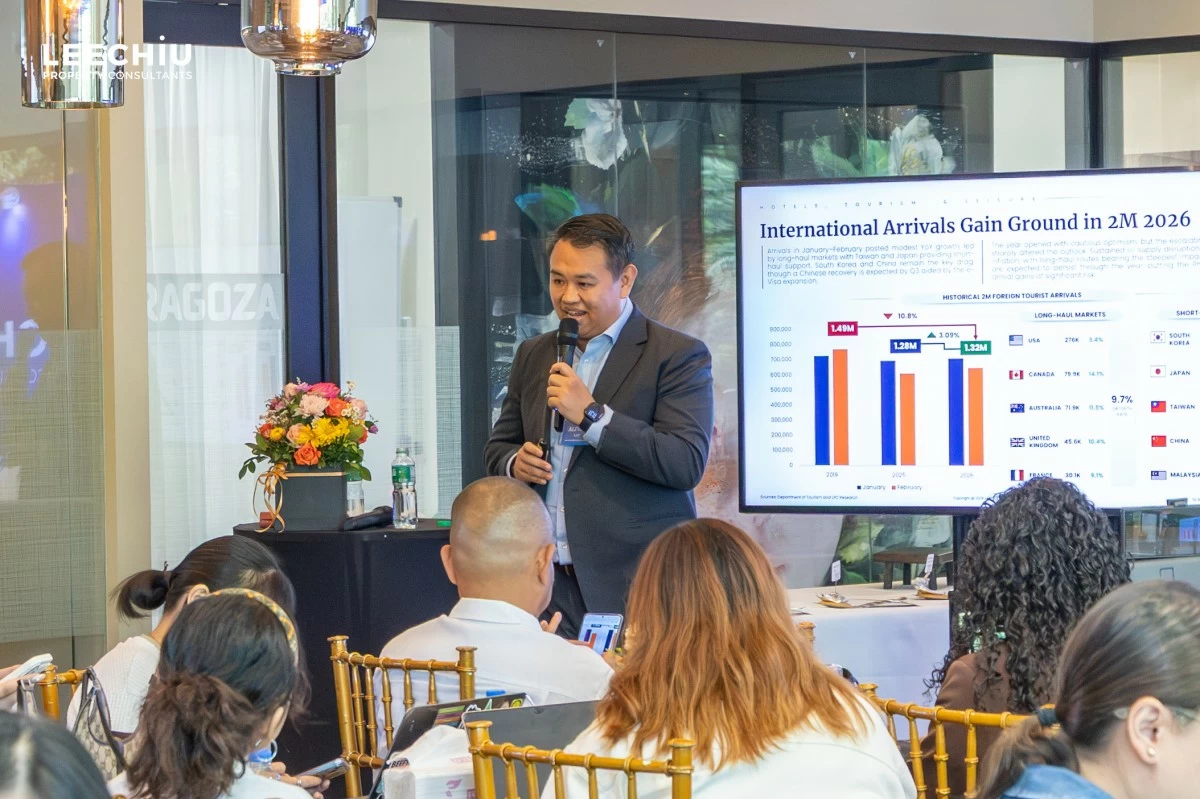
Leechiu Property Consultants Director of Hotels, Tourism, and Leisure Alfred Lay
Because of the Iran conflict, the Philippine tourism sector faces its most uncertain outlook since the Covid-19 pandemic, as it now has to deal with higher airfares, flight cancellations, and a rapid pullback in hotel demand across the country.
“Philippine hotels are entering their most challenging period since the pandemic. Occupancy is expected to fall sharply in April and May as the fuel crisis drives up airfares, dampens traveler confidence, and squeezes household budgets,” said Leechiu Property Consultants (LPC) director of hotels, tourism, and leisure Alfred Lay in a media briefing last week.
He added that, “With international arrivals under threat and domestic spending softening, the industry is bracing for a difficult second half of the year—and the outlook beyond that depends entirely on how quickly the Hormuz crisis resolves.”
The Philippine tourism sector opened 2026 with cautious momentum, as foreign tourist arrivals for January to February posted a 3.1-percent year-on-year increase to 1.32 million visitors. Long-haul markets led the growth, with Taiwan and Japan providing short-haul support.
However, the escalating energy crisis stemming from the Iran conflict has sharply altered the sector’s outlook, and LPC sees a potential return to normal conditions by the fourth quarter of 2026 under a favorable scenario, even as operators should prepare for a sustained period of margin pressure and demand softness through mid-year.
The cancellation of 650 in-person Association of Southeast Asian Nations (ASEAN) meetings and cost-cutting measures by the government and private corporations are expected to further dampen room and event revenues.
Jet fuel costs have doubled in three weeks, with long-haul routes facing the steepest impact, as ticket costs have increased 25 to 50 percent, while destination transportation costs have already risen 20 to 30 percent.
“Travelers are expected to take fewer trips, shorten their stays, and gravitate toward cheaper, shorter routes. Booking patterns are reverting to pandemic-era practices, with shorter booking windows and greater demand for flexibility and refundability,” Lay noted.
According to the 2026 Energy Crisis Impact Survey conducted by the Philippine Hotel Owners Association Inc. (PHOA) and LPC, 64 percent of hotels reported significant to severe operational impact from the crisis.
Resort destinations are disproportionately exposed, as they depend on diesel for power, rely on fuel-intensive flights and ferries to transport guests, and lack the cost absorption capacity of city hotels.
About 80 percent of surveyed hotels reported that occupancy declines are already underway or expected this month. Two-thirds of properties anticipate a more-than-10-percent occupancy decline at peak impact, with 36 percent expecting declines of 11 to 20 percent, and 22 percent expecting declines of 21 to 30 percent.
The corporate and meetings, incentives, conferences, and exhibitions (MICE) segment is expected to be the most affected at 48 percent, followed by international leisure at 28 percent. In response, 30 percent of hotels are offering value-added packages instead of discounting, 28 percent are reducing rates to defend occupancy, and 28 percent are holding rates and absorbing the drop.
LPC has outlined three scenarios for the remainder of 2026. Under a favorable scenario—a ceasefire and the Strait of Hormuz reopening within weeks—occupancy could rebound by the third quarter of 2026, with the national average reaching 50 to 55 percent, and Department of Tourism (DOT) arrival targets missed by only five to 10 percent.
Under a challenging scenario—a negotiated resolution within one to two months with uncertainty persisting through the second to third quarters—national occupancy is expected to fall between 45 percent and 50 percent, with full-year arrivals missing targets by 10 to 20 percent.
Under a severe scenario—a protracted war with no resolution into the second half of 2026—national occupancy could drop below 45 percent, the majority of hotels would operate at a loss, and full-year arrivals would miss the DOT’s targets by more than 30 percent.
Domestic tourism is expected to remain the sector’s backbone, particularly for driving-distance destinations, partially offsetting the decline in international arrivals.
However, the duration and severity of the conflict will determine whether the industry experiences a temporary setback or a prolonged contraction.

Related Tags

Leechiu Property Consultants Alfred Lay
ADVERTISEMENT
.most-popular .layout-ratio{ padding-bottom: 79.13%; } @media (min-width: 768px) and (max-width: 1024px) { .widget-title { font-size: 15px !important; } }

{{ articles_filter_1561_widget.title }}

.most-popular .layout-ratio{ padding-bottom: 79.13%; } @media (min-width: 768px) and (max-width: 1024px) { .widget-title { font-size: 15px !important; } }

{{ articles_filter_1562_widget.title }}

.most-popular .layout-ratio{ padding-bottom: 79.13%; } @media (min-width: 768px) and (max-width: 1024px) { .widget-title { font-size: 15px !important; } }

{{ articles_filter_1563_widget.title }}

{{ articles_filter_1564_widget.title }}

.mb-article-details { position: relative; } .mb-article-details .article-body-preview, .mb-article-details .article-body-summary{ font-size: 17px; line-height: 30px; font-family: "Libre Caslon Text", serif; color: #000; } .mb-article-details .article-body-preview iframe , .mb-article-details .article-body-summary iframe{ width: 100%; margin: auto; } .read-more-background { background: linear-gradient(180deg, color(display-p3 1.000 1.000 1.000 / 0) 13.75%, color(display-p3 1.000 1.000 1.000 / 0.8) 30.79%, color(display-p3 1.000 1.000 1.000) 72.5%); position: absolute; height: 200px; width: 100%; bottom: 0; display: flex; justify-content: center; align-items: center; padding: 0; } .read-more-background a{ color: #000; } .read-more-btn { padding: 17px 45px; font-family: Inter; font-weight: 700; font-size: 18px; line-height: 16px; text-align: center; vertical-align: middle; border: 1px solid black; background-color: white; } .hidden { display: none; }
function initializeAllSwipers() { // Get all hidden inputs with cms_article_id document.querySelectorAll('[id^="cms_article_id_"]').forEach(function (input) { const cmsArticleId = input.value; const articleSelector = '#article-' + cmsArticleId + ' .body_images'; const swiperElement = document.querySelector(articleSelector); if (swiperElement && !swiperElement.classList.contains('swiper-initialized')) { new Swiper(articleSelector, { loop: true, pagination: false, navigation: { nextEl: '#article-' + cmsArticleId + ' .swiper-button-next', prevEl: '#article-' + cmsArticleId + ' .swiper-button-prev', }, }); } }); } setTimeout(initializeAllSwipers, 3000); const intersectionObserver = new IntersectionObserver( (entries) => { entries.forEach((entry) => { if (entry.isIntersecting) { const newUrl = entry.target.getAttribute("data-url"); if (newUrl) { history.pushState(null, null, newUrl); let article = entry.target; // Extract metadata const author = article.querySelector('.author-section').textContent.replace('By', '').trim(); const section = article.querySelector('.section-info ').textContent.replace(' ', ' '); const title = article.querySelector('.article-title h1').textContent; // Parse URL for Chartbeat path format const parsedUrl = new URL(newUrl, window.location.origin); const cleanUrl = parsedUrl.host + parsedUrl.pathname; // Update Chartbeat configuration if (typeof window._sf_async_config !== 'undefined') { window._sf_async_config.path = cleanUrl; window._sf_async_config.sections = section; window._sf_async_config.authors = author; } // Track virtual page view with Chartbeat if (typeof pSUPERFLY !== 'undefined' && typeof pSUPERFLY.virtualPage === 'function') { try { pSUPERFLY.virtualPage({ path: cleanUrl, title: title, sections: section, authors: author }); } catch (error) { console.error('ping error', error); } } // Optional: Update document title if (title && title !== document.title) { document.title = title; } } } }); }, { threshold: 0.1 } ); function showArticleBody(button) { const article = button.closest("article"); const summary = article.querySelector(".article-body-summary"); const body = article.querySelector(".article-body-preview"); const readMoreSection = article.querySelector(".read-more-background"); // Hide summary and read-more section summary.style.display = "none"; readMoreSection.style.display = "none"; // Show the full article body body.classList.remove("hidden"); } document.addEventListener("DOMContentLoaded", () => { let loadCount = 0; // Track how many times articles are loaded const offset = [1, 2, 3, 4, 5, 6, 7, 8, 9, 10]; // Offset values const currentUrl = window.location.pathname.substring(1); let isLoading = false; // Prevent multiple calls if (!currentUrl) { console.log("Current URL is invalid."); return; } const sentinel = document.getElementById("load-more-sentinel"); if (!sentinel) { console.log("Sentinel element not found."); return; } function isSentinelVisible() { const rect = sentinel.getBoundingClientRect(); return ( rect.top < window.innerHeight && rect.bottom >= 0 ); } function onScroll() { if (isLoading) return; if (isSentinelVisible()) { if (loadCount >= offset.length) { console.log("Maximum load attempts reached."); window.removeEventListener("scroll", onScroll); return; } isLoading = true; const currentOffset = offset[loadCount]; window.loadMoreItems().then(() => { let article = document.querySelector('#widget_1690 > div:nth-last-of-type(2) article'); intersectionObserver.observe(article) loadCount++; }).catch(error => { console.error("Error loading more items:", error); }).finally(() => { isLoading = false; }); } } window.addEventListener("scroll", onScroll); });

Sign up by email to receive news.