







Masbate: Where expansion became a mission
Published Apr 13, 2026 12:05 am
|
Updated Apr 12, 2026 04:15 pm


FROM THE MARGINS
Last month, I traveled to Masbate to join the kickoff celebration of the 40th anniversary of CARD Mutually Reinforcing Institutions (CARD MRI). The venue was both symbolic and deeply meaningful. After laying our foundation in Laguna, Masbate was the first province where we successfully expanded our operations. What took root in Masbate served as the model for our institutions’ growth across the Philippines.
Returning to Masbate felt like revisiting a defining chapter in our journey. The celebration was festive, but what made it truly memorable was reconnecting with people who helped build that chapter — people whose lives continue to reflect the mission we began decades ago.
Among them were the original Nanays who joined our early operations in the province in 1991. Seeing them again after so many years was deeply moving. Many remain active members, still practicing the discipline of regular savings, responsible borrowing, and mutual support within their groups. Their presence was a powerful reminder that financial inclusion is not just about institutional growth — it is about transformed lives.
I also reconnected with former staff members who helped establish our presence in Masbate. Their journeys show how opportunity, combined with hard work, can open unexpected paths. One of them, Nong Valenzuela, is now a municipal councilor in Uson. He is married to Elma Buedad, who led our early expansion in Masbate and went on to serve as our microfinance NGO’s Executive Director and later, as CEO of one of our rural banks, until her retirement in 2025. Others from that pioneering team are now public school teachers, local government officials, or professionals in private organizations.
Their stories reflect a deeper truth about development: when people are given the chance to grow, they do not only improve their own lives — they become catalysts for change in their communities.
Equally inspiring are those who pursued entrepreneurship after years of working with our organization. One such story is that of Darlon and Welisa Amante, founders of Darwel Agricultural Farm in Barangay Batuhan, Masbate City. They grew a modest two-hectare demonstration farm for rice production into an eleven-hectare diversified enterprise.
Yet their most valuable harvest is not measured in crops, but in knowledge. Their farm serves as a learning hub for those seeking to increase productivity and adopt sustainable methods. Its impact has gained national recognition: in 2019, it was accredited as a Learning Site for Agriculture by the Agricultural Training Institute, and later as a farm school under the Technical Education and Skills Development Authority.
Darwel has trained around 950 farmers in rice production, with others completing courses in organic vegetable farming. The results are significant. Farmers who once harvested only 50 to 80 cavans per hectare now produce 90 to 100, with some reaching as high as 150. Just as important, they gain financial literacy — learning to compute production costs, estimate profits, and manage resources wisely.
They are encouraged to diversify crops and adopt practices that sustain both income and the environment. As Welisa shares, “The most fulfilling part of our work is seeing farmers believe in themselves.”
That insight captures what Masbate continues to teach us: Development is not only about providing capital or services. It is about building people’s capacity to dream, to learn, and to lead change within their communities.
I also met long-time members whose lives embody the quiet strength of microfinance clients. Aurora Cortes, now 83, has been a member for 30 years. She still runs a caramelado-making business. Erlinda F. Araña, 54, has been a member for 31 years, still making bibingka and suman to support her family. Rowena Tuala, 43, an 18-year- member, is in seafood trading. At 61, Marjieta B. Carabuena is marking her 15th year of membership. She produces dried fish. Dorothea Montejo, 63, has been a member for 17 years and trades seafoods, like crabs and squid.
Typical of microfinance clients, they all started with small loans — ₱3,000-5,000 – but through discipline and perseverance, gradually built sustainable enterprises. Today, their businesses not only support their families but also create jobs within their communities. More importantly, they have built assets and opportunities for the next generation. Many of their children have finished college. Some now help manage family enterprises, while others have found employment here and abroad.
Our expansion in Masbate, started decades ago, was a significant institutional milestone. But its true success lies in stories like these — stories of women who started small, persevered, built businesses, educated their children, and improved their families’ lives.
From the pioneering Nanays who joined us in 1991 to today’s farmers and entrepreneurs, Masbate remains a living testament to what is possible. When people are given opportunity, support, and knowledge, they can rise above poverty and build better futures — not only for themselves, but for their communities.
* * *
“If real development is to take place, the people have to be involved.” – Julius Nyerere
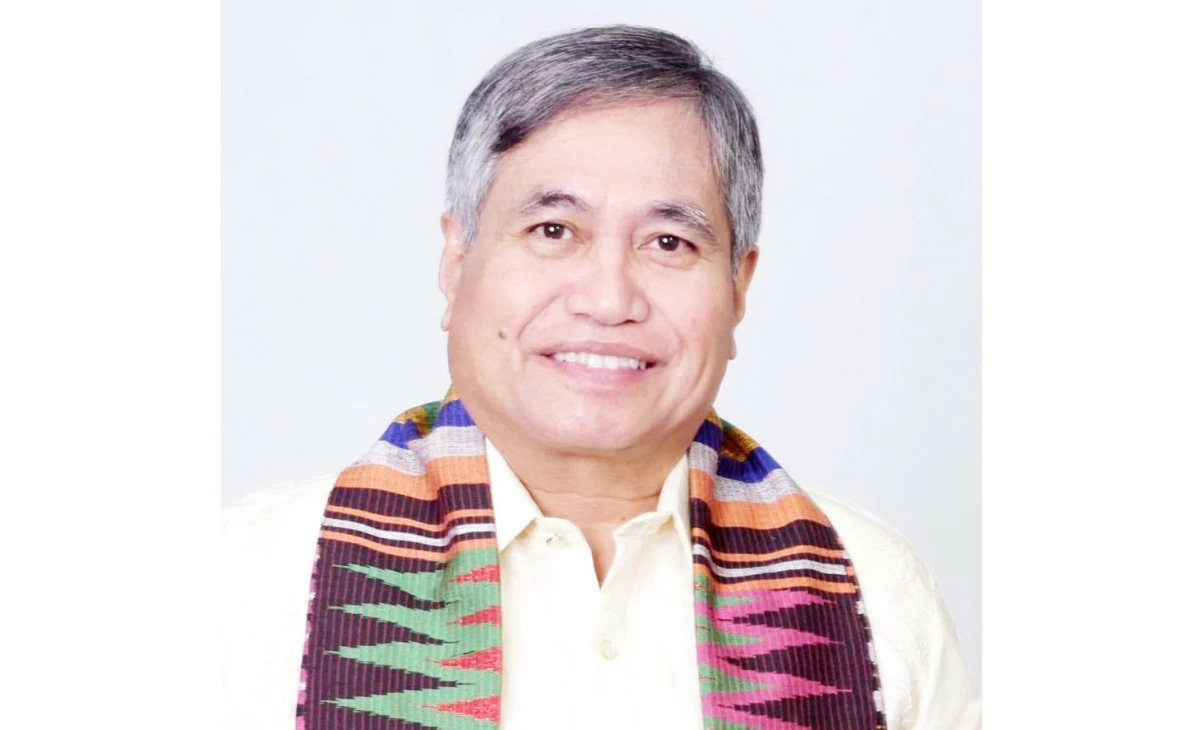
(Dr. Jaime Aristotle B. Alip is a poverty eradication advocate. He is the founder of the Center for Agriculture and Rural Development Mutually-Reinforcing Institutions (CARD MRI), a group of 23 organizations that provide social development services to 8 million economically-disadvantaged Filipinos and insure more than 27 million nationwide.)