ADVERTISEMENT

Libreng sakay: Spirit of damayan in a crisis

Published Apr 13, 2026 12:05 am  |  Updated Apr 12, 2026 04:07 pm
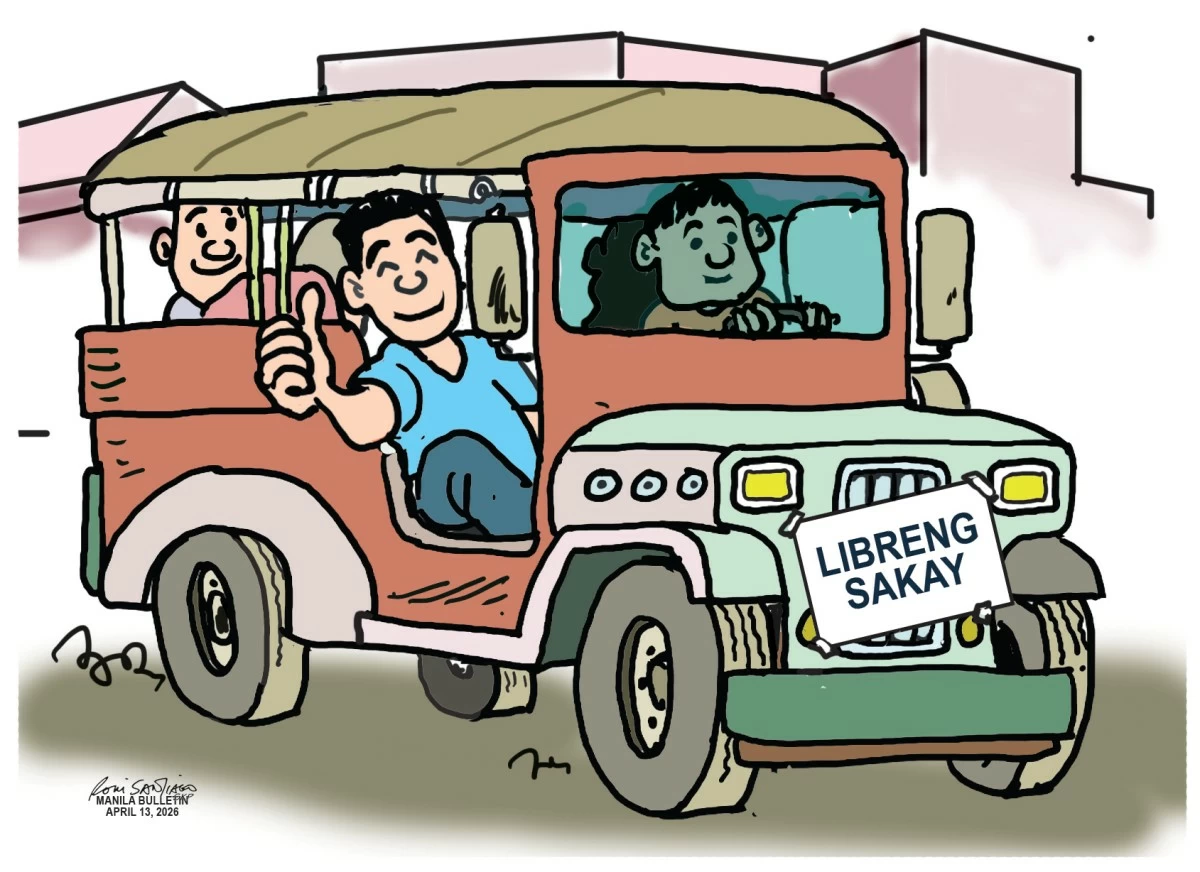
In times of crisis, the true measure of governance lies not only in policy declarations but in the immediacy and compassion of its response. The Manila City government’s “Libreng Sakay” program is a compelling case in point—an initiative that has brought tangible relief to commuters at a time when rising fuel costs continue to squeeze already burdened household budgets.
From March 30 to April 8, 2026, the program has been patronized by an impressive 931,831 commuters, underscoring both the urgency of the need and the effectiveness of the intervention. Building on an earlier report of over 716,000 beneficiaries within the first days of implementation, the surge in ridership reflects how quickly such programs can resonate with the public when they directly address daily hardships.
The genius of the program lies in its dual-impact design. By subsidizing jeepney drivers and operators with guaranteed daily earnings ranging from P3,000 to P6,000, the city government ensured that transport workers—whose incomes had plummeted due to soaring fuel prices—were not left behind. At the same time, commuters, particularly students and minimum-wage earners, were spared the rising cost of fares.
This is governance that works on both sides of the equation: protecting livelihoods while easing the cost of living.
The initiative aligns closely with the national government’s response to the global energy crisis. Under Executive Order No. 110, President Ferdinand Marcos Jr. declared a state of national energy emergency in light of escalating geopolitical tensions and their impact on global oil prices. The order mobilizes a whole-of-government approach to mitigate disruptions, promote energy conservation, and cushion vulnerable sectors from economic shocks.
Across the country, this has translated into a range of relief measures. Fuel subsidies for public utility vehicle drivers have been expanded, ensuring continued mobility despite volatile pump prices. Government agencies have been directed to implement energy-saving measures, reducing operational costs and setting an example for responsible consumption. Local government units, following Manila’s lead, have explored similar transport assistance programs and targeted subsidies.
Moreover, there has been a renewed push for social protection mechanisms—cash assistance, targeted aid for low-income households, and support for critical sectors such as agriculture and fisheries, which are heavily affected by fuel-dependent production and distribution costs. These interventions, while varied in scope, share a common objective: to blunt the cascading effects of the energy crisis on food prices, transport costs, and overall inflation.
Yet, the Manila experience offers an important lesson. Large-scale national policies, while essential, often require localized, innovative execution to achieve real impact. The “Libreng Sakay” program demonstrates how local governments can act swiftly and creatively, leveraging available resources to deliver immediate relief.
Equally significant is the program’s embodiment of damayan—the Filipino spirit of collective support. As Malacañang itself noted, such initiatives reflect a shared determination to weather external shocks together. In a period marked by uncertainty, this social cohesion becomes as vital as any fiscal or economic measure.
Still, sustainability remains a key concern. Free ride programs, while effective as short-term relief, require substantial funding and careful targeting to ensure that they benefit those who need them most. Moving forward, policymakers must strike a balance between immediate assistance and long-term structural solutions—such as investing in energy security, mass transport modernization, and alternative fuels.
For now, however, the message is clear. In the face of a global crisis not of our making, responsive governance—anchored on empathy, innovation, and solidarity—can make a meaningful difference in the lives of ordinary Filipinos.
The road ahead may be uncertain, but with programs like “Libreng Sakay,” there is reassurance that no one is being left behind.

Related Tags

Libreng Sakay Editorial
ADVERTISEMENT
.most-popular .layout-ratio{ padding-bottom: 79.13%; } @media (min-width: 768px) and (max-width: 1024px) { .widget-title { font-size: 15px !important; } }

{{ articles_filter_1561_widget.title }}

.most-popular .layout-ratio{ padding-bottom: 79.13%; } @media (min-width: 768px) and (max-width: 1024px) { .widget-title { font-size: 15px !important; } }

{{ articles_filter_1562_widget.title }}

.most-popular .layout-ratio{ padding-bottom: 79.13%; } @media (min-width: 768px) and (max-width: 1024px) { .widget-title { font-size: 15px !important; } }

{{ articles_filter_1563_widget.title }}

{{ articles_filter_1564_widget.title }}

.mb-article-details { position: relative; } .mb-article-details .article-body-preview, .mb-article-details .article-body-summary{ font-size: 17px; line-height: 30px; font-family: "Libre Caslon Text", serif; color: #000; } .mb-article-details .article-body-preview iframe , .mb-article-details .article-body-summary iframe{ width: 100%; margin: auto; } .read-more-background { background: linear-gradient(180deg, color(display-p3 1.000 1.000 1.000 / 0) 13.75%, color(display-p3 1.000 1.000 1.000 / 0.8) 30.79%, color(display-p3 1.000 1.000 1.000) 72.5%); position: absolute; height: 200px; width: 100%; bottom: 0; display: flex; justify-content: center; align-items: center; padding: 0; } .read-more-background a{ color: #000; } .read-more-btn { padding: 17px 45px; font-family: Inter; font-weight: 700; font-size: 18px; line-height: 16px; text-align: center; vertical-align: middle; border: 1px solid black; background-color: white; } .hidden { display: none; }
function initializeAllSwipers() { // Get all hidden inputs with cms_article_id document.querySelectorAll('[id^="cms_article_id_"]').forEach(function (input) { const cmsArticleId = input.value; const articleSelector = '#article-' + cmsArticleId + ' .body_images'; const swiperElement = document.querySelector(articleSelector); if (swiperElement && !swiperElement.classList.contains('swiper-initialized')) { new Swiper(articleSelector, { loop: true, pagination: false, navigation: { nextEl: '#article-' + cmsArticleId + ' .swiper-button-next', prevEl: '#article-' + cmsArticleId + ' .swiper-button-prev', }, }); } }); } setTimeout(initializeAllSwipers, 3000); const intersectionObserver = new IntersectionObserver( (entries) => { entries.forEach((entry) => { if (entry.isIntersecting) { const newUrl = entry.target.getAttribute("data-url"); if (newUrl) { history.pushState(null, null, newUrl); let article = entry.target; // Extract metadata const author = article.querySelector('.author-section').textContent.replace('By', '').trim(); const section = article.querySelector('.section-info ').textContent.replace(' ', ' '); const title = article.querySelector('.article-title h1').textContent; // Parse URL for Chartbeat path format const parsedUrl = new URL(newUrl, window.location.origin); const cleanUrl = parsedUrl.host + parsedUrl.pathname; // Update Chartbeat configuration if (typeof window._sf_async_config !== 'undefined') { window._sf_async_config.path = cleanUrl; window._sf_async_config.sections = section; window._sf_async_config.authors = author; } // Track virtual page view with Chartbeat if (typeof pSUPERFLY !== 'undefined' && typeof pSUPERFLY.virtualPage === 'function') { try { pSUPERFLY.virtualPage({ path: cleanUrl, title: title, sections: section, authors: author }); } catch (error) { console.error('ping error', error); } } // Optional: Update document title if (title && title !== document.title) { document.title = title; } } } }); }, { threshold: 0.1 } ); function showArticleBody(button) { const article = button.closest("article"); const summary = article.querySelector(".article-body-summary"); const body = article.querySelector(".article-body-preview"); const readMoreSection = article.querySelector(".read-more-background"); // Hide summary and read-more section summary.style.display = "none"; readMoreSection.style.display = "none"; // Show the full article body body.classList.remove("hidden"); } document.addEventListener("DOMContentLoaded", () => { let loadCount = 0; // Track how many times articles are loaded const offset = [1, 2, 3, 4, 5, 6, 7, 8, 9, 10]; // Offset values const currentUrl = window.location.pathname.substring(1); let isLoading = false; // Prevent multiple calls if (!currentUrl) { console.log("Current URL is invalid."); return; } const sentinel = document.getElementById("load-more-sentinel"); if (!sentinel) { console.log("Sentinel element not found."); return; } function isSentinelVisible() { const rect = sentinel.getBoundingClientRect(); return ( rect.top < window.innerHeight && rect.bottom >= 0 ); } function onScroll() { if (isLoading) return; if (isSentinelVisible()) { if (loadCount >= offset.length) { console.log("Maximum load attempts reached."); window.removeEventListener("scroll", onScroll); return; } isLoading = true; const currentOffset = offset[loadCount]; window.loadMoreItems().then(() => { let article = document.querySelector('#widget_1690 > div:nth-last-of-type(2) article'); intersectionObserver.observe(article) loadCount++; }).catch(error => { console.error("Error loading more items:", error); }).finally(() => { isLoading = false; }); } } window.addEventListener("scroll", onScroll); });

Sign up by email to receive news.