






 Business
Trade & Industry
DepEd taps private sector for ₱106-billion deal to build 16,000 classrooms
Business
Trade & Industry
DepEd taps private sector for ₱106-billion deal to build 16,000 classrooms
DepEd taps private sector for ₱106-billion deal to build 16,000 classrooms


In an invitation to bid issued last week, the DepEd said it is now welcoming interested parties to bid for the first three contract packages under Phase 3 of the PPP for School Infrastructure Project (PSIP III).
Implemented under a build-lease-transfer arrangement, the contract packages cover the design, construction, and maintenance of more than 3,600 classrooms that will be built primarily in existing schools located in Luzon regions.
The first contract focuses on the northern part of the country, covering 1,094 classrooms in Ilocos Region, Cagayan Valley, and Cordillera Administrative Region (CAR).
The second package involves the development of 1,015 classrooms in Metro Manila and Mimaropa.
Meanwhile, the third contract includes the highest number of classrooms at 1,454, which will be constructed in Central Luzon, Calabarzon, and Bicol Region.
The DepEd said the estimated construction period for all 3,563 classrooms is 17 months, with the total contract duration set at 11 years and five months, and a payment period of 10 years.
To ensure the success of PSIP III, the competitive bidding will be open to all interested foreign and local parties, subject to the conditions outlined in the bidding documents and applicable laws.
Interested bidders for one or any number of contract packages may submit their bid documents to the DepEd through its prequalification, bids, and awards committee (PBAC) until Aug. 24.
The DepEd’s PBAC for PSIP III will hold a pre-bid conference for the project on May 4, open to all prospective bidders.
The target date for contract signing with the winning bidders is set for August, with construction expected to begin in March next year.
With an allocation of ₱105.7 billion, PSIP III is part of the DepEd’s broader agenda to accelerate classroom construction and improve the management of school infrastructure.
Targeting the construction of 16,459 classrooms, PSIP III will be the largest classroom PPP in the country’s history. DepEd data showed that more than 13,000 classrooms were constructed under the first two phases of PSIP.
By relying on the private sector to build the classrooms, the DepEd estimates that the government could save around ₱40.17 billion under PSIP III.
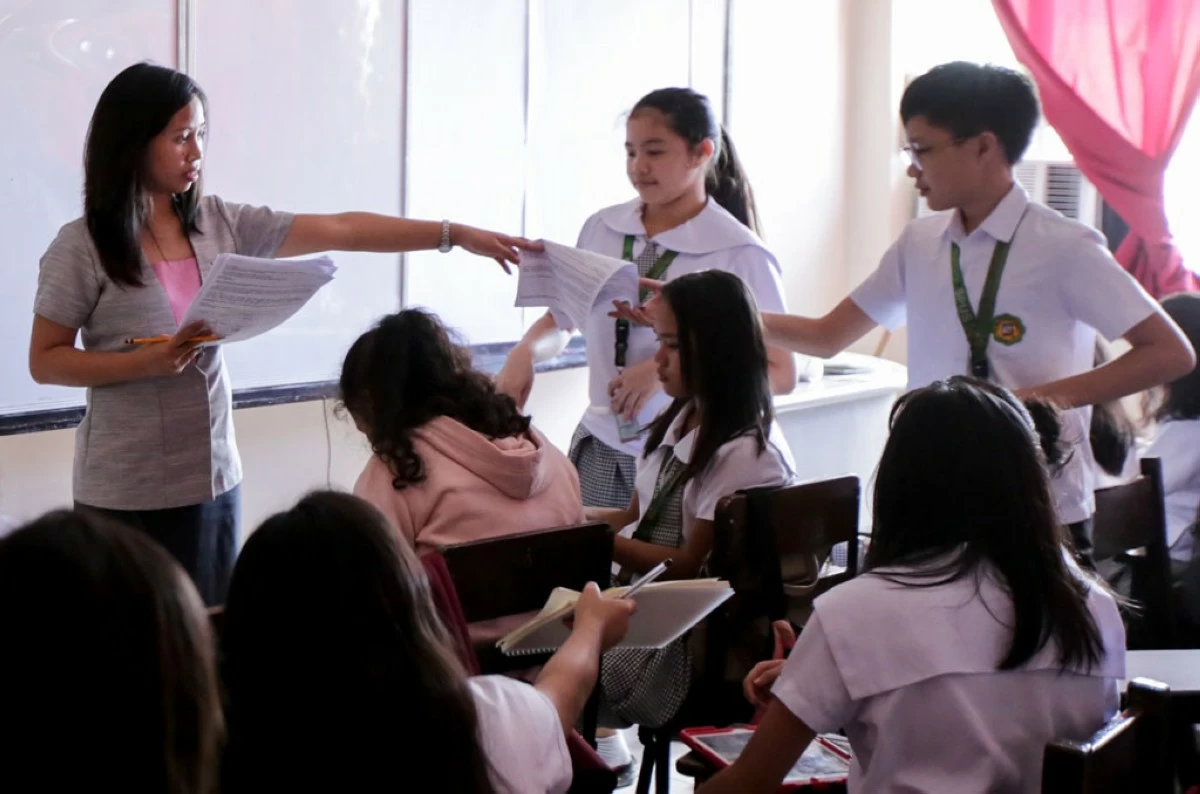
Once operational, the new classrooms are expected to benefit up to 800,000 students annually, with millions more benefiting from reduced congestion in more than 1,000 public schools.
As a result, the average class size is projected to decrease from 50 to around 39 students.
“By reducing overcrowding and eliminating multiple-shift schedules, the initiative is expected to lengthen actual learning time, reduce teacher fatigue, and improve overall school operations and safety,” the DepEd said in an earlier statement.