ADVERTISEMENT

ASEAN urges diplomacy, restraint after US-Iran ceasefire in Middle East

Second ASEAN Foreign Ministers' Meeting tackles Middle East crisis, energy and food security, safety of nationals

Published Apr 13, 2026 05:23 pm
ASEAN calls for diplomacy and restraint after the US-Iran ceasefire, highlighting risks to global energy supply, maritime security, and Middle East stability. (ASEAN / Facebook)
Foreign ministers of the Association of Southeast Asian Nations (ASEAN) on Monday, April 13, urged sustained diplomacy and restraint following recent developments in the Middle East, while welcoming a temporary ceasefire between the United States and Iran.
Department of Foreign Affairs (DFA) Secretary Tess Lazaro, in an online press conference, shared key discussion points during the Second Special ASEAN Foreign Ministers' Meeting on the Situation in the Middle East, “centering on issues of energy, food security, and the safety of nationals,” among others.
Lazaro said ASEAN ministers are calling for the “full and effective implementation of the two-week ceasefire,” as they outlined several measures to address existing and emerging needs related to the Middle East crisis.
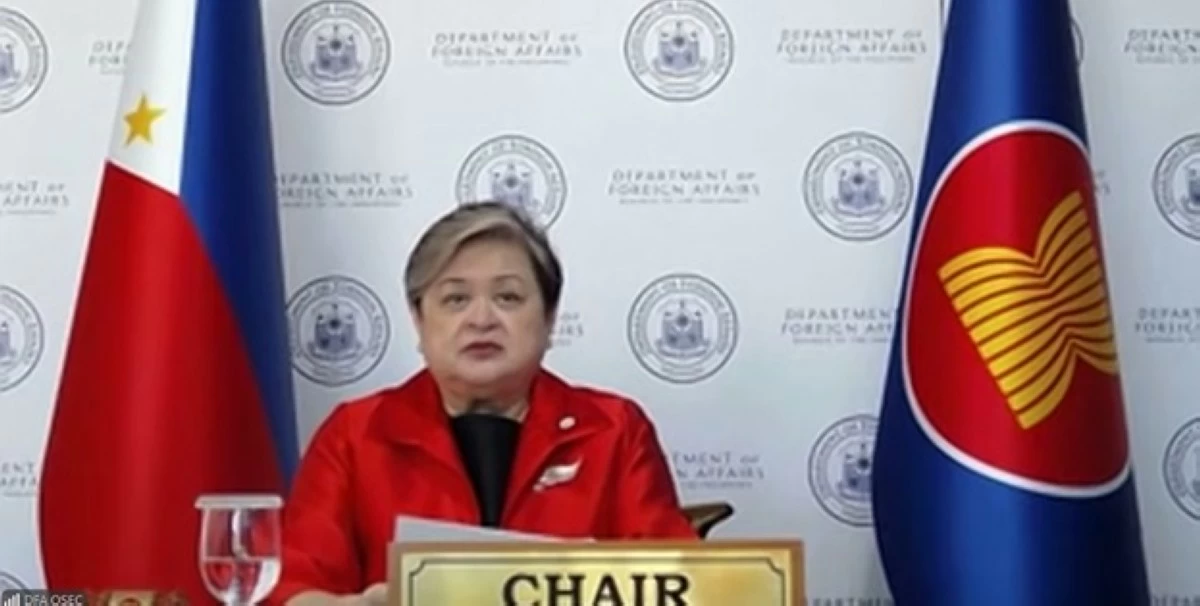
In an online press briefing on April 13, 2026, Department of Foreign Affairs (DFA) Secretary Tess Lazaro said the Second Special ASEAN Foreign Ministers’ Meeting on the Middle East focused on key concerns, including energy and food security, as well as the safety of nationals. (DFA / screenshot)
Maritime security, global energy supply highlighted
A joint statement released by ASEAN member states acknowledged the two-week ceasefire announced on April 8, describing it as a crucial step toward de-escalation in a region facing heightened geopolitical tensions.
ASEAN emphasized the need to maintain maritime safety and security, particularly in key global shipping routes such as the Strait of Hormuz—a critical corridor through which roughly a fifth of the world’s oil supply passes.
The bloc reiterated the importance of upholding international law, including the United Nations Convention on the Law of the Sea, to ensure freedom of navigation and overflight.
Foreign ministers also called for the restoration of safe, unimpeded transit for vessels and aircraft, warning that disruptions in the Strait of Hormuz could significantly impact global energy flows, oil prices, and economic stability.
They further underscored compliance with international safety frameworks such as the International Convention for the Safety of Life at Sea, alongside standards set by the International Maritime Organization and the International Civil Aviation Organization.
Call for continued negotiations
ASEAN urged both Washington and Tehran to pursue continued negotiations aimed at achieving a permanent resolution to the conflict.
The group also commended mediation and diplomatic efforts by Pakistan and other stakeholders involved in facilitating dialogue between the two sides.
“The full and effective implementation of the ceasefire is essential to prevent further loss of life and to ensure regional peace and stability,” the statement said.
Preventing escalation, protecting civilians
The regional bloc called on all parties to strictly adhere to the ceasefire terms, exercise restraint, and avoid actions that could escalate tensions.
ASEAN stressed the importance of protecting civilians and civilian infrastructure in conflict zones, as well as ensuring the safety of humanitarian personnel and peacekeepers under international law and the United Nations Charter.
ASEAN pushes for peaceful resolution
Reaffirming its longstanding position, ASEAN highlighted diplomacy and dialogue as the primary means of resolving conflicts in the Middle East.
The group also reiterated the obligation of all states to respect sovereignty and territorial integrity and to pursue peaceful solutions in accordance with international law and relevant UN Security Council resolutions.
The statement concluded with a call for a comprehensive and enduring resolution, warning that prolonged instability could disrupt global trade, energy supply chains, and broader economic recovery.
“We underscore the importance of maintaining regional peace, stability, and prosperity, upholding international law, and promoting earnest dialogue and diplomacy as the primary means of addressing conflicts and tensions, including the need for a complete and immediate cessation of hostilities across all fronts in the Middle East,” the statement read. 
This year, the DFA is at the center of ASEAN diplomacy as the Philippines serves as ASEAN Chair.
The DFA leads the country’s foreign policy execution, coordination, and hosting of all ASEAN-related engagements.

Related Tags

DFA ASEAN foreign ministers US-Iran ceasefire Middle East crisis 2026 Strait of Hormuz oil supply maritime security global energy supply
ADVERTISEMENT
.most-popular .layout-ratio{ padding-bottom: 79.13%; } @media (min-width: 768px) and (max-width: 1024px) { .widget-title { font-size: 15px !important; } }

{{ articles_filter_1561_widget.title }}

.most-popular .layout-ratio{ padding-bottom: 79.13%; } @media (min-width: 768px) and (max-width: 1024px) { .widget-title { font-size: 15px !important; } }

{{ articles_filter_1562_widget.title }}

.most-popular .layout-ratio{ padding-bottom: 79.13%; } @media (min-width: 768px) and (max-width: 1024px) { .widget-title { font-size: 15px !important; } }

{{ articles_filter_1563_widget.title }}

{{ articles_filter_1564_widget.title }}

.mb-article-details { position: relative; } .mb-article-details .article-body-preview, .mb-article-details .article-body-summary{ font-size: 17px; line-height: 30px; font-family: "Libre Caslon Text", serif; color: #000; } .mb-article-details .article-body-preview iframe , .mb-article-details .article-body-summary iframe{ width: 100%; margin: auto; } .read-more-background { background: linear-gradient(180deg, color(display-p3 1.000 1.000 1.000 / 0) 13.75%, color(display-p3 1.000 1.000 1.000 / 0.8) 30.79%, color(display-p3 1.000 1.000 1.000) 72.5%); position: absolute; height: 200px; width: 100%; bottom: 0; display: flex; justify-content: center; align-items: center; padding: 0; } .read-more-background a{ color: #000; } .read-more-btn { padding: 17px 45px; font-family: Inter; font-weight: 700; font-size: 18px; line-height: 16px; text-align: center; vertical-align: middle; border: 1px solid black; background-color: white; } .hidden { display: none; }
function initializeAllSwipers() { // Get all hidden inputs with cms_article_id document.querySelectorAll('[id^="cms_article_id_"]').forEach(function (input) { const cmsArticleId = input.value; const articleSelector = '#article-' + cmsArticleId + ' .body_images'; const swiperElement = document.querySelector(articleSelector); if (swiperElement && !swiperElement.classList.contains('swiper-initialized')) { new Swiper(articleSelector, { loop: true, pagination: false, navigation: { nextEl: '#article-' + cmsArticleId + ' .swiper-button-next', prevEl: '#article-' + cmsArticleId + ' .swiper-button-prev', }, }); } }); } setTimeout(initializeAllSwipers, 3000); const intersectionObserver = new IntersectionObserver( (entries) => { entries.forEach((entry) => { if (entry.isIntersecting) { const newUrl = entry.target.getAttribute("data-url"); if (newUrl) { history.pushState(null, null, newUrl); let article = entry.target; // Extract metadata const author = article.querySelector('.author-section').textContent.replace('By', '').trim(); const section = article.querySelector('.section-info ').textContent.replace(' ', ' '); const title = article.querySelector('.article-title h1').textContent; // Parse URL for Chartbeat path format const parsedUrl = new URL(newUrl, window.location.origin); const cleanUrl = parsedUrl.host + parsedUrl.pathname; // Update Chartbeat configuration if (typeof window._sf_async_config !== 'undefined') { window._sf_async_config.path = cleanUrl; window._sf_async_config.sections = section; window._sf_async_config.authors = author; } // Track virtual page view with Chartbeat if (typeof pSUPERFLY !== 'undefined' && typeof pSUPERFLY.virtualPage === 'function') { try { pSUPERFLY.virtualPage({ path: cleanUrl, title: title, sections: section, authors: author }); } catch (error) { console.error('ping error', error); } } // Optional: Update document title if (title && title !== document.title) { document.title = title; } } } }); }, { threshold: 0.1 } ); function showArticleBody(button) { const article = button.closest("article"); const summary = article.querySelector(".article-body-summary"); const body = article.querySelector(".article-body-preview"); const readMoreSection = article.querySelector(".read-more-background"); // Hide summary and read-more section summary.style.display = "none"; readMoreSection.style.display = "none"; // Show the full article body body.classList.remove("hidden"); } document.addEventListener("DOMContentLoaded", () => { let loadCount = 0; // Track how many times articles are loaded const offset = [1, 2, 3, 4, 5, 6, 7, 8, 9, 10]; // Offset values const currentUrl = window.location.pathname.substring(1); let isLoading = false; // Prevent multiple calls if (!currentUrl) { console.log("Current URL is invalid."); return; } const sentinel = document.getElementById("load-more-sentinel"); if (!sentinel) { console.log("Sentinel element not found."); return; } function isSentinelVisible() { const rect = sentinel.getBoundingClientRect(); return ( rect.top < window.innerHeight && rect.bottom >= 0 ); } function onScroll() { if (isLoading) return; if (isSentinelVisible()) { if (loadCount >= offset.length) { console.log("Maximum load attempts reached."); window.removeEventListener("scroll", onScroll); return; } isLoading = true; const currentOffset = offset[loadCount]; window.loadMoreItems().then(() => { let article = document.querySelector('#widget_1690 > div:nth-last-of-type(2) article'); intersectionObserver.observe(article) loadCount++; }).catch(error => { console.error("Error loading more items:", error); }).finally(() => { isLoading = false; }); } } window.addEventListener("scroll", onScroll); });

Sign up by email to receive news.