






Manila Bulletin
 Philippines
National
'Tama na ang gulo!': PH leads ASEAN peace push amid global wars, tensions
Philippines
National
'Tama na ang gulo!': PH leads ASEAN peace push amid global wars, tensions
Philippines
National
'Tama na ang gulo!': PH leads ASEAN peace push amid global wars, tensions
'Tama na ang gulo!': PH leads ASEAN peace push amid global wars, tensions
Published Apr 11, 2026 02:00 pm


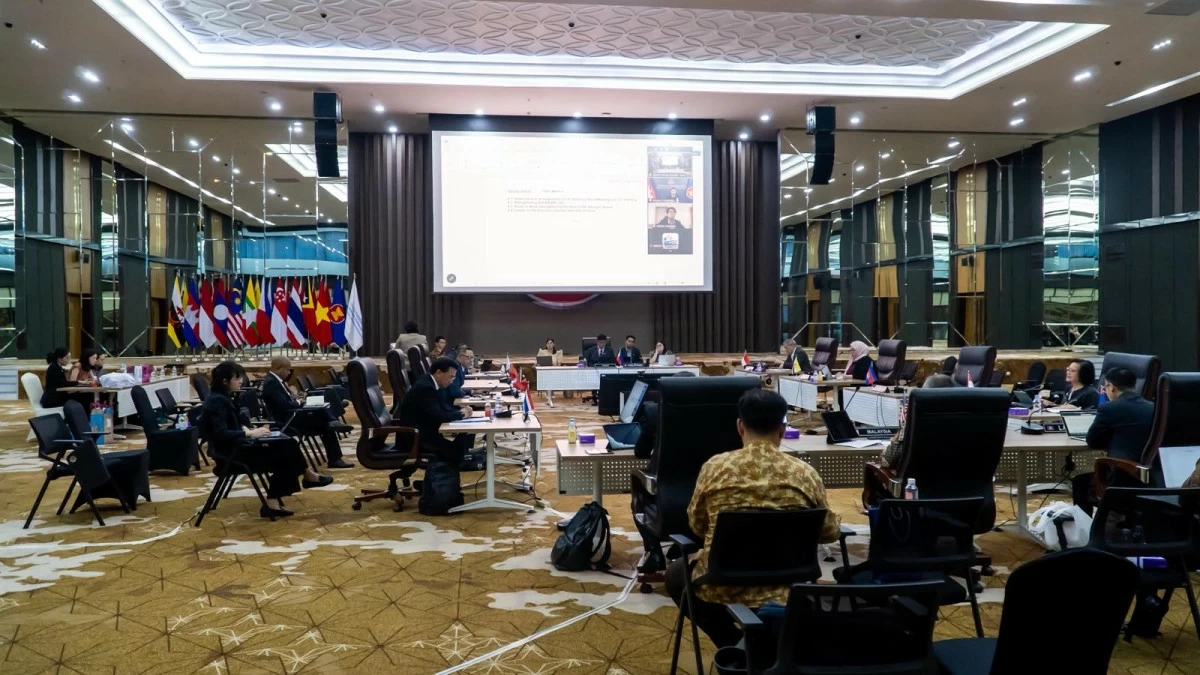
The Philippines, through the Office of the Presidential Adviser on Peace, Reconciliation and Unity (OPAPRU), takes the lead in advancing regional peace efforts as it chaired the 18th meeting of the advisory board of the Association of Southeast Asian Nations (ASEAN) Institute for Peace and Reconciliation (IPR) at the ASEAN headquarters in Jakarta, Indonesia on April 8, 2026. (Photo: OPAPRU)
As tensions in the Middle East, Ukraine, and many parts of the world persist, the Philippines took the lead in advancing regional peace efforts as it chaired the 18th meeting of the advisory board of the Association of Southeast Asian Nations (ASEAN) Institute for Peace and Reconciliation (IPR) at the ASEAN headquarters in Jakarta, Indonesia.
The Office of the Presidential Adviser on Peace, Reconciliation, and Unity (OPAPRU) said the meeting sought to “advance understanding, promote trust, and contribute to a culture of peace” in Southeast Asia and beyond amid global conflicts and rising geopolitical tensions that continue to challenge international dialogue and cooperation.
OPAPRU Executive Director Andres S. Aguinaldo Jr., who also serves as the current chairman of the ASEAN-IPR Advisory Board and executive director of the Philippine Peace Institute (PPI), presided over the meeting and stressed the urgency of dialogue amid rising instability across regions.
“These recent events remind us of the enduring importance of dialogue, restraint, and the peaceful resolution of disputes and threats,” he said.
He added that recent developments “underscore the value of institutions such as ASEAN-IPR in advancing understanding, promoting trust, and contributing to a culture of peace in our region and beyond.”
The ASEAN-IPR, a regional platform under the ASEAN, is mandated to advance research, dialogue, and capacity-building on peace and reconciliation. It operates as a knowledge hub supporting ASEAN’s broader political-security cooperation.
Nine advisory board members attended the Jakarta meeting in person, including Aguinaldo, while two others joined virtually. The participation reflected sustained engagement among ASEAN member states despite differing regional priorities, according to OPAPRU.
During the meeting, the ASEAN board members exchanged views on key priorities and ongoing initiatives, emphasizing the need for ASEAN-IPR to remain responsive to evolving regional dynamics.
The discussions focused on the Institute’s 2026 Annual Work Plan, refinement of priority research areas, and progress in regional partnerships, including the ASEAN Think Tank Dialogue, which aims to strengthen policy exchange among research institutions across Southeast Asia.
Board members emphasized the need for policy-relevant research as they pushed for stronger regional knowledge networks. Expansion of outreach programs to academic institutions was also raised to widen peace education and awareness across the region.
Members further discussed how ASEAN-IPR can strengthen its institutional role as the goal is to support ASEAN’s peace and reconciliation agenda more effectively.
The OPAPRU said that Aguinaldo steered the discussions with emphasis on consensus-building and inclusivity, with an approach presented as aligned with ASEAN’s tradition of quiet diplomacy and cooperation among member states.
The OPAPRU said the meeting was part of Manila’s chairmanship of the ASEAN meetings this year, which carries the “Navigating Our Future, Together.”