ADVERTISEMENT

'Swimming, ano tara?': Kids crowd Manila's free public pools

Published Apr 11, 2026 04:35 pm
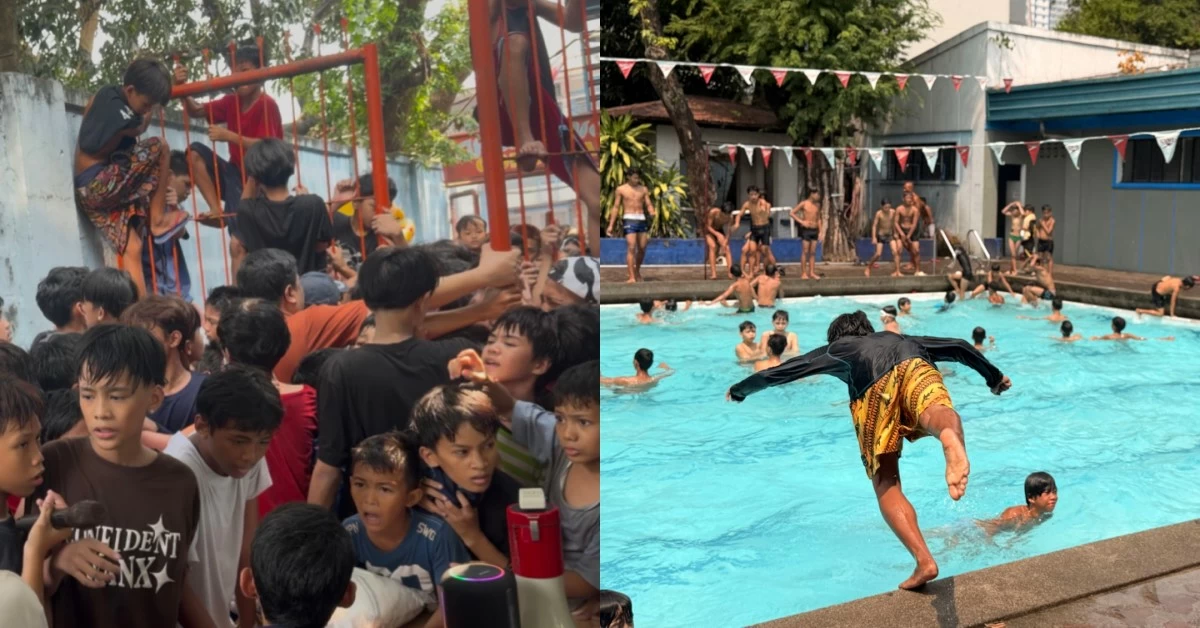
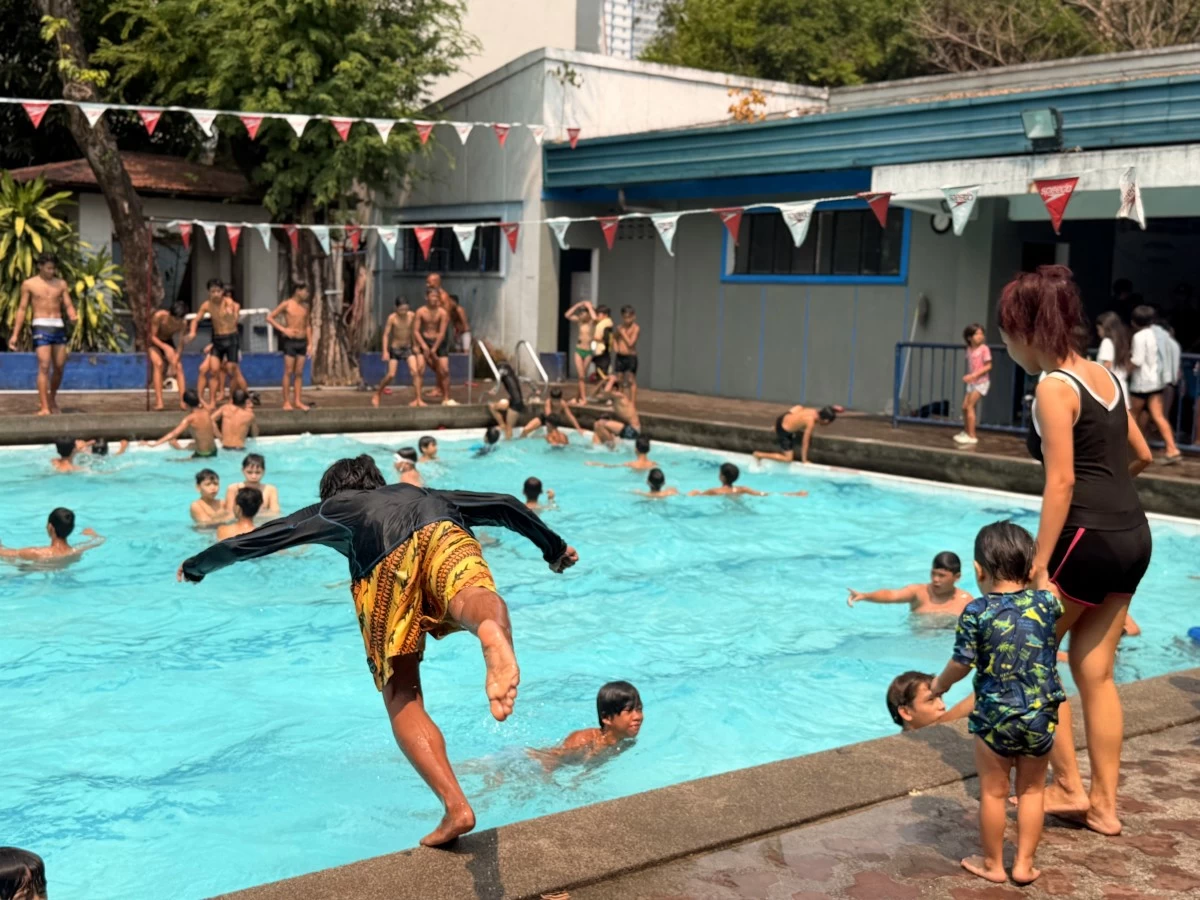
Swimmers dive and splash into the water at the Dapitan Sports Complex, one of six free public pools opened across Manila’s districts, turning peak summer heat into a communal cooling escape.

“Swimming, ano tara?” echoed along the long lines of young swimmers gathered by midmorning on a scorching Saturday, April 11, outside the Dapitan Sports Complex swimming pool in Sampaloc, Manila. The facility -- one of six public swimming pools in the city now open free of charge -- drew both Manila residents and visitors alike, all braving the heat for a chance to cool off.

As staff began opening the gates for the next batch of swimmers, voices quickly rose from the waiting crowd.

“Pasok na! Pasok na!” (Come in! Come in!)
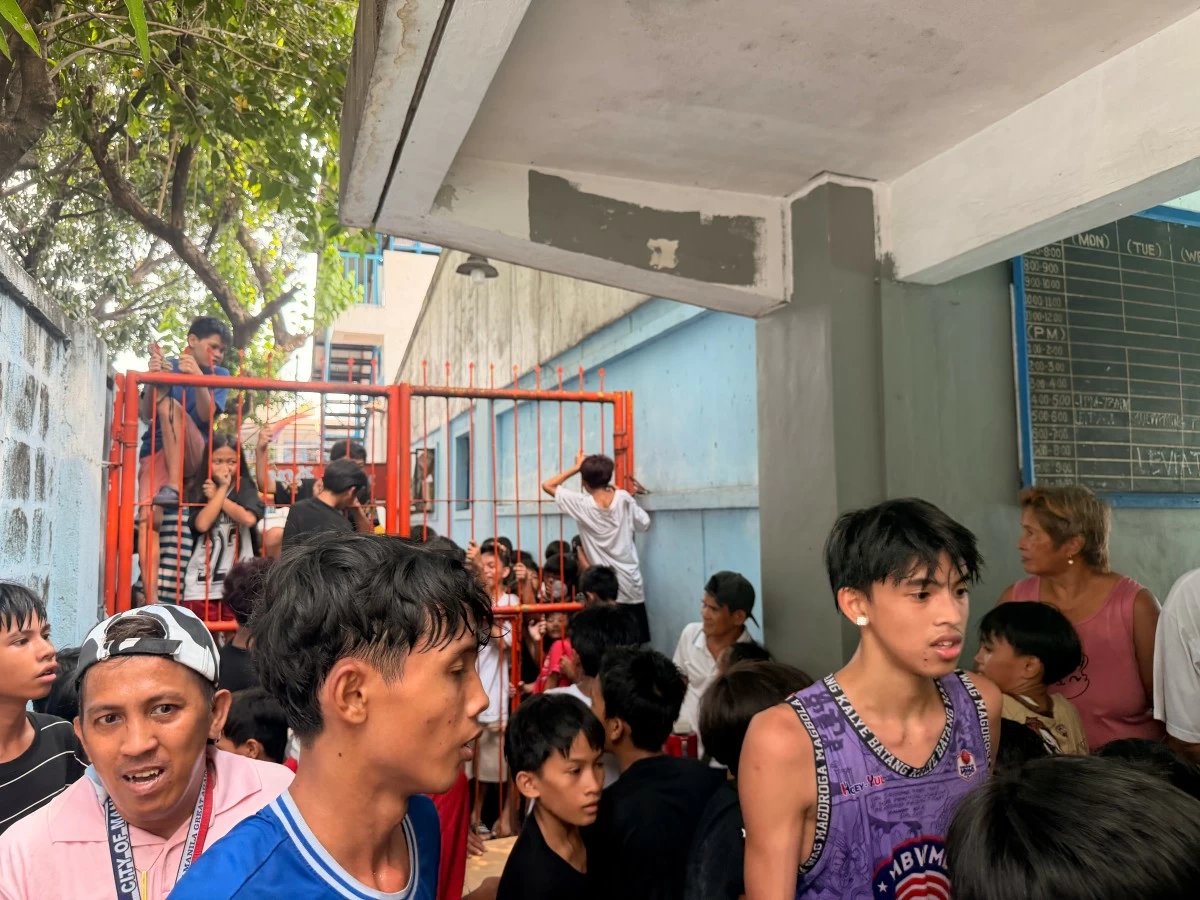
Residents line up early at the Dapitan Sports Complex in Sampaloc, Manila, as crowds grow by midmorning for a chance to enter the city’s free public swimming pool under a batch system.

Dozens of children, most of them minors, many barefoot and clutching towels, floaters, and plastic bags of snacks, pressed forward. Some stood on tiptoe, others squeezed through gaps, all hoping to make it into the next batch allowed inside.

For some Manilenos, this is what summer looks like. Not beach trips or resort bookings, but lining up under the sun for a chance to enter one of Manila’s free public pools.

By 11 a.m., the crowd had already thickened, with the busiest hours stretching into early afternoon. Most were children, some with parents, others in groups of friends, all drawn by the same promise: relief from the heat, free of charge.
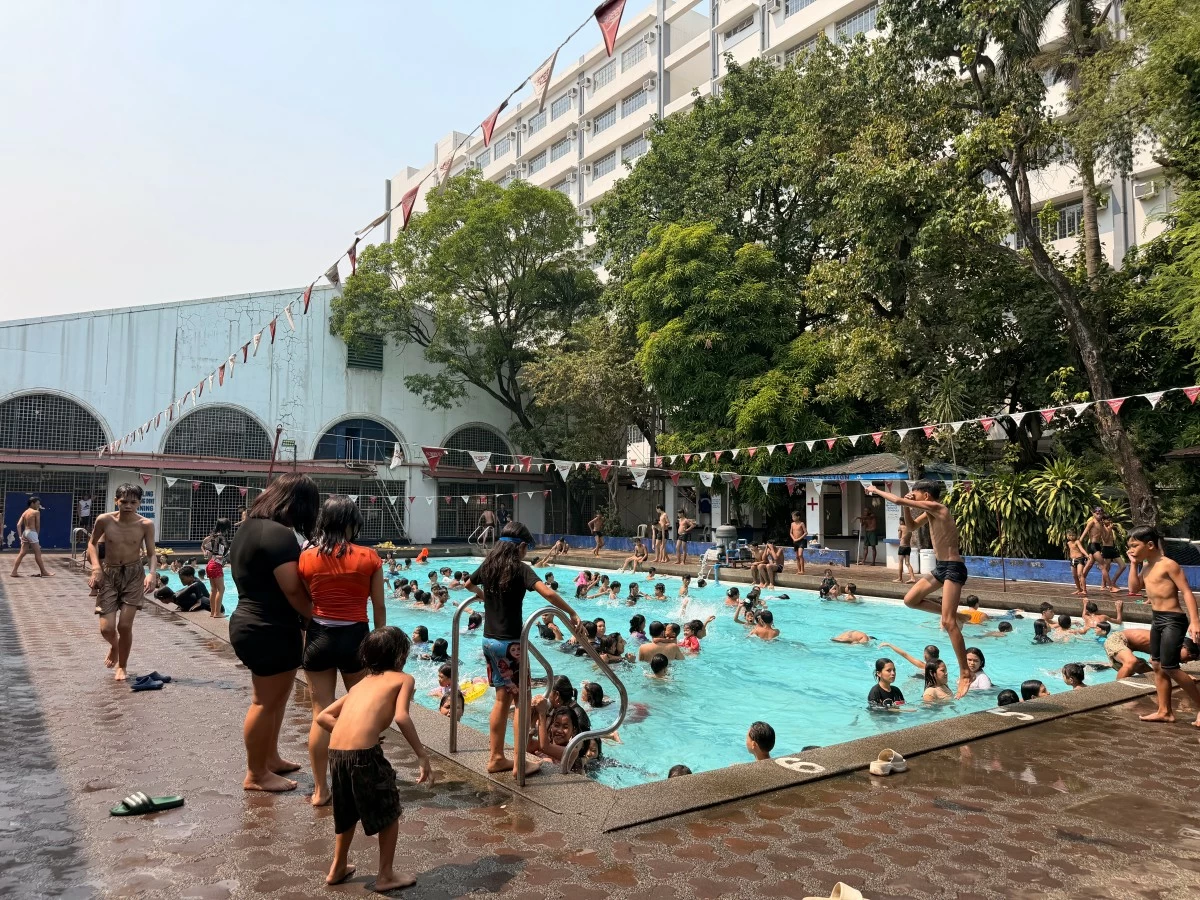
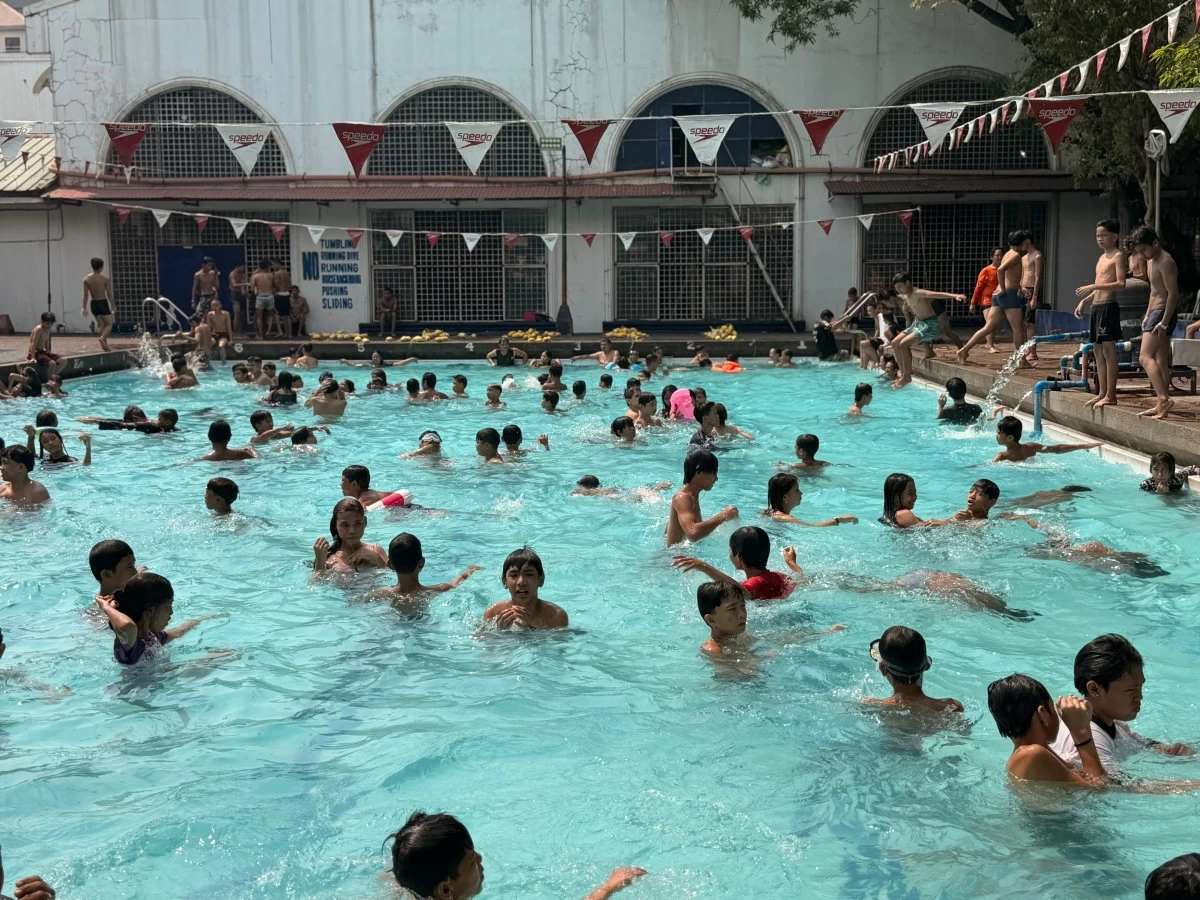
Swimmers enjoy the water at the Dapitan Sports Complex as the city’s free pool program operates on a batch system to manage the growing number of visitors during summer.

Inside the gates, however, time is limited. Pool personnel enforce a per-batch system to manage the volume of swimmers, with two sessions on weekends from 11 a.m. to 1 p.m. and 1 p.m. to 3 p.m., and one session on weekdays. Each batch accommodates around 70 to 80 people at a time, mostly walk-ins with no reservation required.

Once a session ends, whistles blow. Swimmers are asked to exit, and the next group, often waiting for hours, is finally allowed in.

For those who make it, the shift is instant, from heat to water, from waiting to play.

The pool, about four feet deep in some sections, quickly fills with splashing and laughter. Lifeguards remain stationed at the sides, closely monitoring the mostly young crowd.

“Kadalasan talaga marami, lalo tulad ngayon, Sabado (There are usually many, especially like today, Saturday),” said Assistant Lifeguard Axel, 30. 
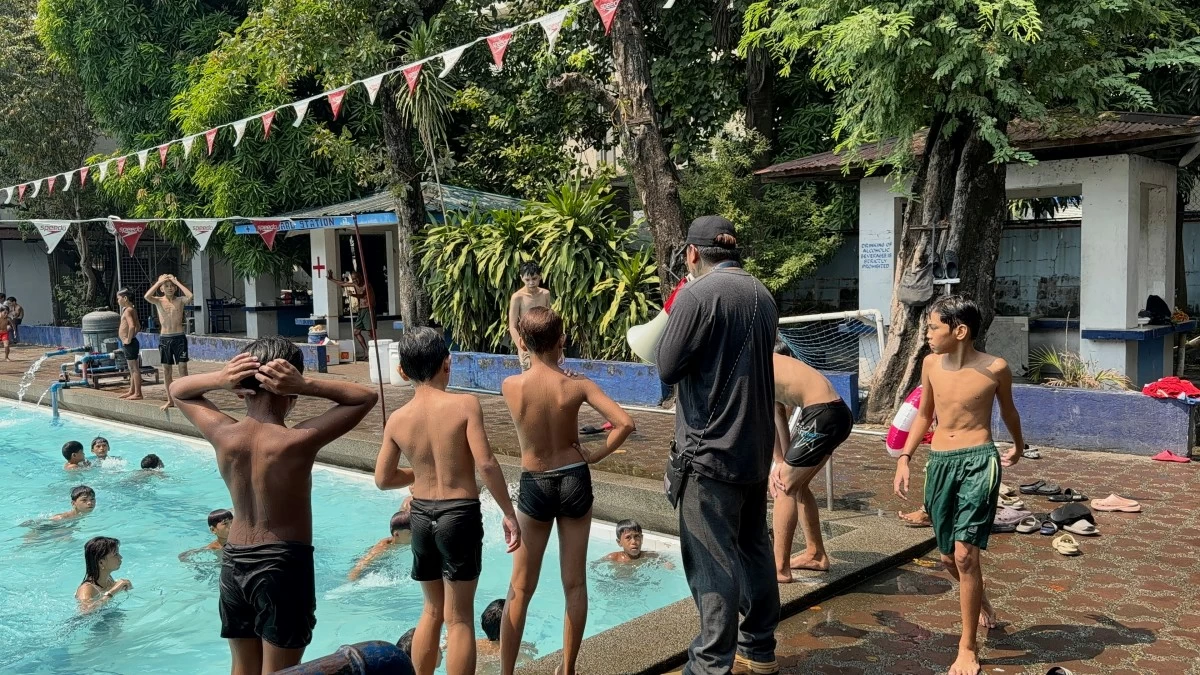
Assistant lifeguard Axel monitors swimmers at the Dapitan Sports Complex in Sampaloc, Manila, reminding visitors to follow safety rules and avoid risky behavior inside the pool area.

He also reminded visitors to follow safety rules while inside the pool.

“Sa mga pupunta po sa Dapitan Sports Complex swimming pool natin, ang kailangan lang po dalhin ay swimming equipment. Swimming lang po at saka maayos na gamit (For those going to the Dapitan Sports Complex swimming pool, you only need to bring proper swimming equipment),” he said. 

“May mga ipinagbabawal po tayong gawin sa pool. Bawal po ang tulakan, bawal ang diving o pagtalon sa pool dahil puwedeng magdulot ng disgrasya (There are prohibited activities in the pool. Pushing and diving or jumping into the pool are not allowed because these can cause accidents)."

Rules are constantly repeated: no running, no rough play, no eating near the pool, shower first, and wear proper swimwear.

“Kapag may nakikitang paglabag, sinasaway agad para maiwasan ang disgrasya (If we see any violations, we immediately call them out to prevent accidents),” he said. 

Excitement, however, often gets the better of the swimmers.

“Dahan dahan lang (Take it easy)," a staff member calls out as another group rushes toward the water.

Outside, the cycle continues as more children arrive and more lines form.

Some families come early, bringing food, extra clothes, and patience. Others take their chances at peak hours, hoping to still get a slot.

A few ask if swimming time can be extended beyond the usual schedule.

But according to personnel, the limited hours are necessary, not just to accommodate more swimmers, but to ensure proper maintenance of the pool.

After each batch, the water undergoes routine cleaning. The pool is vacuumed, filters are checked, and chlorine and tawas are added to keep the water safe for the next group. Tank cleaning is also done regularly as part of sanitation protocols.

With hundreds cycling through daily, maintenance has become as crucial as crowd control.

Authorities have also coordinated with police for assistance in managing the crowd, especially during peak days, according to staff member Mawel Dela Cruz.

Geoff Aaron Rañoco, 16, and Angelo Prudencio, 17, both residents of Sampaloc, take a break after swimming at the Dapitan Sports Complex, saying the free pool access is “worth it” despite long queues.

Most swimmers are residents of Sampaloc, though the pool remains open to everyone, including non- Manila residents.

For Angelo, 17, and Geoff, 16, both residents of Sampaloc who came with three of their friends, the long wait is nothing new.

“Worth it naman po 'yung pila, kasi libre naman po (The wait is worth it because it’s free),” Angelo said. 

“Masaya po kasi marami pong tao. Naibalik na po ‘yong libreng swimming pool ni Mayor Isko (It’s fun because there are many people. The free swimming pool of Mayor Isko has been brought back),” he  added.

Because for them, two hours is enough. Enough to cool off. Enough to laugh. Enough to turn a hot, crowded Saturday into something worth lining up for.
 

Related Tags

METRONEWS Manila summer Isko Moreno dapitan street SAMPALOC MANILA
ADVERTISEMENT
.most-popular .layout-ratio{ padding-bottom: 79.13%; } @media (min-width: 768px) and (max-width: 1024px) { .widget-title { font-size: 15px !important; } }

{{ articles_filter_1561_widget.title }}

.most-popular .layout-ratio{ padding-bottom: 79.13%; } @media (min-width: 768px) and (max-width: 1024px) { .widget-title { font-size: 15px !important; } }

{{ articles_filter_1562_widget.title }}

.most-popular .layout-ratio{ padding-bottom: 79.13%; } @media (min-width: 768px) and (max-width: 1024px) { .widget-title { font-size: 15px !important; } }

{{ articles_filter_1563_widget.title }}

{{ articles_filter_1564_widget.title }}

.mb-article-details { position: relative; } .mb-article-details .article-body-preview, .mb-article-details .article-body-summary{ font-size: 17px; line-height: 30px; font-family: "Libre Caslon Text", serif; color: #000; } .mb-article-details .article-body-preview iframe , .mb-article-details .article-body-summary iframe{ width: 100%; margin: auto; } .read-more-background { background: linear-gradient(180deg, color(display-p3 1.000 1.000 1.000 / 0) 13.75%, color(display-p3 1.000 1.000 1.000 / 0.8) 30.79%, color(display-p3 1.000 1.000 1.000) 72.5%); position: absolute; height: 200px; width: 100%; bottom: 0; display: flex; justify-content: center; align-items: center; padding: 0; } .read-more-background a{ color: #000; } .read-more-btn { padding: 17px 45px; font-family: Inter; font-weight: 700; font-size: 18px; line-height: 16px; text-align: center; vertical-align: middle; border: 1px solid black; background-color: white; } .hidden { display: none; }
function initializeAllSwipers() { // Get all hidden inputs with cms_article_id document.querySelectorAll('[id^="cms_article_id_"]').forEach(function (input) { const cmsArticleId = input.value; const articleSelector = '#article-' + cmsArticleId + ' .body_images'; const swiperElement = document.querySelector(articleSelector); if (swiperElement && !swiperElement.classList.contains('swiper-initialized')) { new Swiper(articleSelector, { loop: true, pagination: false, navigation: { nextEl: '#article-' + cmsArticleId + ' .swiper-button-next', prevEl: '#article-' + cmsArticleId + ' .swiper-button-prev', }, }); } }); } setTimeout(initializeAllSwipers, 3000); const intersectionObserver = new IntersectionObserver( (entries) => { entries.forEach((entry) => { if (entry.isIntersecting) { const newUrl = entry.target.getAttribute("data-url"); if (newUrl) { history.pushState(null, null, newUrl); let article = entry.target; // Extract metadata const author = article.querySelector('.author-section').textContent.replace('By', '').trim(); const section = article.querySelector('.section-info ').textContent.replace(' ', ' '); const title = article.querySelector('.article-title h1').textContent; // Parse URL for Chartbeat path format const parsedUrl = new URL(newUrl, window.location.origin); const cleanUrl = parsedUrl.host + parsedUrl.pathname; // Update Chartbeat configuration if (typeof window._sf_async_config !== 'undefined') { window._sf_async_config.path = cleanUrl; window._sf_async_config.sections = section; window._sf_async_config.authors = author; } // Track virtual page view with Chartbeat if (typeof pSUPERFLY !== 'undefined' && typeof pSUPERFLY.virtualPage === 'function') { try { pSUPERFLY.virtualPage({ path: cleanUrl, title: title, sections: section, authors: author }); } catch (error) { console.error('ping error', error); } } // Optional: Update document title if (title && title !== document.title) { document.title = title; } } } }); }, { threshold: 0.1 } ); function showArticleBody(button) { const article = button.closest("article"); const summary = article.querySelector(".article-body-summary"); const body = article.querySelector(".article-body-preview"); const readMoreSection = article.querySelector(".read-more-background"); // Hide summary and read-more section summary.style.display = "none"; readMoreSection.style.display = "none"; // Show the full article body body.classList.remove("hidden"); } document.addEventListener("DOMContentLoaded", () => { let loadCount = 0; // Track how many times articles are loaded const offset = [1, 2, 3, 4, 5, 6, 7, 8, 9, 10]; // Offset values const currentUrl = window.location.pathname.substring(1); let isLoading = false; // Prevent multiple calls if (!currentUrl) { console.log("Current URL is invalid."); return; } const sentinel = document.getElementById("load-more-sentinel"); if (!sentinel) { console.log("Sentinel element not found."); return; } function isSentinelVisible() { const rect = sentinel.getBoundingClientRect(); return ( rect.top < window.innerHeight && rect.bottom >= 0 ); } function onScroll() { if (isLoading) return; if (isSentinelVisible()) { if (loadCount >= offset.length) { console.log("Maximum load attempts reached."); window.removeEventListener("scroll", onScroll); return; } isLoading = true; const currentOffset = offset[loadCount]; window.loadMoreItems().then(() => { let article = document.querySelector('#widget_1690 > div:nth-last-of-type(2) article'); intersectionObserver.observe(article) loadCount++; }).catch(error => { console.error("Error loading more items:", error); }).finally(() => { isLoading = false; }); } } window.addEventListener("scroll", onScroll); });

Sign up by email to receive news.