






Manila Bulletin
 Philippines
National
Mikee Romero makes history with Army Aviation Service Insignia conferment
Philippines
National
Mikee Romero makes history with Army Aviation Service Insignia conferment
Philippines
National
Mikee Romero makes history with Army Aviation Service Insignia conferment
Mikee Romero makes history with Army Aviation Service Insignia conferment
Published Apr 11, 2026 08:54 am


At A Glance
- Former House Deputy Speaker Mikee Romero recently made his history by receiving an honorary Army Aviation Service Insignia.
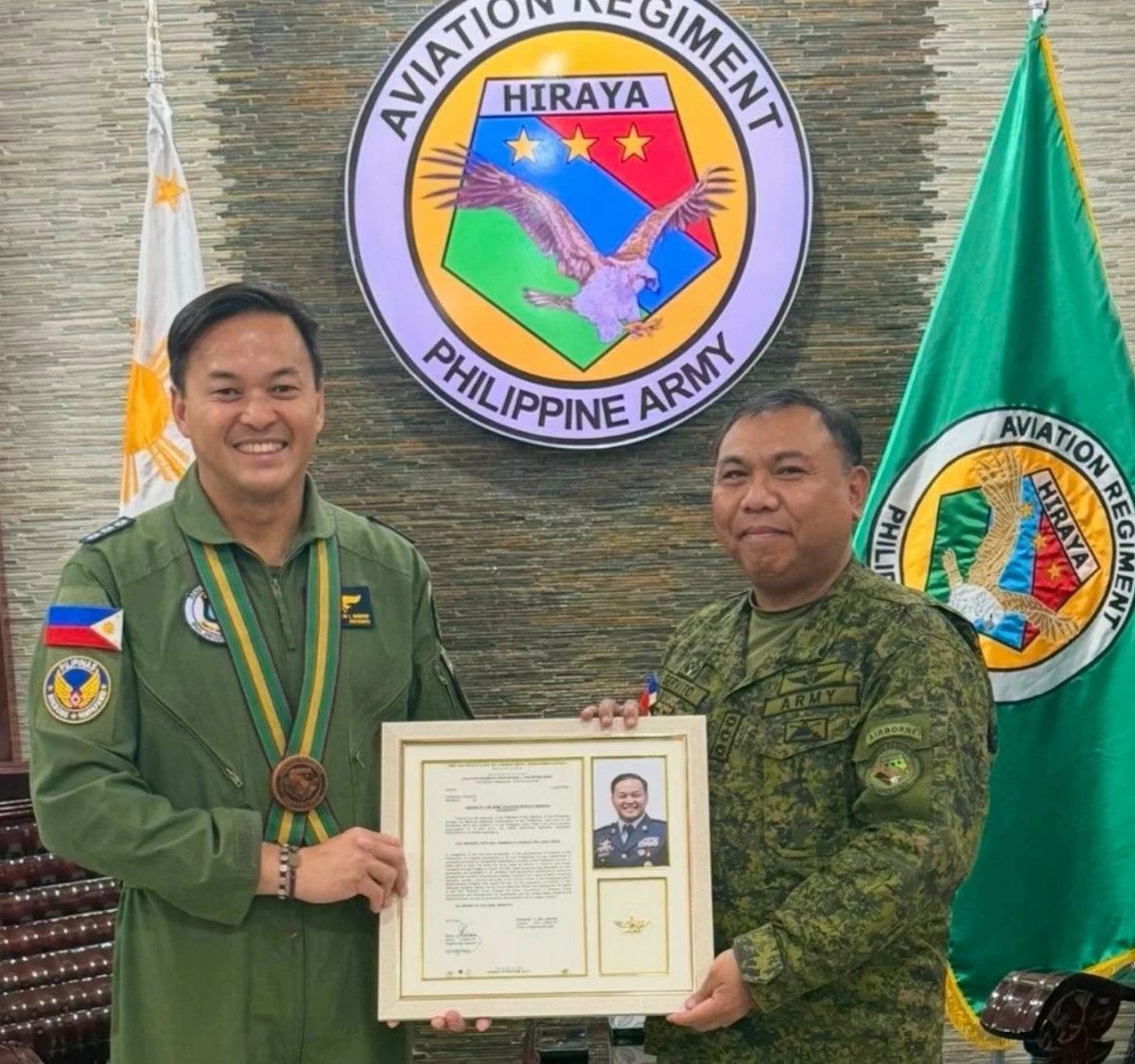
Former House Deputy Speaker Col. Mikee Romero (left), Philippine Army Aviation Regiment commander Col. Richard Severito (Contributed photo)
Former House Deputy Speaker Mikee Romero recently made his history by receiving an honorary Army Aviation Service Insignia.
Romero, a Civil Aviation Authority of the Philippines (CAAP)-rated helicopter pilot and three-term congessman under 1-Pacman Party-list, is the first recipient of the insignia outside the Philippine Army.
The conferment was formally approved by LTGen Antonio Nafarrete, commanding general of the Philippine Army, and presented by Colonel Richard Servito, commander of the Philippine Army Aviation Regiment.
Romero, a reservist colonel, earned this distinction through his contributions as a former legislator, where he strongly supported the Armed Forces of the Philippines (AFP) Modernization Program, particularly advocating for the acquisition of C-130 Hercules aircraft,
He said this move enhanced strategic airlift, disaster response, and humanitarian operations.
As the majority owner of AirAsia Philippines from 2010 to 2023, Romero also played a crucial role during the Covid-19 pandemic (2020–2022), as he helped provide free aircraft to the Philippines and the AFP to transport troops, vaccines, test kits, and medicines nationwide.
With this honor, Romero will now be part of the Philippine Army’s history, recognized not only for his leadership and service but also for bridging civilian aviation and national defense.
Meanwhile, in another historic milestone for military aviation, President Marcos approved the official insignia wings of the Philippine Army Aviation Regiment, and in turned established a defining symbol of excellence and identity for army aviators.
To ensure its historical and cultural significance, the design of the insignia was formally approved by the National Historical Commission of the Philippines (NHCP).