






Manila Bulletin
 Philippines
National
DepEd rolls out orientations for shift to three-term school calendar
Philippines
National
DepEd rolls out orientations for shift to three-term school calendar
Philippines
National
DepEd rolls out orientations for shift to three-term school calendar
DepEd rolls out orientations for shift to three-term school calendar
By Dhel Nazario
Published Apr 11, 2026 11:01 am
|
Updated Apr 11, 2026 04:15 pm


Schools nationwide are being prepared for a shift to a three-term school calendar in School Year 2026–2027, as the Department of Education (DepEd) begins a series of orientation sessions for teachers and school leaders.
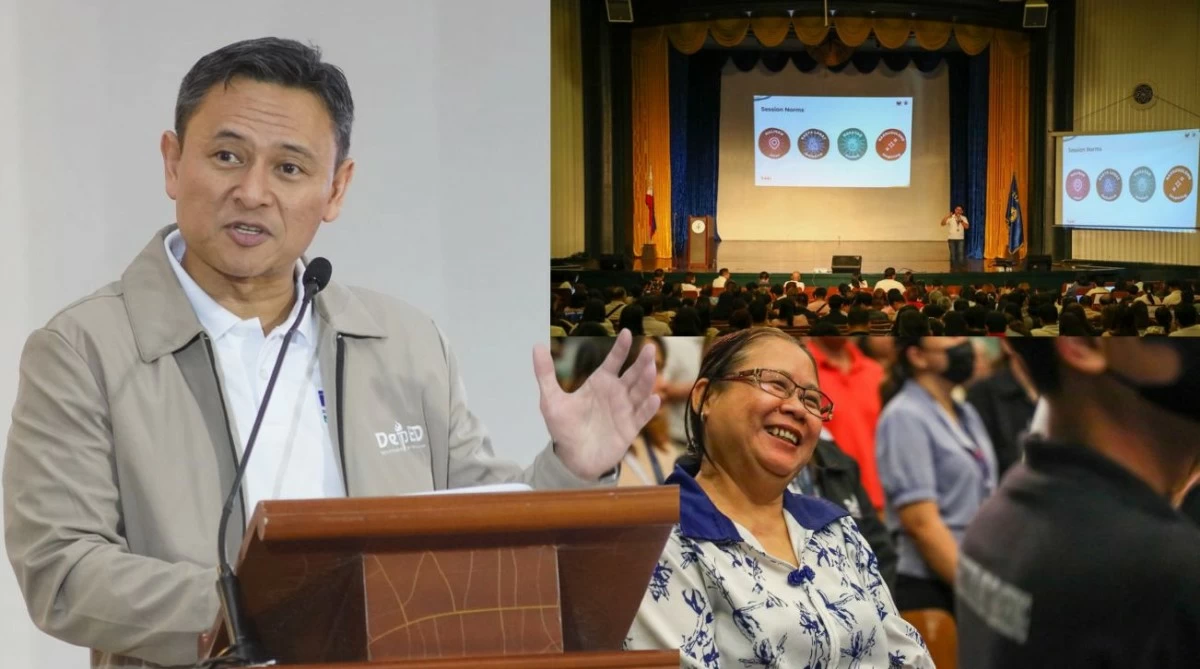
(Photo from DepEd)
The rollout, conducted for school leaders and teachers across the country, aims to support the implementation of key learning system reforms while helping schools prepare early for the upcoming changes.
The initiative follows the directive of DepEd Secretary Sonny Angara to ensure that school officials and teachers clearly understand the new policies as preparations for the next school year begin.
According to Angara, the orientations are intended to provide clear guidance and ensure that the transition to the new school calendar and other reforms is well-supported.
“Magiging matagumpay lamang ang mga repormang ito kung lubos na mauunawaan ng ating mga guro at school leaders kung paano ito ipatutupad sa aktuwal na sitwasyon (These reforms will only succeed if our teachers and school leaders fully understand how to implement them in actual situations),” Angara said.
“Sa pamamagitan ng mga orientation na ito, nais nating matiyak na handa at suportado ang ating mga paaralan para sa darating na school year (Through these orientations, we aim to ensure that our schools are ready and well-supported for the upcoming school year),” he added.
One of the initial sessions was held on April 8 at Miriam College in Quezon City, where education officials and stakeholders discussed reforms under DepEd’s Learning Systems strand.
“These policies aim for a humane system for teachers, learners, families that protects the conditions for real learning to happen,” Assistant Secretary for Learning Systems Jerome Buenviaje said.
Among the key topics discussed were the three-term school calendar, revised classroom assessment and grading guidelines, and the strengthened Senior High School curriculum. Flexible learning programs, learning continuity during emergencies, work immersion and off-campus learning for Senior High School students, and updated lesson planning guidelines were also tackled.
These reforms form part of DepEd’s broader effort to improve the quality of basic education, strengthen instructional planning, and better support schools in implementing the K to 12 curriculum.
The orientations will continue nationwide, starting with regional and division officials and school heads who will help cascade the reforms to their respective schools.
Sessions for master teachers and classroom teachers are scheduled in May. DepEd also emphasized that teachers are not required to report during their 30-day break this April.
According to DepEd, the phased orientation approach is designed to help schools prepare in advance while minimizing disruptions to teaching and learning.