






 Business
The Economy
Remolona signals lower BSP forex intervention threshold as inflation risks evolve
Business
The Economy
Remolona signals lower BSP forex intervention threshold as inflation risks evolve
Remolona signals lower BSP forex intervention threshold as inflation risks evolve
By Derco Rosal


At A Glance
- While the Bangko Sentral ng Pilipinas (BSP) remains firm on only intervening in the foreign exchange (forex) market when it becomes inflationary, its chief revealed that this threshold has been lowered, citing the central bank's credibility.
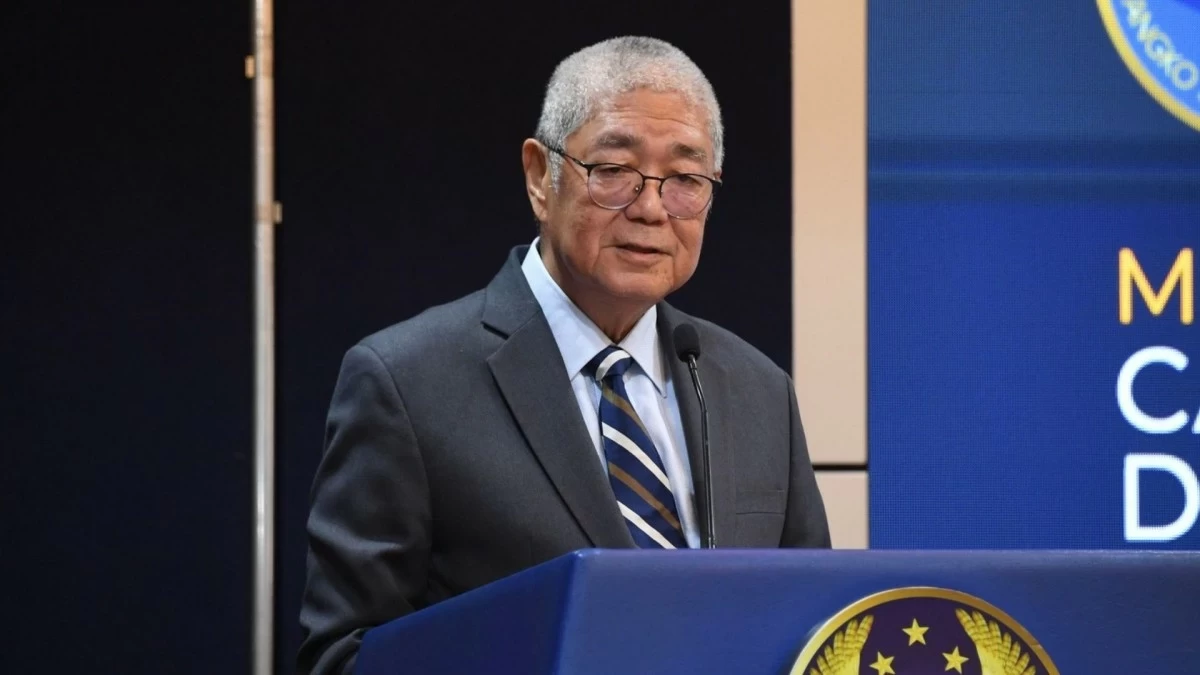
While the Bangko Sentral ng Pilipinas (BSP) remains firm on intervening in the foreign exchange (forex) market only when it becomes inflationary, its chief said this threshold has been lowered, citing the central bank’s credibility.
BSP Governor Eli M. Remolona Jr. told CNBC on Friday, April 10, that the central bank maintains a certain threshold for gauging the scale of peso depreciation before it steps in to calm wild swings.
“Depreciation of the peso doesn’t always lead to inflation. It has to depreciate sharply enough for it to be inflationary—but that threshold has become lower than before. I would attribute that to increased credibility of the BSP,” Remolona said.
Meanwhile, Remolona said the BSP is closely monitoring the eventual spillover of energy shocks to private consumption. This is consistent with the principle that interest rate adjustments are only a potent response when inflation risks are demand-driven.
“We usually weaken demand by tightening monetary policy. That would have a limited effect in the face of a supply shock. So we are waiting for spillover effects on demand. When those effects appear, we can act on policy,” Remolona said.
He added that the central bank could anticipate when the spillover effects would appear, which would then prompt policy action. Last month, the policy-setting Monetary Board (MB) opted to keep the 4.25-percent benchmark rate unchanged during an off-cycle meeting amid well-anchored inflation expectations.
While the current crisis is reminiscent of 2022, during the tail-end of the Covid-19 pandemic when Russia invaded Ukraine and also caused global energy price spikes, Remolona said: “The sense of uncertainty is bigger now than before,” noting that the transmission of second-round effects of oil inflation could be quicker.
He stressed that a “more aggressive” policy tightening would occur when inflation expectations de-anchor. This means the market and the public no longer believe inflation can return to normal levels in the near term.