






 Business
Trade & Industry
Philippines to benefit from $35-million US agricultural aid
Business
Trade & Industry
Philippines to benefit from $35-million US agricultural aid
Philippines to benefit from $35-million US agricultural aid


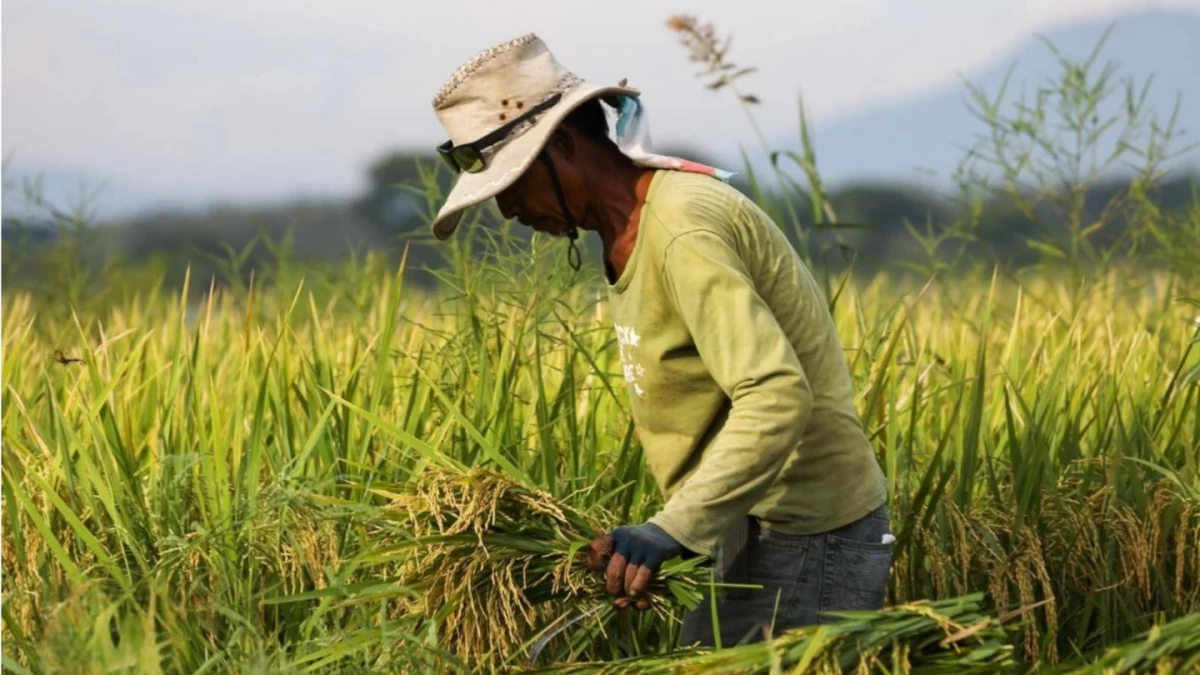
The Philippines is expected to benefit from agricultural programs worth up to $35 million from the United States (US) after being identified as one of the priority countries for this year’s Food for Progress (FFPr) program, marking the first time in seven years.
In an April 9 notice, the US Department of Agriculture (USDA) identified the Philippines as one of seven countries that will be prioritized under the program’s funding, which is expected to exceed $200 million.
Implemented by the USDA’s Foreign Agricultural Service (FAS), FFPr aims to improve agricultural productivity and expand trade in agricultural commodities in developing countries.
“These objectives work to enhance the competitiveness of American agricultural markets while promoting private sector engagement and encouraging innovation in emerging markets,” the USDA said.
Under this program, FAS enters into cooperative agreements with eligible organizations to implement field-based projects in partner countries.
Such projects are designed to support the agricultural, economic, and infrastructure development of partner countries, ultimately enhancing economic growth and strengthening trade opportunities for the US.
These projects are primarily funded through the sale of US agricultural commodities in the markets where they are implemented.
For the year, the USDA plans to award up to $226 million in new cooperative agreements to organizations for projects with a five-year lifespan, ranging from $28 million to $35 million each.
Organizations eligible to apply for and implement these projects include foreign governments, intergovernmental organizations, private voluntary organizations, cooperatives, and non-governmental organizations (NGOs).
Colleges and universities, including land-grant institutions, are also eligible to apply for the program, the USDA said.
The Philippines was last identified as a priority country for FFPr in 2019, with US-based nonprofit organization Winrock International tapped to implement programs in the country.
USDA data showed that Winrock was awarded a grant of $13.3 million for initiatives benefiting over 25,000 Filipinos.
Based on its website, one of Winrock’s projects is an $8.5-million program aimed at strengthening the country’s sanitary and phytosanitary (SPS) regulatory systems through the adoption of risk-based international standards to facilitate trade.
Beyond the Philippines, projects under FFPr have trained farmers in animal and plant health, improved farming methods, developed road and utility systems, established producer cooperatives, provided microcredit, and strengthened agricultural value chains.
Priority countries for this year’s FFPr also include Thailand, Bangladesh, Bolivia, Ecuador, Morocco, and Sri Lanka.