







Obsessive and dead bodies
Published Apr 10, 2026 11:09 pm


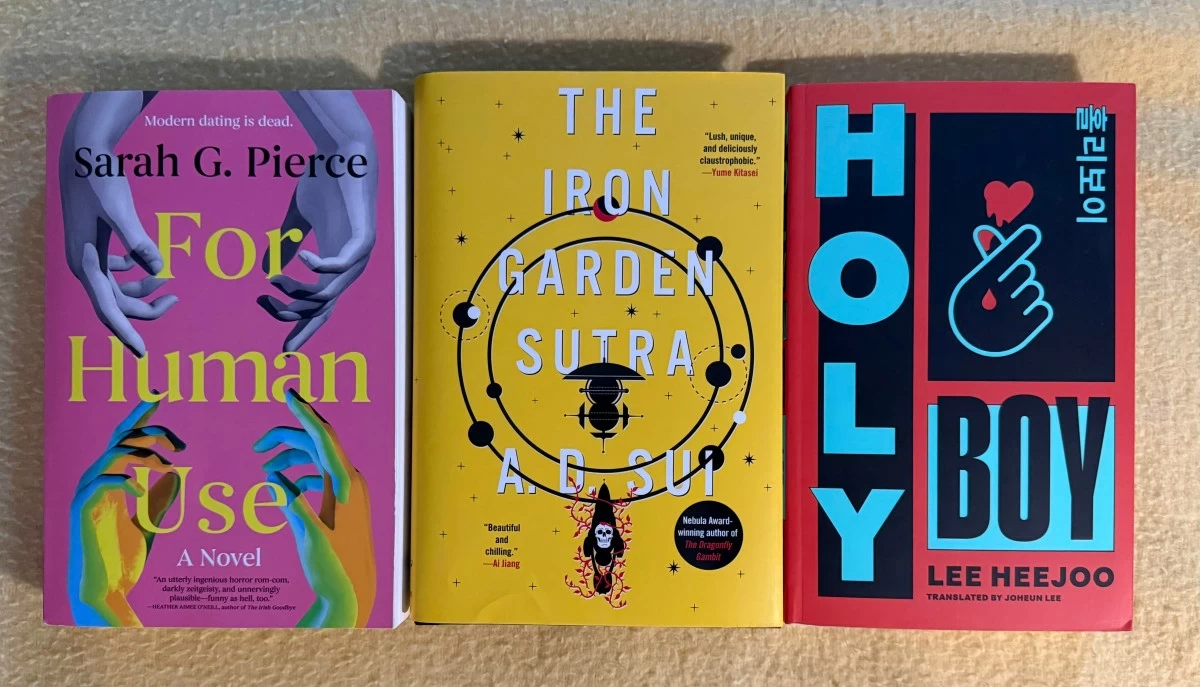
Novels that deal with the obsessive behavior of fans today, or satirize dating apps and the corporate world of angel investing. Plus a SciFi work that features a ‘death monk’, and a ghost starship.
"For Human Use" by Sarah G. Pierce
A penetrating satire on venture capitalism, on dating apps, and the influencer culture that permeates society and social media today, this is very much a novel of the present times. First, there’s Auden White, Founder of LIV, a start-up dating app that matches people with dead bodies, predicated on the premise that in this era of disconnection, a corpse is a more stable partner than a live person. With a user base that’s growing exponentially, it's left to Tom Williamson, who works in a highly regarded Angel Investor firm, to voice the doubts about backing LIV. And the third main character is Mara Reed, stepsister of Auden, and a girlfriend to the superstar Founder. It's a complicated relationship, as it would seem Mara had something with Auden’s father, before he passed away, after Mara’s mother had disappeared. That Tom is attracted to Mara just makes the possible scenarios even more explosive.
It is Mara who knows Auden’s deepest secrets and obsessions. As she embarks on a relationship with Tom, it becomes a matter of whether she is even capable of entering such a relationship or whether what she has gone through in her past, and with Auden, has severely compromised her capability of doing so. There is both horror and humor in this fast-paced narrative that can never be accused of dealing in half-measures. That the society depicted would even seriously consider the app that Auden proposes is a scathing commentary on where we are heading in terms of bonding with other individuals, what our demands and expectations consist of. Then there are the pages devoted to Tom and Kane Capital, where he works. How the prospects of making a ton of money will easily trigger corporate overreach and lead to turning a blind eye to whatever moral implications may arise. It's refreshing to be led by Pierce in her debut novel and explore this near-future that could be all too possible,
"The Iron Garden Sutra" by A. D. Sui
This gripping SciFi novel answers the question of what would happen if your locked room mystery was set in an ancient spaceship, and you placed a death monk named Vessel Iris, and a group of academics in a situation where someone or something primeval is possibly stalking them on this first-generation starship. The Council of Nicaea has suddenly appeared after more than a thousand years of being lost. So Vessel Iris is dispatched with its AI counterpart VIFAI (Vessel Iris Friendly AI) to perform death ceremonies on the remains and skeletons of the Nicaea crew members. Upon his arrival, a group of academics is already installed on the ship, conducting research. While they initially think they’re on the ship doing their work, it’s soon apparent that there’s a force that exists on the starship, and they are essentially trapped, unable to even make contact with the world outside the vessel.
At once a space opera, a locked room mystery, and a horror story, there is much to admire in the novel and its taut narrative. There’s even a slow-burning tender romance that you may not see coming right away. Seemingly devoted to the Starlit Order, Vessel Iris and his VIFAI make for a compelling duo, more partnership than mere service arrangement. Among the group of academics, it’s Engineer Yan who’s the most intriguing. He’s driven for knowledge and sees the foray in the starship as an opportunity to further his career, but always looking out for the others on the team, as he feels he’s responsible for their safety and getting home. Also of great interest, given the furor and discussion over AI today, is this interconnection between Iris and VIFAI, where the interface between human and AI is more symbiotic and with a respect for each other, rather than one that is adversarial or has been imposed on the human. It’s an integration that’s creatively described and depicted.
"Holy Boy" by Lee Heejoo
Sasaeng is the Korean term used to describe K-Pop fans who get obsessed and proceed to stalk and violate the privacy of their music idols. Holy Boy is a visceral satire that explores this phenomenon of sasaeng fan culture and takes it to extremes that both disturb and enchant us, as readers. It’s much like a bad car accident on the highway that we can’t turn our eyes away from. Here, the K-Pop Idol is Yosep, and he’s been kidnapped by four women, each with their own back story as to why the very personal interest in Yosep, and their ‘claim’ on him. There are Ahnna, a rich matron, Mihee, a young, pretty fan, Nami, a wondering soul who does readings, and Heeae, an older woman with a dark, maternal secret. Yosep himself has a unique story to his rise to fame, and how, in some way or manner, he does have a connection, no matter if only tenuous, to these four individuals.
What the four ladies are ready to do to achieve their quest will surprise and shock us. Not content with a poster on the wall of their idol, they justify their criminal actions by believing they are on a mission to free Yosep from the shackles of fame. And when I say actions, it's because, beyond the kidnapping, what transpires to the four while they’re holed up in a creepy mansion will keep you turning the pages to discover what fresh horror awaits. The mansion is like a Korean mountaintop version of the hotel in The Shining, set in a coastal town. There’s strong local color in the pages, as we meet the town’s police force. And there’s the Management than of Yosep, stumped by his disappearance and doing damage control. Unhinged, macabre, this is an exploration of the dark side of devotion that leaves many questions unanswered, as leftover food for thought. Disturbing, and what a compelling read.