ADVERTISEMENT

Moderate oil price hikes, temper profit

Published Apr 10, 2026 12:05 am  |  Updated Apr 10, 2026 02:38 pm
In the Philippine context, fuel is a foundational input that underpins transportation, food production, and the delivery of essential services. Consequently, any sustained increase in fuel prices exerts immediate and far-reaching pressure on household expenditures and business operations.
This is why at a time when global oil volatility continues to strain domestic markets, the role of major industry players warrants closer scrutiny, not only in terms of financial performance, but also in their broader social obligations.
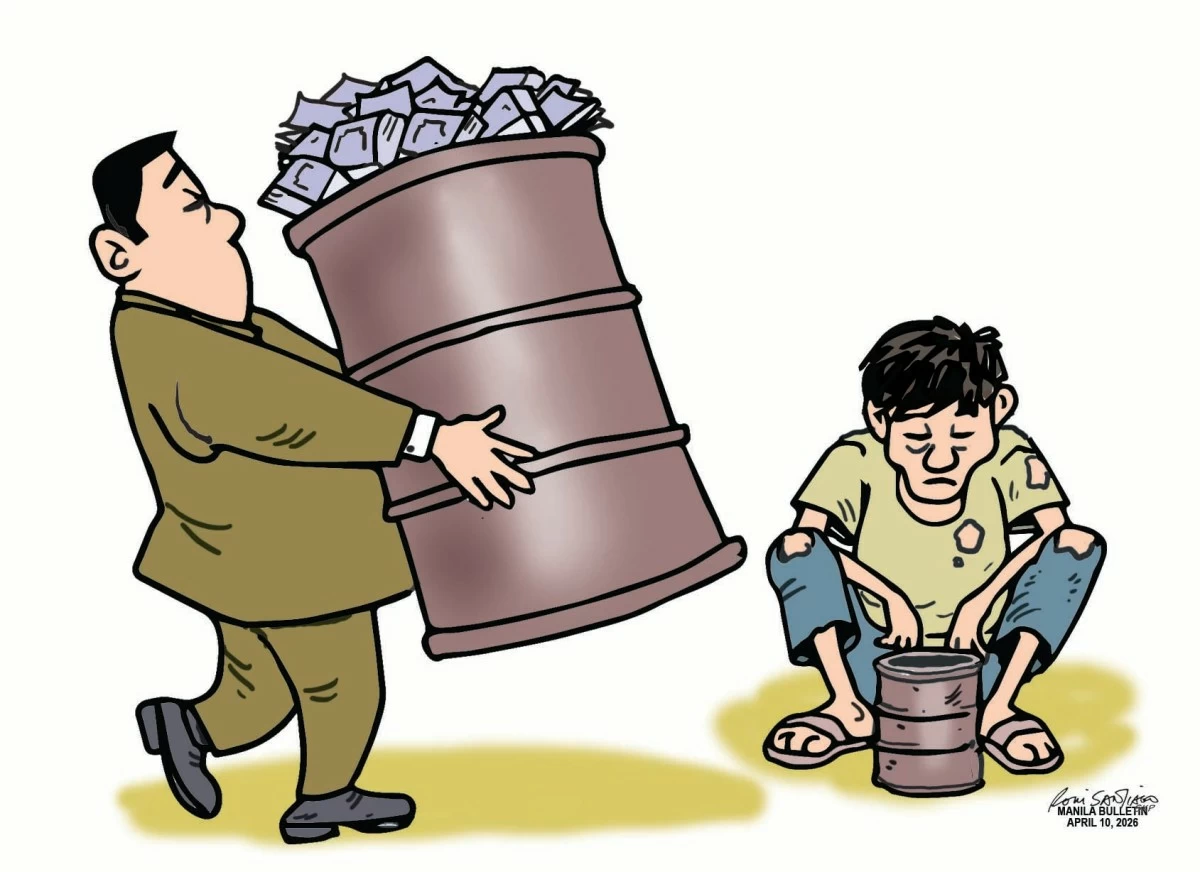
Recent disclosures underscore the robust financial standing of leading oil firms such as Petron Corporation and Shell Pilipinas. Petron reported a net income of ₱15.6 billion in 2025, representing an 84 percent increase from the previous year’s ₱8.5 billion. Meanwhile, Shell Pilipinas recorded earnings of ₱2.5 billion and a net income of ₱1.3 billion, reflecting steady year-on-year growth. These figures indicate not only resilience but also a significant capacity to absorb temporary economic pressures.
Such capacity calls for a corresponding degree of responsibility. In periods of economic strain, it is both reasonable and necessary to expect that corporations benefiting from favorable financial outcomes exercise prudence in passing on additional costs to consumers. Don’t get us wrong. This is not a call for the abandonment of profitability, but rather for a calibrated approach to pricing that recognizes the disproportionate impact of fuel costs on the broader population.
Notably, several manufacturers of basic necessities and prime commodities have already adopted this approach. Despite facing increased input and logistical expenses, they have chosen to defer price adjustments or implement only minimal increases. Their actions reflect an understanding that maintaining affordability for consumers contributes to overall economic stability, which ultimately benefits all sectors, including their own.
A similar approach within the oil industry would yield substantial and immediate benefits. By moderating or temporarily suspending price increases, fuel companies can help stabilize transportation costs, mitigate upward pressure on food prices, and provide relief to small and medium-sized enterprises. For ordinary Filipino households, many of which allocate a significant portion of their income to essential goods, such measures would offer meaningful financial respite. To underscore the impact of high fuel prices, some jeepney drivers have already opted to stop plying their routes as it is no longer feasible to do so.
Moreover, the adoption of pricing restraint aligns with the enduring Filipino value of bayanihan, or collective solidarity. In practical terms, this principle underscores the importance of shared sacrifice during periods of national difficulty. When large corporations demonstrate a willingness to temper profit-driven decisions in favor of public welfare, they contribute not only to economic relief but also to the strengthening of social trust and institutional credibility.
It is acknowledged that pricing decisions are influenced by market dynamics, including global supply conditions and currency fluctuations. However, markets function within a societal framework, and their sustainability depends on the capacity of individuals and businesses to participate effectively. A narrowly defined adherence to market mechanisms, absent consideration of social impact, risks exacerbating inequality and undermining long-term economic resilience.
The present circumstances, therefore, present a critical juncture. Oil companies are in a position to act not solely as commercial entities, but as stakeholders in national development. By exercising restraint in fuel pricing, whether through delaying increases or limiting them to the minimum necessary, they can play a decisive role in alleviating the economic burden faced by millions of Filipinos.
Ultimately, corporate success must be evaluated not only by financial metrics, but also by responsiveness to the needs of society during periods of hardship. In this regard, the expectation is neither extraordinary nor unreasonable. It is, rather, a measured appeal for balance: between profit and purpose, and between corporate gain and collective welfare.
ADVERTISEMENT
.most-popular .layout-ratio{ padding-bottom: 79.13%; } @media (min-width: 768px) and (max-width: 1024px) { .widget-title { font-size: 15px !important; } }

{{ articles_filter_1561_widget.title }}

.most-popular .layout-ratio{ padding-bottom: 79.13%; } @media (min-width: 768px) and (max-width: 1024px) { .widget-title { font-size: 15px !important; } }

{{ articles_filter_1562_widget.title }}

.most-popular .layout-ratio{ padding-bottom: 79.13%; } @media (min-width: 768px) and (max-width: 1024px) { .widget-title { font-size: 15px !important; } }

{{ articles_filter_1563_widget.title }}

{{ articles_filter_1564_widget.title }}

.mb-article-details { position: relative; } .mb-article-details .article-body-preview, .mb-article-details .article-body-summary{ font-size: 17px; line-height: 30px; font-family: "Libre Caslon Text", serif; color: #000; } .mb-article-details .article-body-preview iframe , .mb-article-details .article-body-summary iframe{ width: 100%; margin: auto; } .read-more-background { background: linear-gradient(180deg, color(display-p3 1.000 1.000 1.000 / 0) 13.75%, color(display-p3 1.000 1.000 1.000 / 0.8) 30.79%, color(display-p3 1.000 1.000 1.000) 72.5%); position: absolute; height: 200px; width: 100%; bottom: 0; display: flex; justify-content: center; align-items: center; padding: 0; } .read-more-background a{ color: #000; } .read-more-btn { padding: 17px 45px; font-family: Inter; font-weight: 700; font-size: 18px; line-height: 16px; text-align: center; vertical-align: middle; border: 1px solid black; background-color: white; } .hidden { display: none; }
function initializeAllSwipers() { // Get all hidden inputs with cms_article_id document.querySelectorAll('[id^="cms_article_id_"]').forEach(function (input) { const cmsArticleId = input.value; const articleSelector = '#article-' + cmsArticleId + ' .body_images'; const swiperElement = document.querySelector(articleSelector); if (swiperElement && !swiperElement.classList.contains('swiper-initialized')) { new Swiper(articleSelector, { loop: true, pagination: false, navigation: { nextEl: '#article-' + cmsArticleId + ' .swiper-button-next', prevEl: '#article-' + cmsArticleId + ' .swiper-button-prev', }, }); } }); } setTimeout(initializeAllSwipers, 3000); const intersectionObserver = new IntersectionObserver( (entries) => { entries.forEach((entry) => { if (entry.isIntersecting) { const newUrl = entry.target.getAttribute("data-url"); if (newUrl) { history.pushState(null, null, newUrl); let article = entry.target; // Extract metadata const author = article.querySelector('.author-section').textContent.replace('By', '').trim(); const section = article.querySelector('.section-info ').textContent.replace(' ', ' '); const title = article.querySelector('.article-title h1').textContent; // Parse URL for Chartbeat path format const parsedUrl = new URL(newUrl, window.location.origin); const cleanUrl = parsedUrl.host + parsedUrl.pathname; // Update Chartbeat configuration if (typeof window._sf_async_config !== 'undefined') { window._sf_async_config.path = cleanUrl; window._sf_async_config.sections = section; window._sf_async_config.authors = author; } // Track virtual page view with Chartbeat if (typeof pSUPERFLY !== 'undefined' && typeof pSUPERFLY.virtualPage === 'function') { try { pSUPERFLY.virtualPage({ path: cleanUrl, title: title, sections: section, authors: author }); } catch (error) { console.error('ping error', error); } } // Optional: Update document title if (title && title !== document.title) { document.title = title; } } } }); }, { threshold: 0.1 } ); function showArticleBody(button) { const article = button.closest("article"); const summary = article.querySelector(".article-body-summary"); const body = article.querySelector(".article-body-preview"); const readMoreSection = article.querySelector(".read-more-background"); // Hide summary and read-more section summary.style.display = "none"; readMoreSection.style.display = "none"; // Show the full article body body.classList.remove("hidden"); } document.addEventListener("DOMContentLoaded", () => { let loadCount = 0; // Track how many times articles are loaded const offset = [1, 2, 3, 4, 5, 6, 7, 8, 9, 10]; // Offset values const currentUrl = window.location.pathname.substring(1); let isLoading = false; // Prevent multiple calls if (!currentUrl) { console.log("Current URL is invalid."); return; } const sentinel = document.getElementById("load-more-sentinel"); if (!sentinel) { console.log("Sentinel element not found."); return; } function isSentinelVisible() { const rect = sentinel.getBoundingClientRect(); return ( rect.top < window.innerHeight && rect.bottom >= 0 ); } function onScroll() { if (isLoading) return; if (isSentinelVisible()) { if (loadCount >= offset.length) { console.log("Maximum load attempts reached."); window.removeEventListener("scroll", onScroll); return; } isLoading = true; const currentOffset = offset[loadCount]; window.loadMoreItems().then(() => { let article = document.querySelector('#widget_1690 > div:nth-last-of-type(2) article'); intersectionObserver.observe(article) loadCount++; }).catch(error => { console.error("Error loading more items:", error); }).finally(() => { isLoading = false; }); } } window.addEventListener("scroll", onScroll); });

Sign up by email to receive news.