






 Business
Trade & Industry
Local manufacturers appeal for subsidies, incentives amid Mideast truce
Business
Trade & Industry
Local manufacturers appeal for subsidies, incentives amid Mideast truce
Local manufacturers appeal for subsidies, incentives amid Mideast truce


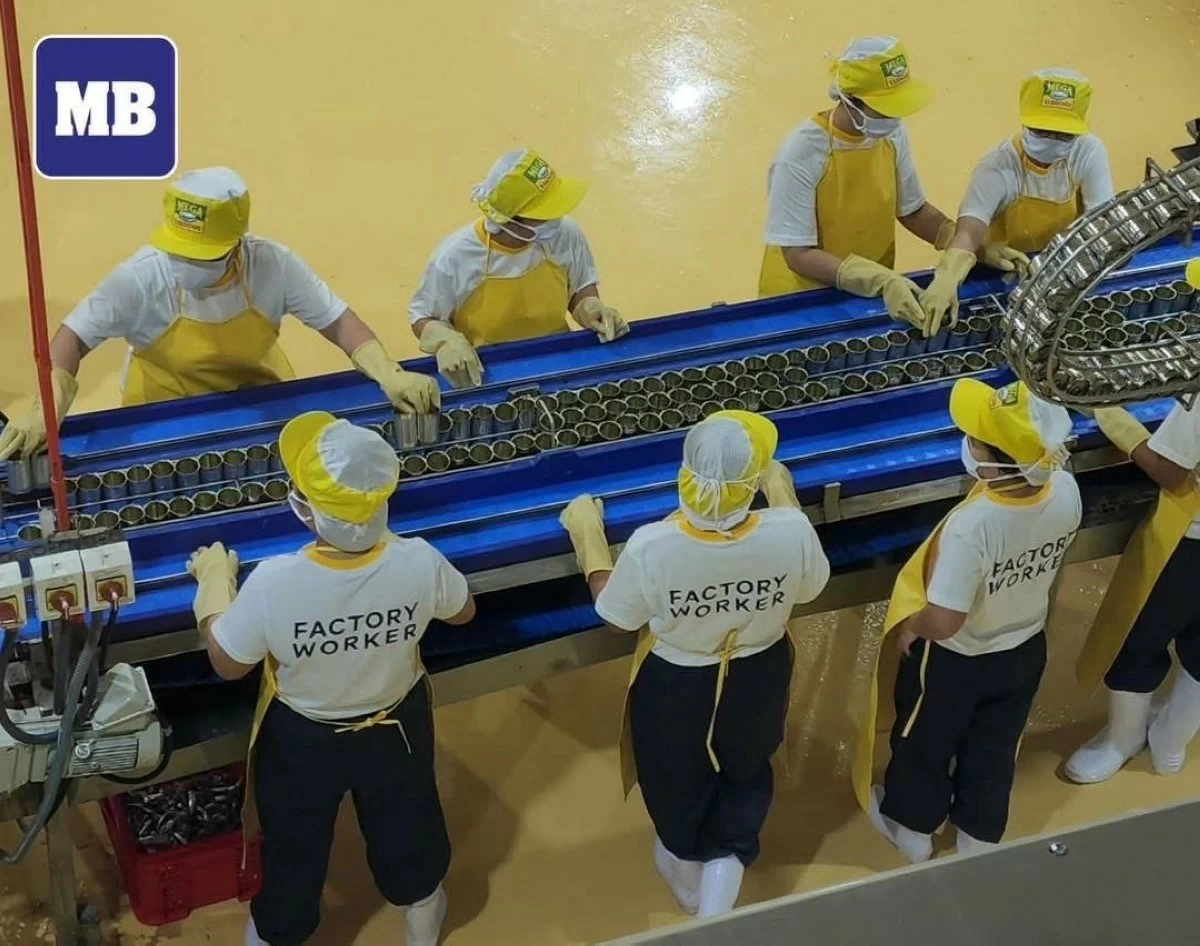
The country’s umbrella group of manufacturers and producers is urging the government to provide more support to businesses through subsidies and incentives, as higher operating costs threaten millions of livelihoods.
In a statement, the Federation of Philippine Industries (FPI) said the government should take advantage of the short-term relief brought by the conditional ceasefire in the Middle East to usher in long-term gains aimed at reinforcing the country’s competitiveness.
“At the end of the day, even if the ceasefire holds, this is not yet a return to normal. It is, however, a critical window to accelerate reforms and build resilience across energy, supply chains, and domestic industry,” FPI chairperson Elizabeth Lee said in a statement.
FPI is pushing for a time-bound, rules-based price-smoothing mechanism to ease the operating costs incurred by local industries due to rising fuel and logistics costs.
The government is urged to implement support mechanisms to ease the financial burden on affected sectors, particularly micro, small, and medium enterprises (MSMEs) and energy-intensive industries such as manufacturing.
These measures may include wage subsidies, retention incentives, and targeted relief for transport- and logistics-dependent companies, FPI said.
“Targeted, time-bound support is a pragmatic investment in productive economic activity. By protecting jobs and sustaining purchasing power, we ensure stability for businesses and continuity for communities,” said Lee.
Lee is also recommending the adjustment of the effective 12-percent value-added tax (VAT), or tax base, against a reference price to temper tax-induced price spikes while maintaining a predictable revenue stream.
Further, she wants the government to double down on its “buy local” strategy to safeguard the country against disruptions in global supply chains.
“By prioritizing domestic inputs and supply chains, the Philippines can reduce import dependence, stabilize production costs, and create more predictable sourcing conditions for manufacturers,” said Lee.
As rising fuel prices put pressure on the country’s public transportation, she said the government should also focus on accelerating its transition from fuel-based to a fully electric system.
Lee said the government may opt for a hybrid gross cost contracting program, under which it would support the acquisition of electric vehicles (EVs) through subsidies, concessional financing, or pooled procurement.
Under this model, ownership remains with cooperatives or private operators.
Lee said a similar program could be adopted to expedite the country’s shift to solar energy and minimize upfront costs for households and businesses.
The Philippine Exporters Confederation Inc. (Philexport) said in a separate statement that the government should also work to cushion the impact of surging fuel prices on the country’s exporters.
In addition to targeted support measures, Philexport president Sergio Ortiz-Luis Jr. said the government should strengthen engagement with international partners to ensure the continued flow of trade, alongside more robust monitoring of fuel price movements.
As the truce between Iran and the United States (US) continues to falter with each new development, the Philippine Chamber of Commerce and Industry (PCCI) said the government should use this time to secure critical shipments of oil and fertilizers to ensure sufficient supply for the country.
“The two-week opening of the Strait [of Hormuz] is an opportunity for the Philippines to secure vital imports. We need to buffer stock for any possible disruptions,” said PCCI president Ferdinand Ferrer.
The conditional ceasefire in the Middle East involves the opening of the Strait of Hormuz, the narrow waterway through which most of the Philippines’ oil supply passes.