







Jeff Dizon's 'Mangha' metamorphosis
How these mesmerizing figures leave you admiring the human form
By S.C. Fojas
Published Apr 10, 2026 11:23 pm


At A Glance
- The figures in "Mangha" were often depicted in positions of passage, reaching, stepping, or shielding their eyes, as if crossing into a new realm of understanding.
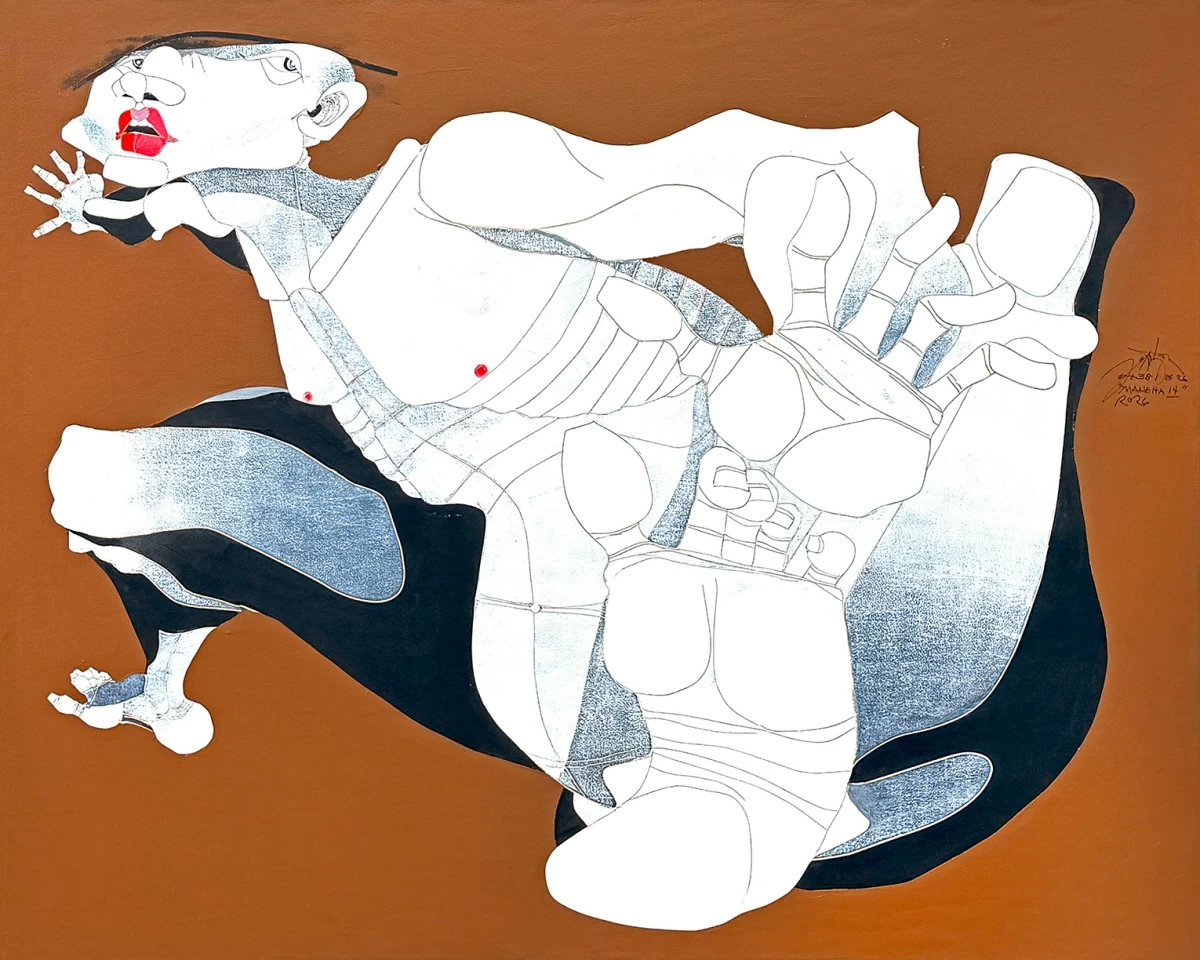
'MANGHA SERIES VIII,' acrylic on canvas, 2026
For decades, Jeff Dizon’s work was defined by a specific kind of “busy-ness,” a dense, layered complexity that invited the viewer to get lost in stratified surfaces. In his recent exhibit, “Mangha,” however, which concluded its run at the Art Circle Gallery last April 2, signaled a radical transformation. This wasn’t just a new series; it was a total stylistic metamorphosis.
In this collection, Jeff moved away from the intricate textures of his past, stepping into a distilled, minimalist language that favored breath, space, and the raw power of the human form.
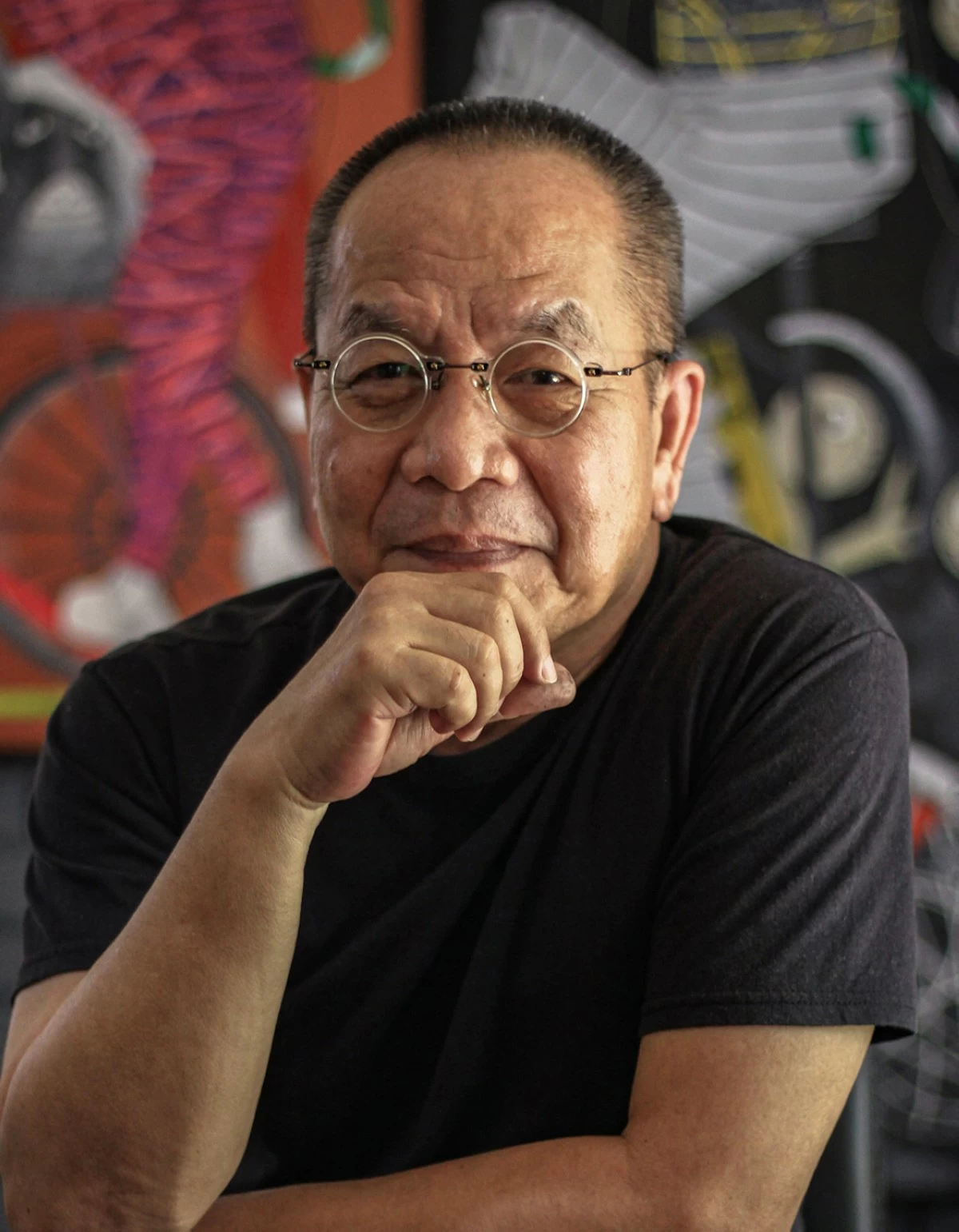
MEET THE ARTIST Jeff T. Dizon
The “metamorphosis” at the heart of the exhibit was most evident in Jeff’s treatment of the canvas. By stripping away decorative establishments, he allowed the human figure to carry the full weight of the narrative. Set against expansive, flat fields of ochre, his white-washed figures became architectural elements - monuments of tension and grace.
Throughout the series, Jeff leaned heavily into foreshortening. In works like “Mangha Series I and IV,” limbs were elongated, and proportions were intentionally distorted, creating a sense of groundedness and immense physical presence.
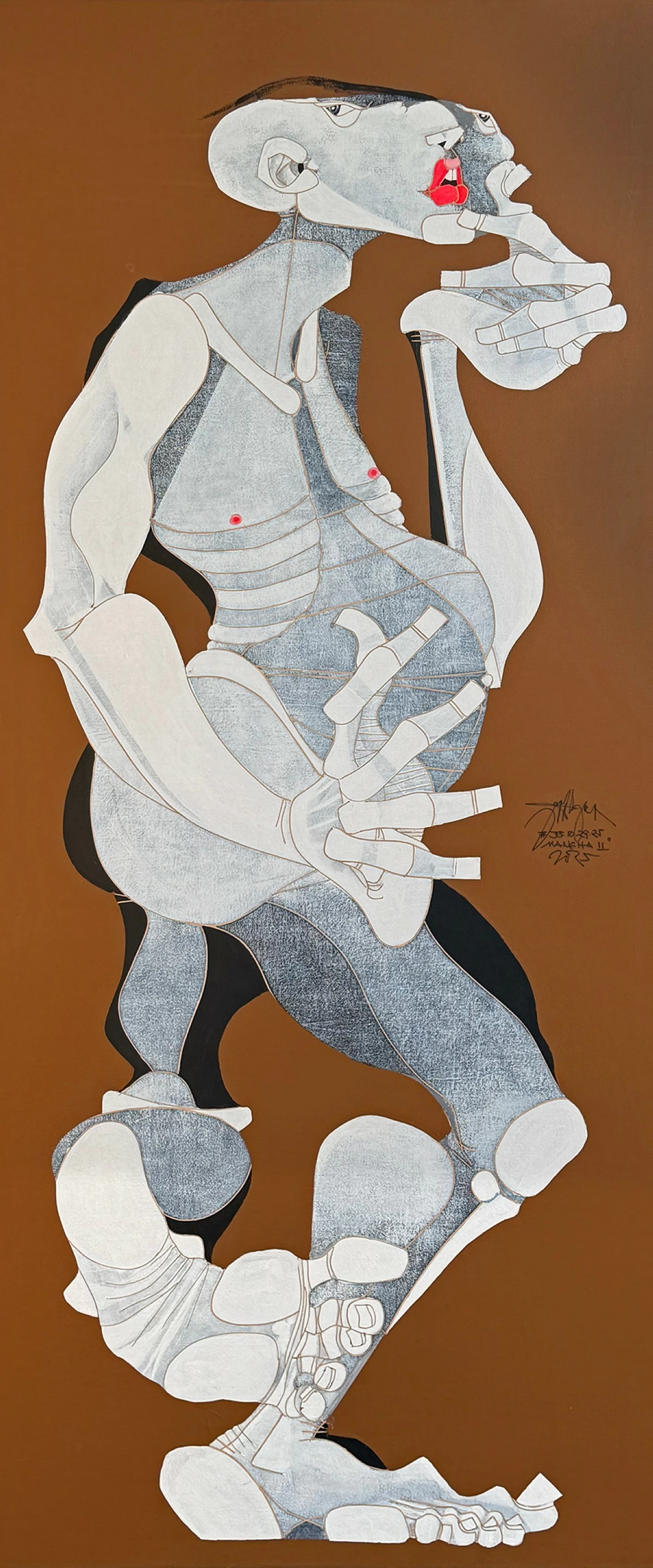
'MANGHA SERIES II,' acrylic on canvas, 2026
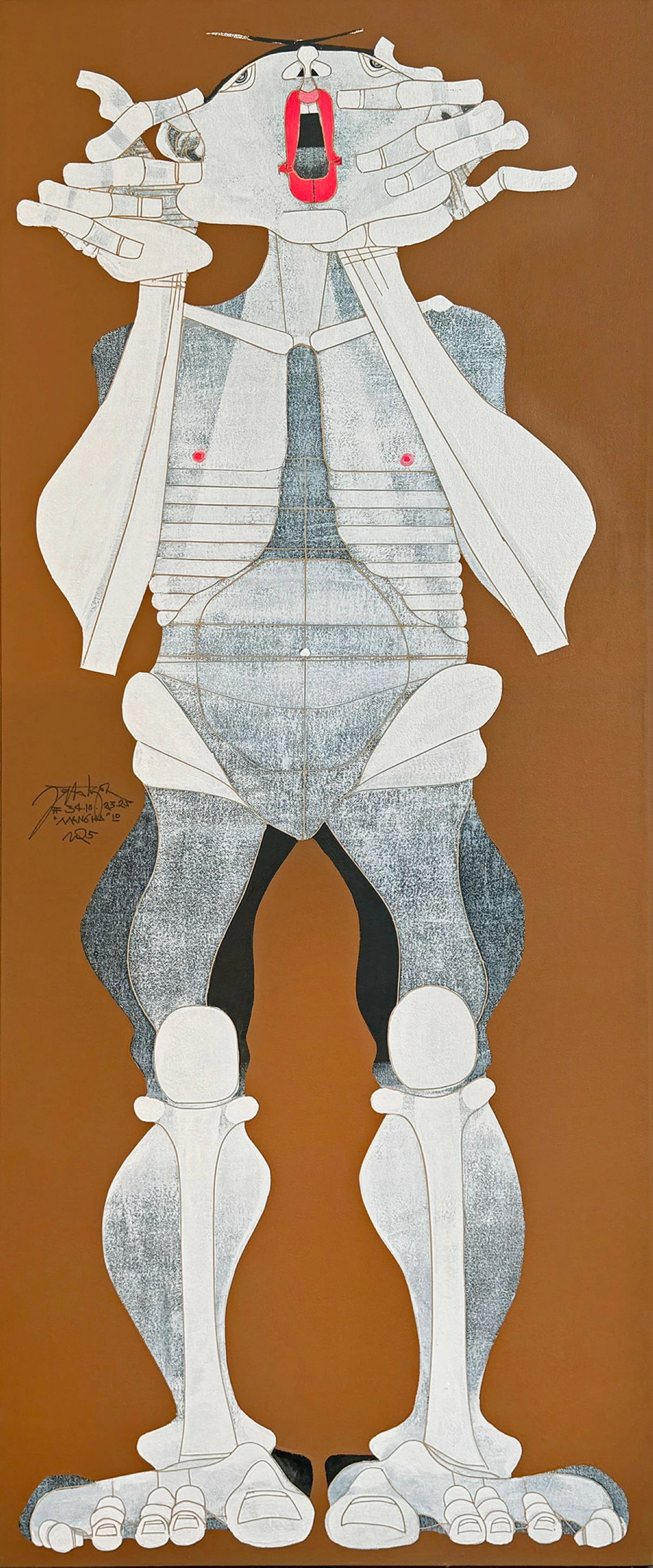
'MANGHA SERIES I,' acrylic on canvas, 2026
Amid the starch, monochromatic palette, Jeff placed “pulse points,” small hits of vivid crimson on the lips and chests of his subjects. These served as vital reminders of the humanity residing within his minimalist constructions.
The later pieces in the series, such as “Series IX and X,” captured figures in a state of high-speed transition. The sharp, rhythmic lines suggested a body caught in the middle of a profound change, echoing the artist’s own shift in perspective.
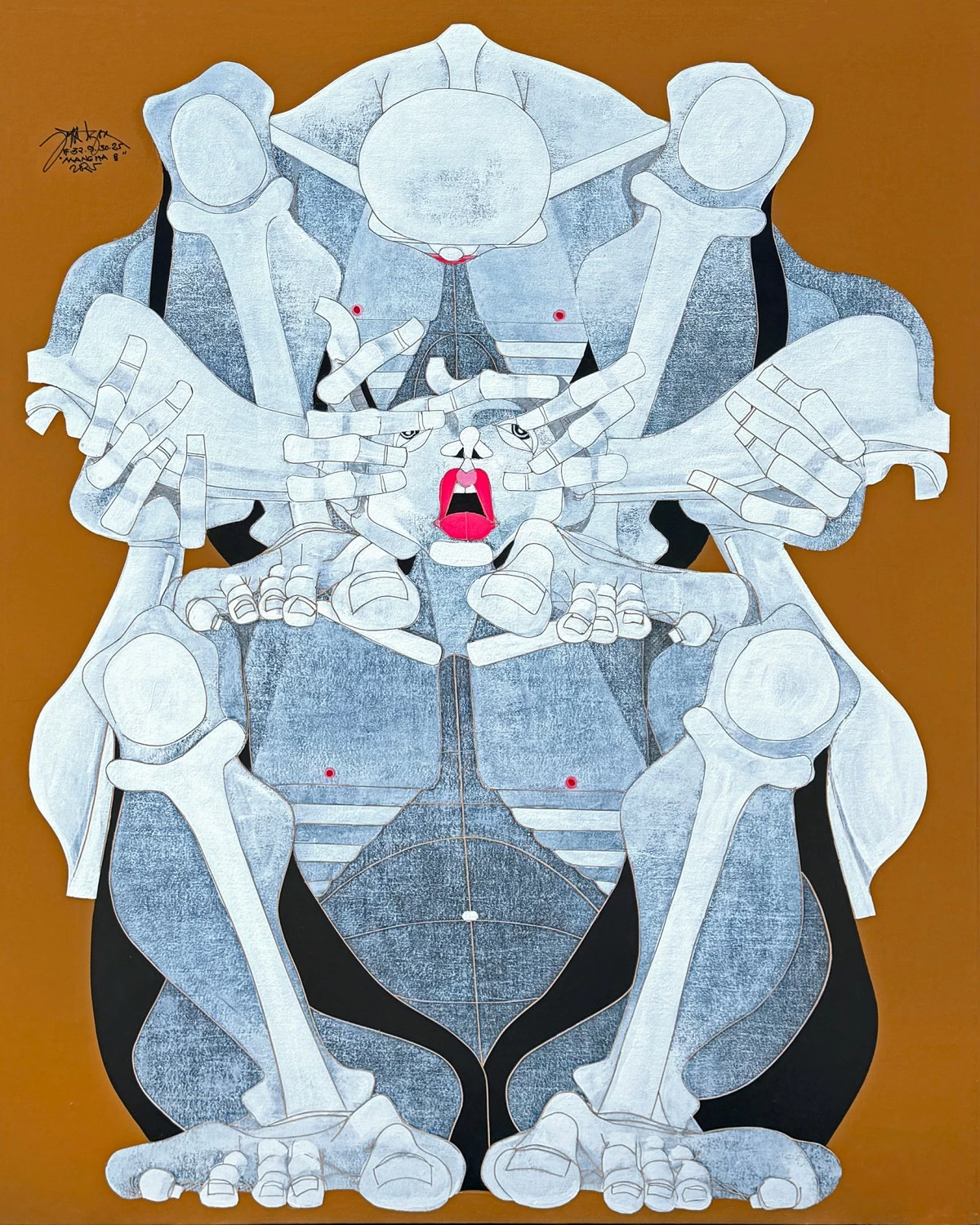
'MANGHA SERIES V,' acrylic on canvas, 2026
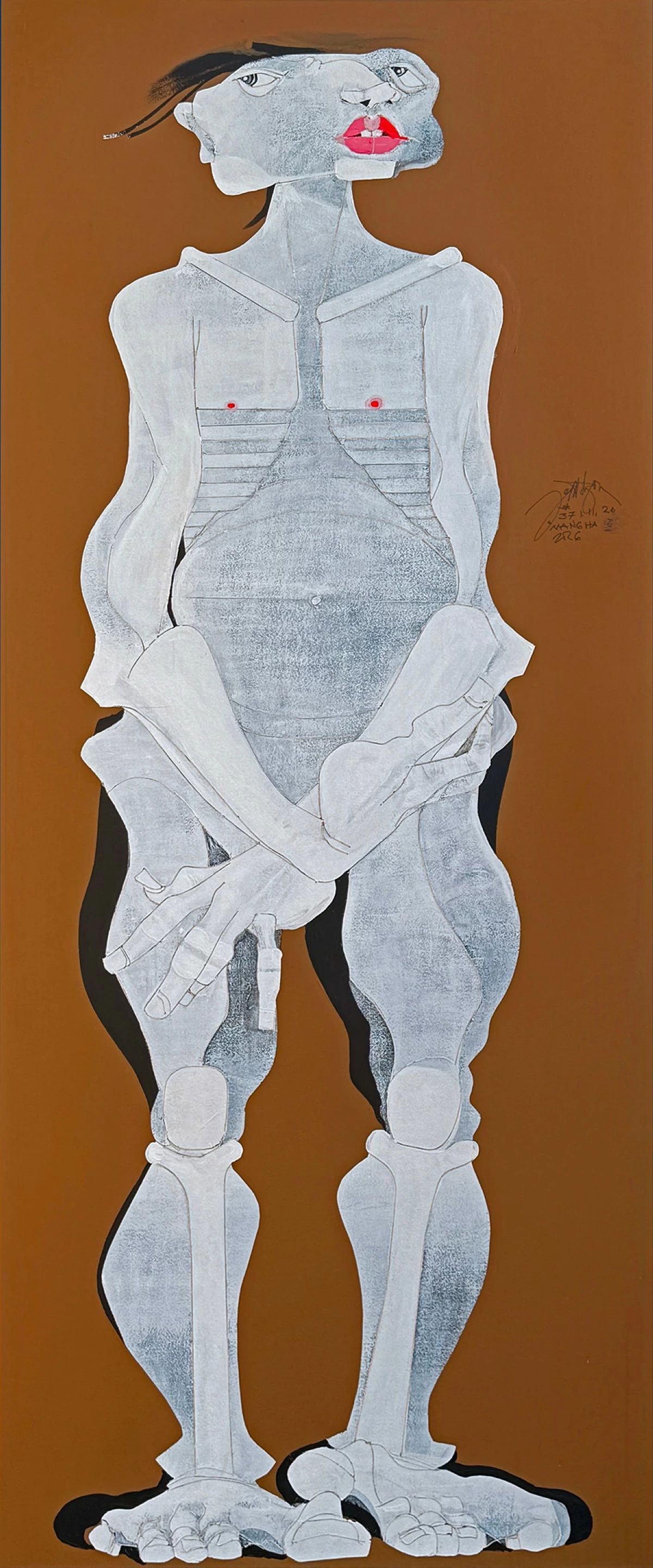
'MANGHA SERIES IV,' acrylic on canvas, 2026
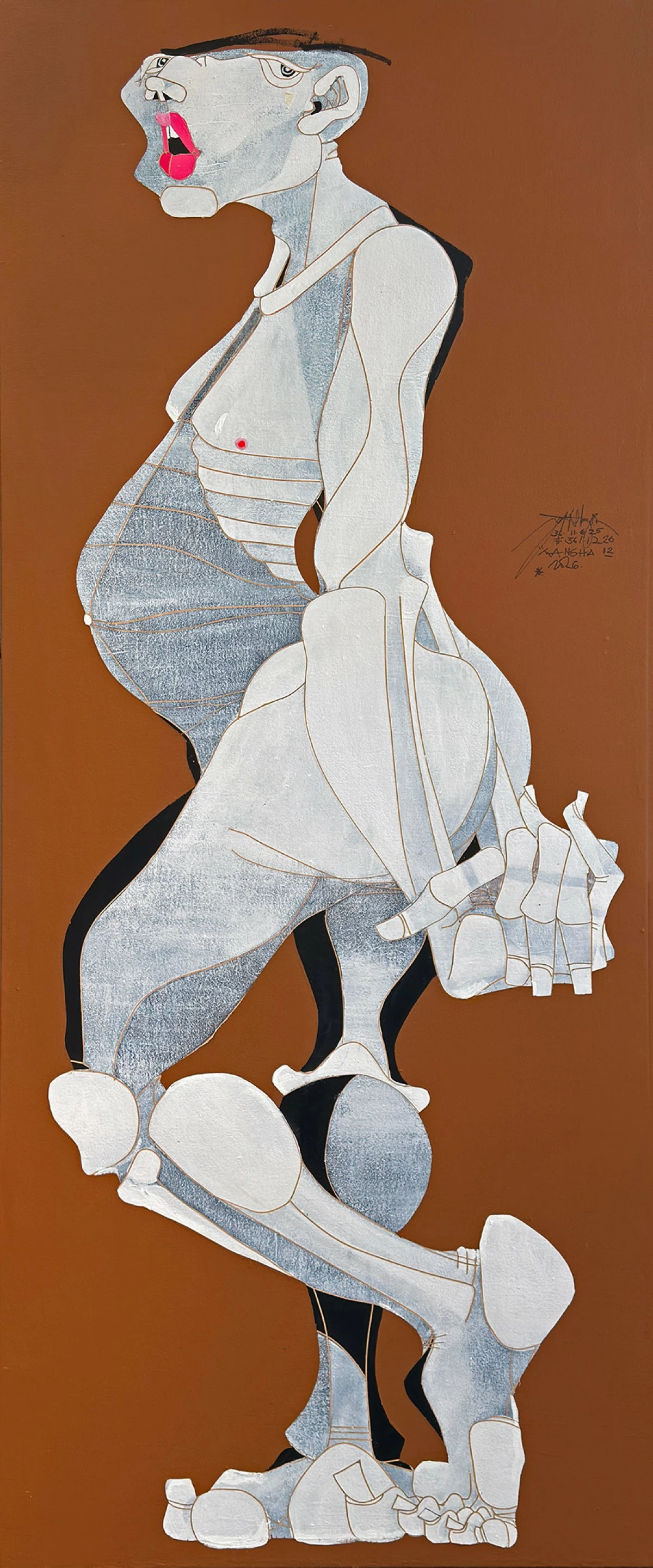
'MANGHA SERIES III,' acrylic on canvas, 2026
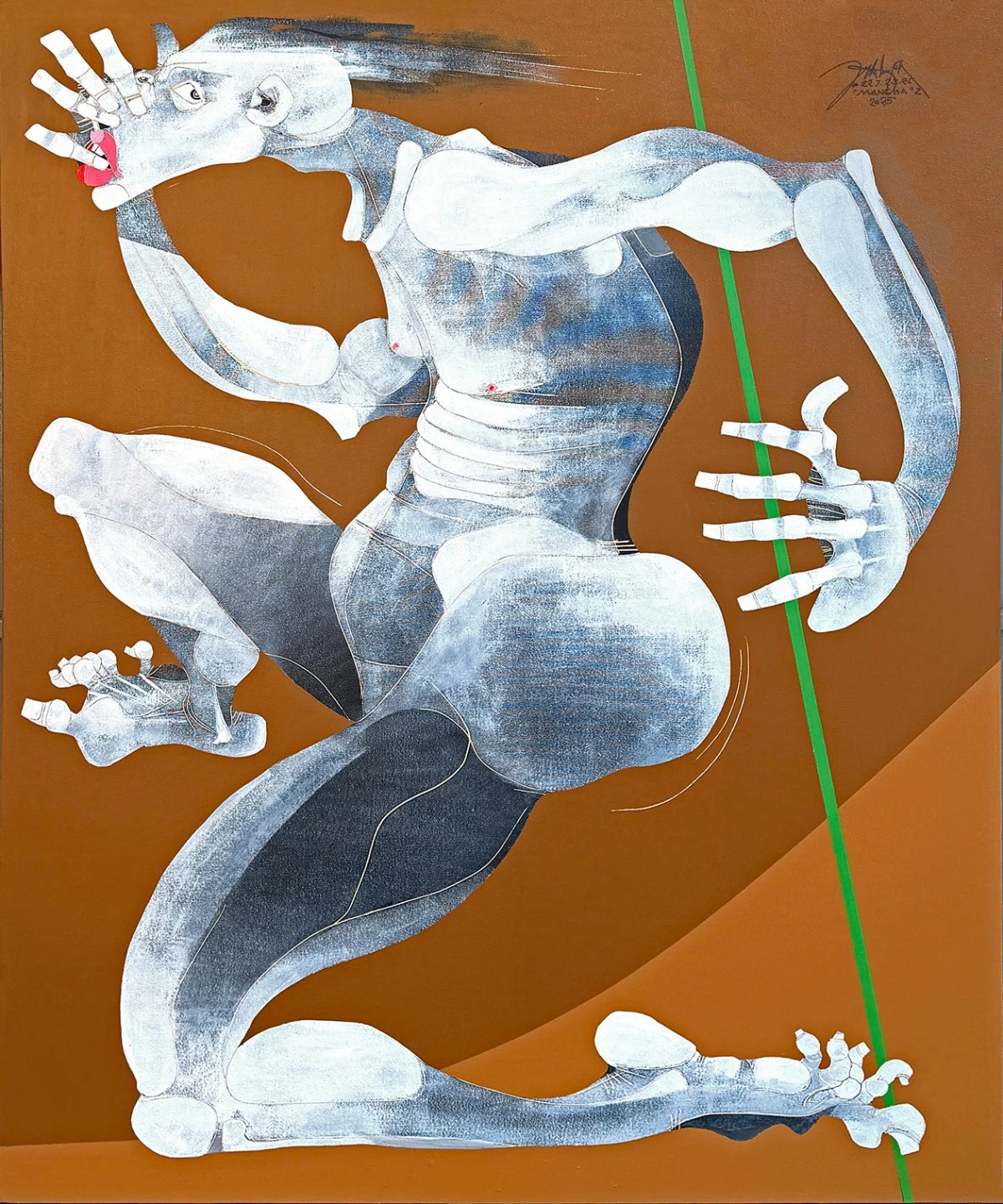
'MANGHA SERIES IX,' acrylic on canvas, 2026
Jeff’s “Mangha” series is not just a formal experiment but a deeply personal tribute to his friend and colleague, the legendary artist Junyee. Drawing inspiration from Junyee’s “Open Door Monument,” Jeff explored the concept of the “threshold,” that thin line between where one has been and where one is going.
The figures in “Mangha” were often depicted in positions of passage, reaching, stepping, or shielding their eyes, as if crossing into a new realm of understanding. By simplifying his visual vocabulary, Jeff effectively mirrored the courage required to walk through an open door and leave the safety of familiar styles behind.
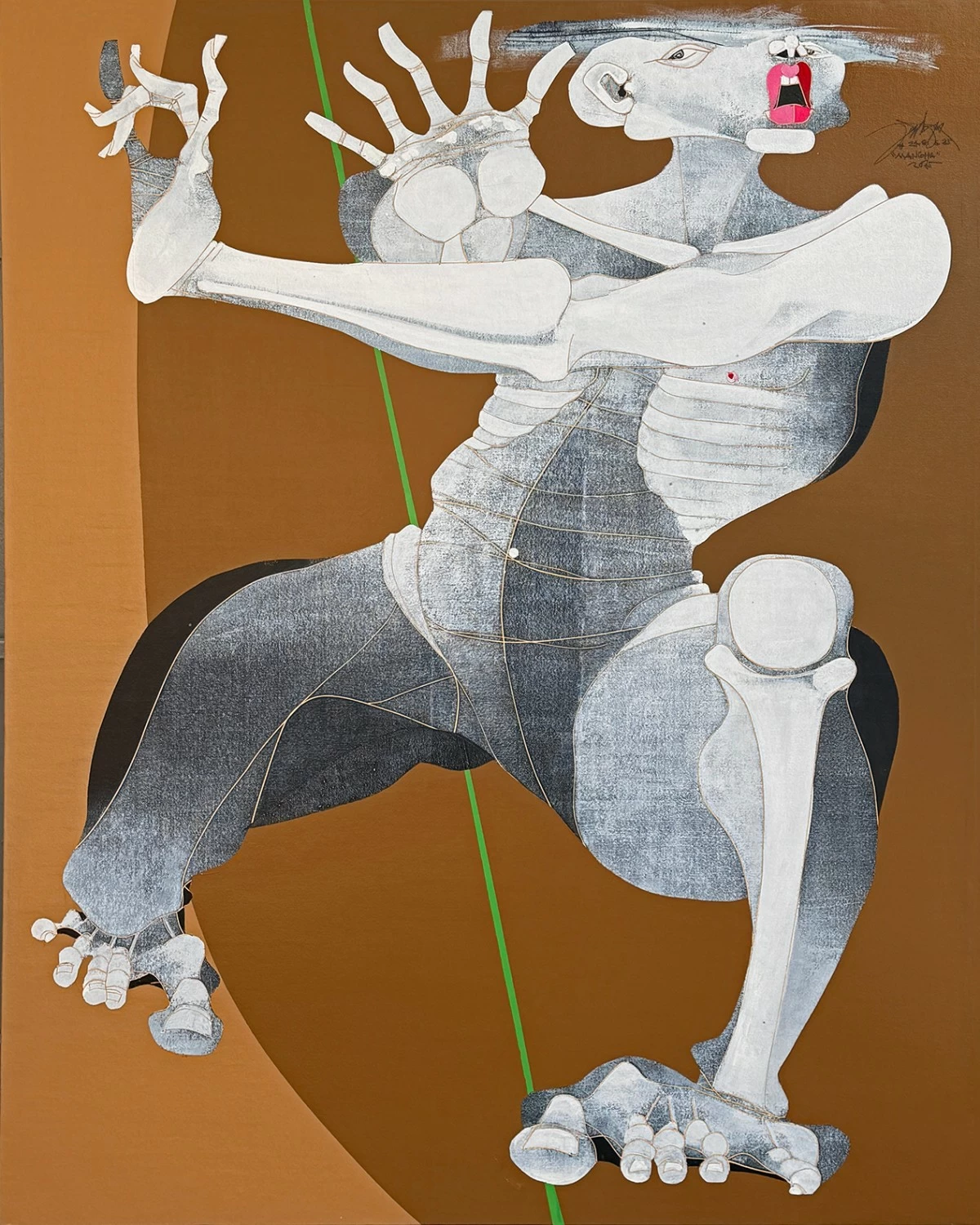
'MANGHA SERIES XII,' acrylic on canvas, 2026
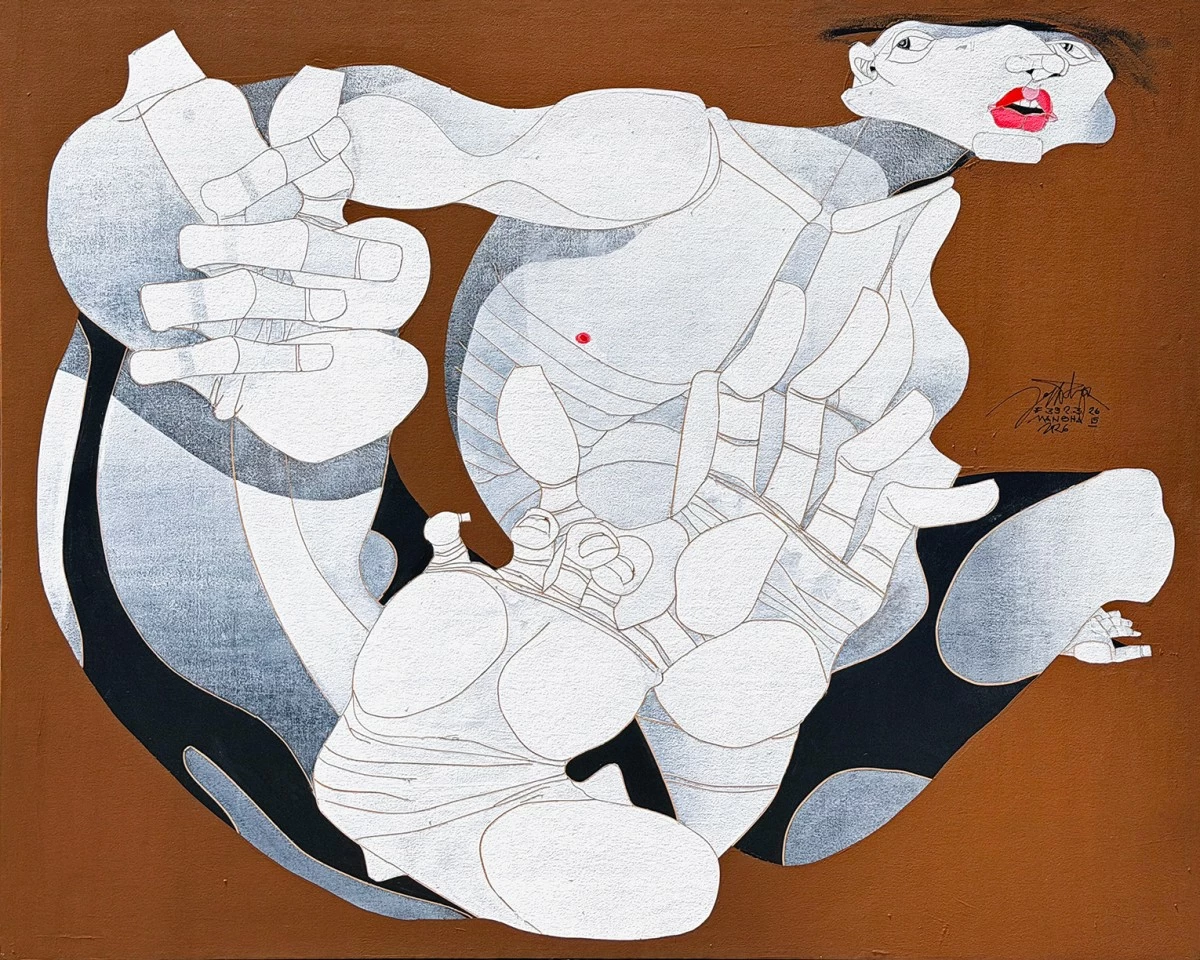
'MANGHA SERIES VII,' acrylic on canvas, 2026
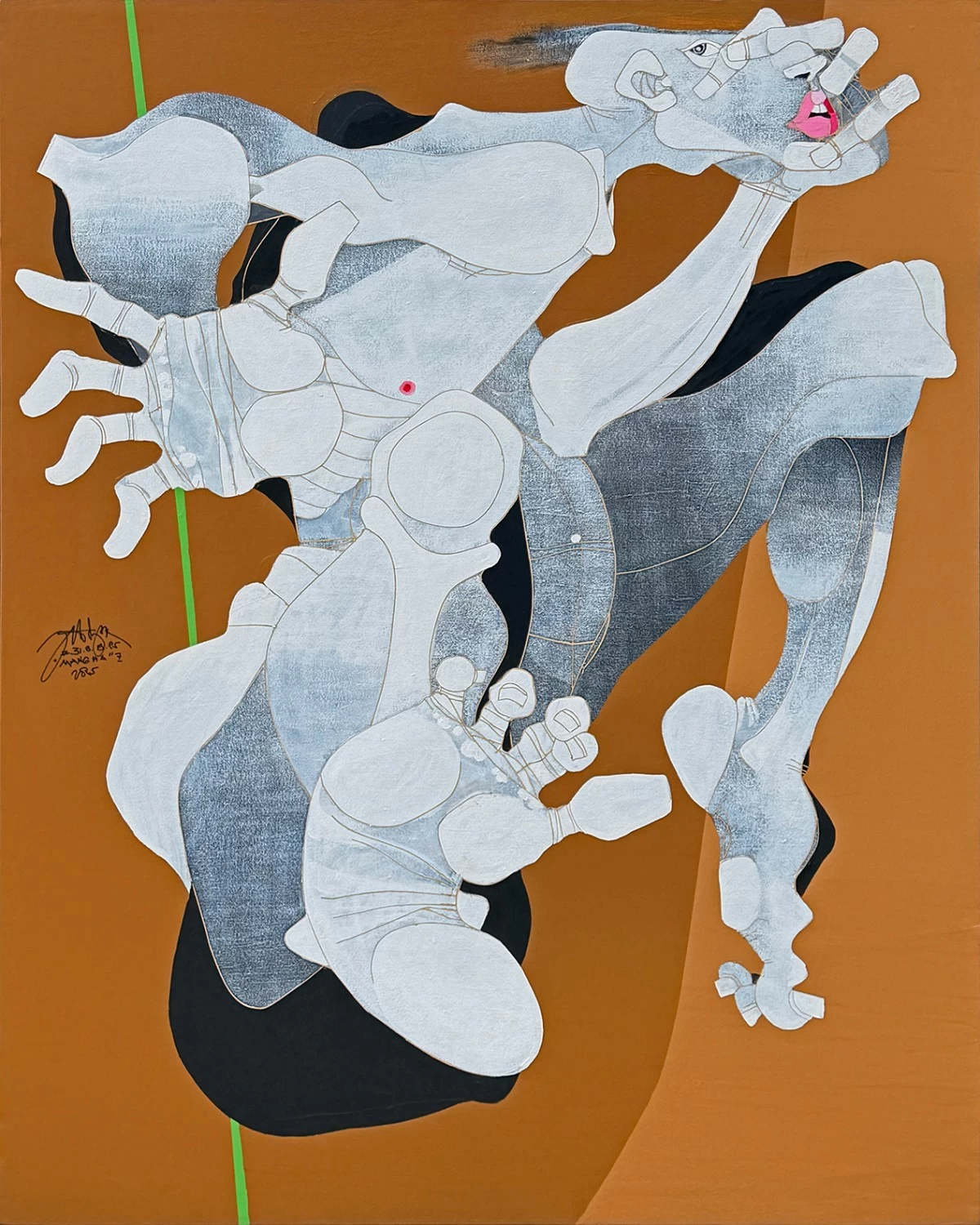
'MANGHA SERIES VI,' acrylic on canvas, 2026
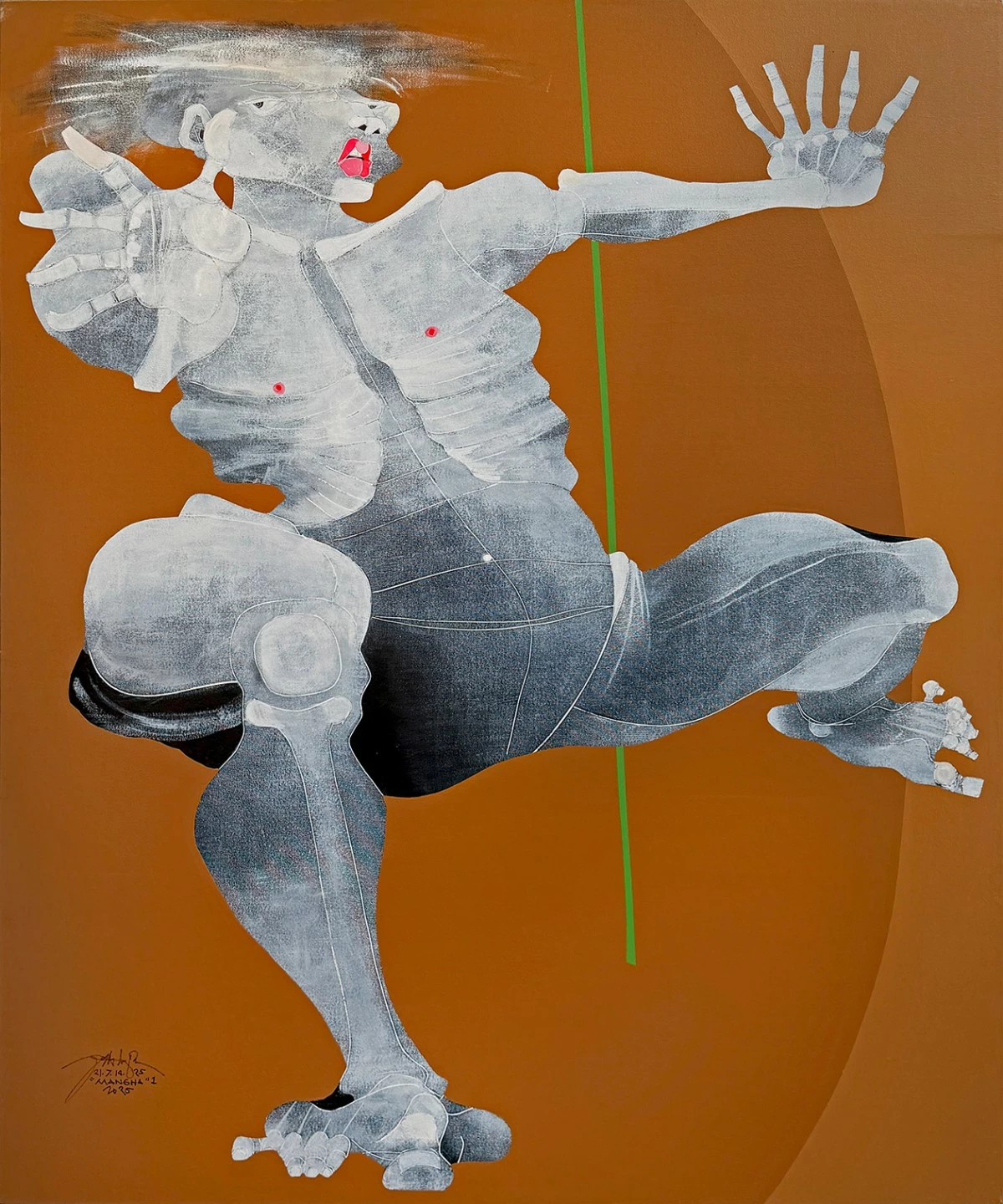
'MANGHA SERIES XI,' acrylic on canvas, 2026
By embracing a “less is more” philosophy, Jeff Dizon didn’t just change his technique; he rediscovered the awe or the mangha, which is inherent in the simplest stroke. Dizon’s metamorphosis shows that sometimes, to move forward, one must have the bravery to strip everything back to the bone.
“Mangha” ran from March 21 to April 2, 2026, at the Art Circle Gallery, Greenhills, San Juan City.