






Manila Bulletin
 Philippines
National
EXPLAINER: How DOTr plans to implement government's Net Service Contracting Program
Philippines
National
EXPLAINER: How DOTr plans to implement government's Net Service Contracting Program
Philippines
National
EXPLAINER: How DOTr plans to implement government's Net Service Contracting Program
EXPLAINER: How DOTr plans to implement government's Net Service Contracting Program
Published Apr 10, 2026 01:20 pm


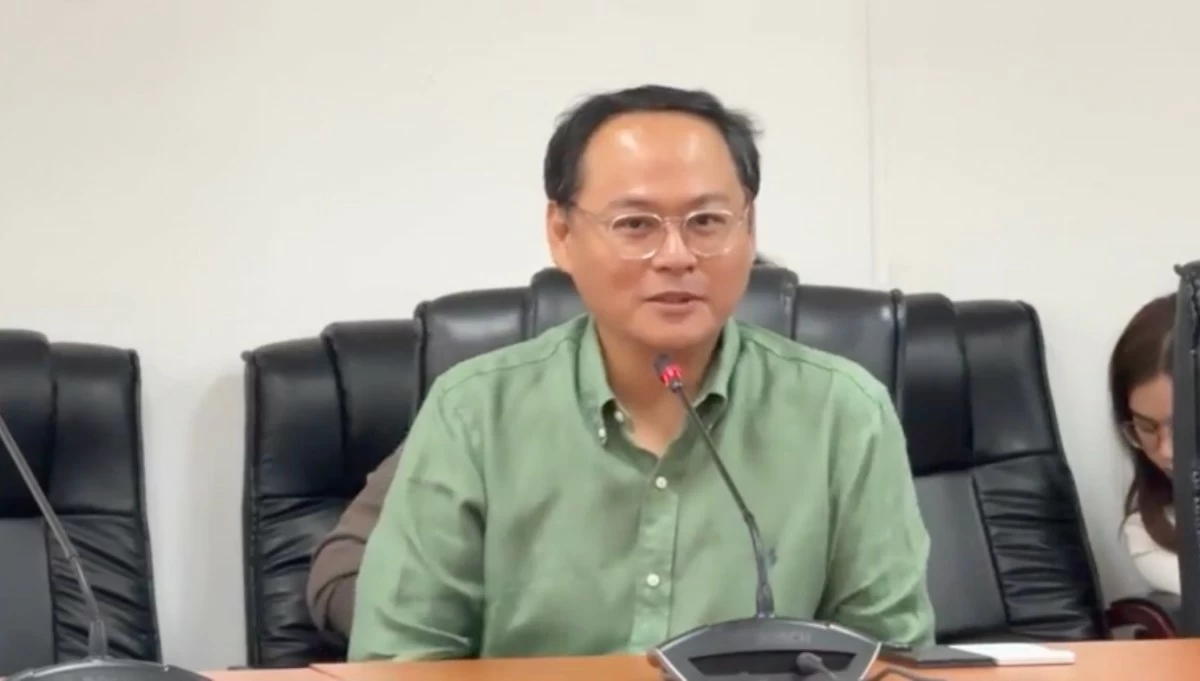
Department of Transportation (DOTr) Secretary Giovanni Lopez explains the mechanics of the government's Service Contracting Program, which seeks to keep public utility vehicles (PUVs) on the road despite volatile fuel prices, during a press conference on April 10, 2026. (Courtesy of DOTr)
The Department of Transportation (DOTr) will roll out its revamped Net Service Contracting Program on April 15 to keep public utility vehicles (PUVs) on the road despite volatile fuel prices.
The program revives and expands service contracting first introduced during the pandemic. It departs from earlier versions by combining government payments to operators with mandatory fare discounts for passengers.
In a press conference Friday, April 10, DOTr Secretary Giovanni Lopez said the program has a total budget of P1 billion under the 2026 General Appropriations Act (GAA), which is enough to sustain the program for two weeks.
The fund will be split to cover both land and sea travel, funding P800 million for the road sector and P200 million for the maritime sector.
The maritime component is still being finalized by agencies including the Maritime Industry Authority (Marina) and the Philippine Ports Authority (PPA), and this will benefit passengers who rely on ferries and fast craft.
On land, a total of 823 routes nationwide will be covered by the program, targeting over 1,000 operators and 50,000 PUV units including traditional and modern jeepneys, UV Express vans, city buses, and units operating along the EDSA Busway.
Of these, 545 routes are in Metro Manila and nearby provinces including Cavite, Laguna, and Rizal. Many routes are designed as feeders to rail systems such as the LRT Line 2 and MRT Line 3.
“Ang tantsa natin, ang makikinabang na pasahero is around 15 million daily passengers (Our estimate is that around 15 million passengers will benefit daily,” Lopez said.
The transport chief said the full list of routes and updated fare matrices included in the program will be published by the Land Transportation and Franchising Regulatory Board (LTFRB) on Saturday, April 11. These will be organized by city and district to guide commuters, he noted.
Payment scheme
For the EDSA Busway, the government will pay operators and drivers P100 per kilometer.
Meanwhile, modern jeepneys and UV Express units will be paid P40 per kilometer while traditional jeepneys will get P30 per kilometer.
Operators and drivers must run their PUV units at least five days a week and daily operations are capped at 100 kilometers per unit.
“Dapat ang units na kasama sa Service Contracting Program, five days per week na tatakbo. Ibig sabihin hindi kailangan Lunes hanggang Friday ang working days. it’s up to you to do it five days per week (Units included in the Service Contracting Program must operate five days per week. This does not necessarily mean Monday to Friday. It is up to you to choose which five days to operate each week),” Lopez said.
“Ang pagtakbo ng ma sasakyan is whole day also but kailangan may limitation na 100 kilometers per day. You can basically fly the entire day basta ang limitation natin 100 kilometers per day sa pampublikong sasakyan (Public utility vehicles can operate the whole day but there must be a limit of 100 kilometers per day. You can run throughout the day as long as the limit is 100 kilometers per day for each vehicle),” he added.
Discount for passengers
A major shift in this year’s program is the introduction of a 20 percent fare discount for all passengers. Lopez shared that this is the first time the government is combining service contracting with direct fare reductions.
“Ang utos ng Pangulo kapag tutulungan natin ang mga operators and drivers, kailangan tulungan din ang pasahero at commuters (The President's order is that if we are going to help the operators and drivers, we must also help the passengers and commuters),” Lpoez noted.
The DOTr said the 20 percent discount applies all day and stacks with existing mandatory discounts for students, persons with disability (PWD), and senior citizens. For instance, senior citizens riding the EDSA Busway could see their total discount reach 40 percent.
GPS monitoring for faster pay
According to Lopez, the LTFRB will use Global Positioning System (GPS) technology to verify the distance covered by each unit. While modern units have built-in GPS, many traditional jeepneys still lack the hardware.
As such, Lopez said the LTFRB has negotiated with 22 providers to lower GPS costs to P500 monthly for traditional jeepney operators.
“We are encouraging traditional jeepney operators who do not have GPS yet that it is better for you to have one, because it will speed up the payment process,” he said.
To ensure compliance, Lopez said vehicles must also display tarpaulins and posters showing their inclusion in the program and the correct fare rates.
Meanwhile, Lopez said the DOTr is seeking additional funding to expand the program. “We are requesting additional budget from the President so we can expand the implementation of the program,” he said.