







ASEAN unity key to navigating 'complex' sea risks – Brawner
Published Apr 10, 2026 02:50 pm


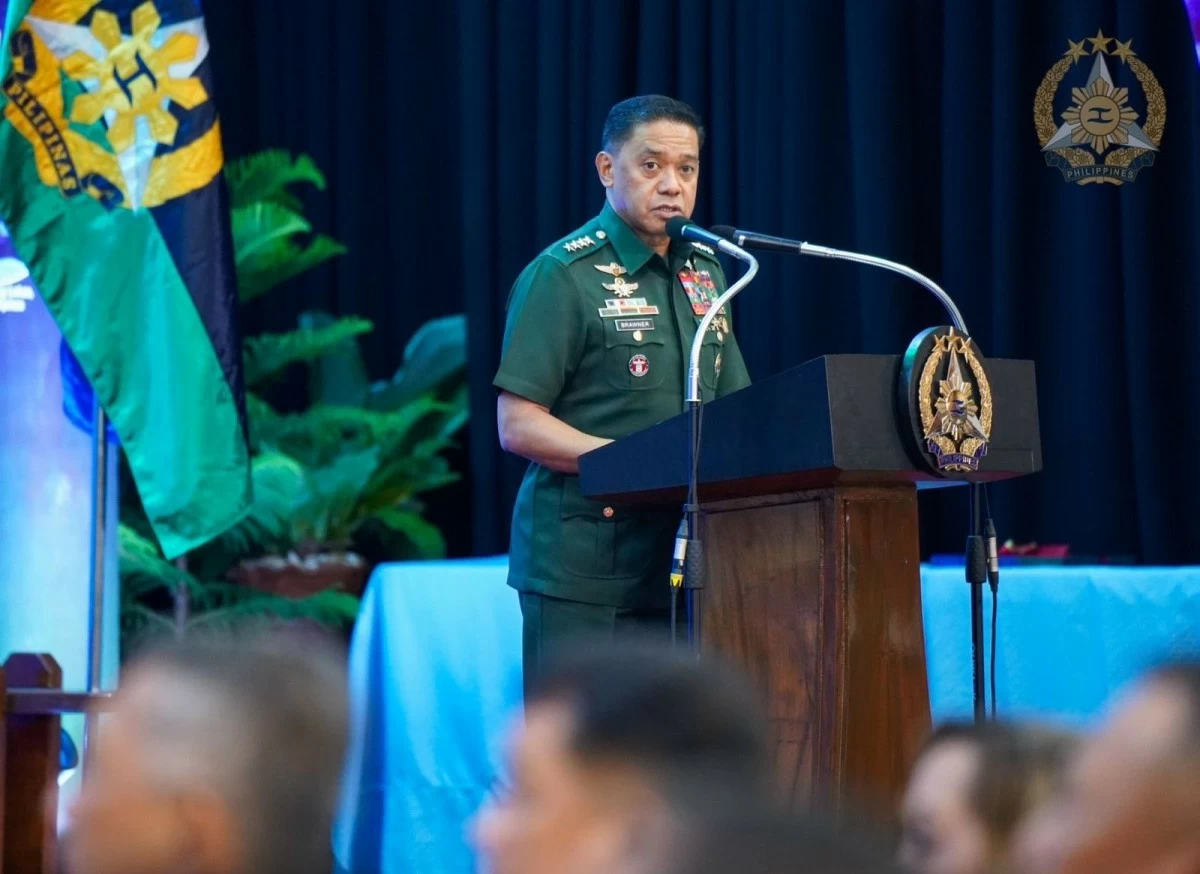
Armed Forces of the Philippines (AFP) Chief Gen. Romeo Brawner Jr. (Photo: AFP)
Unity and sustained cooperation among the Association of Southeast Asian Nations (ASEAN) are crucial as Southeast Asia faces growing maritime security challenges, Armed Forces of the Philippines (AFP) Chief Gen. Romeo Brawner Jr. said on Friday, April 10.
Brawner made the statement during the 11th Maritime Security Symposium 2026 at the AFP Commissioned Officers’ Club, Camp General Emilio Aguinaldo in Quezon City. The annual forum was led by the Philippine Navy (PN) through its Office of Naval Strategic Studies and Strategy Management.
Brawner said the region’s environment is becoming more complex even as ASEAN continues to serve as a stabilizing force.
“This year's theme, Navigating Continuity and Change through ASEAN, captures the reality we face today because while the principles that have guided our region remain steady, the environment in which we operate is becoming more complex,” he shared.
Brawner said ASEAN mechanisms have allowed countries with different interests to work together over time. He noted that these principles have supported regional growth and stability.
“Dialogue, mutual respect, and consensus are very important. These are not abstract ideals. They are very they are the very conditions that have allowed our region to grow, to connect, and to prosper,” he stressed.
“At the same time, we must be clear-eyed about the changes around us. Our maritime domain is increasingly shaped by the shifting geopolitical dynamics, evolving security challenges, rapid technological advancement, and the intensifying effects of climate and environmental pressures,” he added.
The symposium coincided with the Philippines’ chairmanship of ASEAN this year.
Brawner said maritime security challenges are evolving due to multiple pressures, including geopolitical tensions, technological change, and climate-related risks affecting sea lanes and coastal states.
“These developments do not diminish ASEAN's role, but they do require ASEAN and all of us to be more deliberate, more coordinated, and more forward-looking in how we respond,” he said.
He also underscored the importance of collective action in protecting shared maritime spaces.
“As the chair of ASEAN this year, the Philippines is guided by a simple but enduring idea that our future must be navigated together but guided with clarity,” he said.
Brawner said the AFP remains committed to defending the country’s maritime interests while supporting regional stability.
He pointed to ongoing cooperation with Indonesia following his recent visit. He said both countries agreed to strengthen joint operations in the Sulu Sea and Celebes Sea, expand intelligence sharing, and improve training exchanges. A new logistics subcommittee was also created.
Meanwhile, the Navy said the symposium serves as a platform for information sharing and cooperation among maritime stakeholders.
PN spokesperson Capt. Marissa Martinez said the event supports continuous engagement across sectors.
“Your Navy remains resolute in protecting our maritime domain while engaging our partners to promote peace, stability, and respect for international law at sea,” she said.