






 Business
The Economy
Shortened workweek, energy curbs raise unrest, stagflation risks in Philippines—Oxford Economics
Business
The Economy
Shortened workweek, energy curbs raise unrest, stagflation risks in Philippines—Oxford Economics
Shortened workweek, energy curbs raise unrest, stagflation risks in Philippines—Oxford Economics
Poor Filipino households suffer the worst


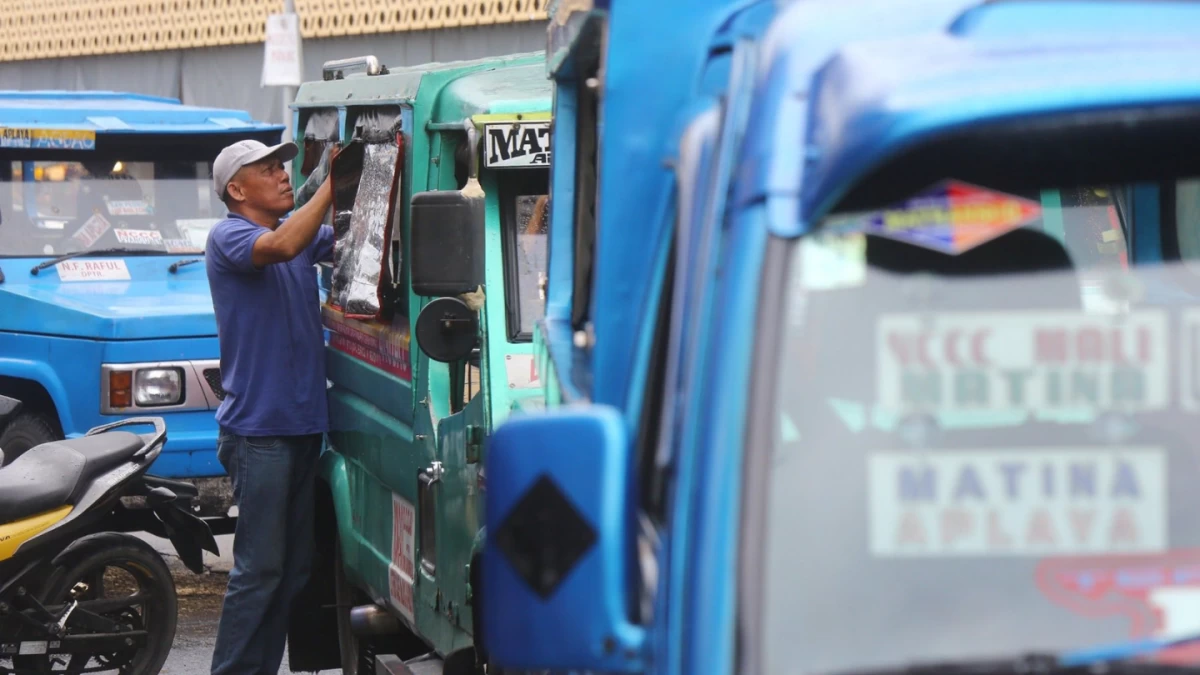
The Philippines’ energy rationing measures, including a shortened four-day workweek for some government offices, are disproportionately hitting low-income households, raising risks of stagflation and potential social unrest, according to think tank Oxford Economics.
In a report on Thursday, April 9, Oxford Economics Asia economics head Louise Loo said the country’s heavy reliance on informal labor means reduced working days quickly translate into lost income and weaker household consumption.
“In the Philippines, rationing disproportionately affects informal labor markets, amplifying stagflationary pressures,” Oxford Economics said. Stagflation refers to a situation where inflation rises while economic growth slows, eroding purchasing power even as output weakens. Headline inflation already soared to a 20-month high in March alongside expectations that gross domestic product (GDP) growth this year could decelerate to another post-pandemic low amid oil price and supply shocks wrought by the war in the Middle East.
Oxford Economics noted that the current four-day workweek for some government offices, amid a state of national energy emergency, is “probably modest in macro terms, as it stands.” However, the think tank warned that if the measure is extended to the private sector, the economic impact would be significantly larger.
“[T]he more serious risk as energy shortages start to bite, is that this behavioral mandate is extended into private sector—similar to controversial government proposals raised in 2022. In that scenario, the adjustment becomes much more economically damaging, as output is hit directly through lower operating capacity,” it said.
The think tank estimated that such a shift could drag quarterly GDP by around 0.9 percent, taking into account forward and backward linkages across industries.
Lower-income households are seen as particularly vulnerable due to the country’s high labor-market informality and strong fuel-price pass-through to consumer prices.
“Fewer working days can also quickly erode incomes for daily-wage and contract workers. Because these households tend to have high marginal propensities to consume, the hit to consumer spending is usually immediate,” Oxford Economics said.
The report projected that retail volumes in the Philippines could fall by almost four percent by the third month after a global oil price shock, one of the largest declines in the region.
It added that administrative energy-saving measures may result in reduced demand rather than efficiency gains.
“Energy conservation may not come from efficiency gains, but rather from demand destruction,” the think tank said, noting that the burden falls disproportionately on lower-income households and domestically oriented sectors.
Oxford Economics also flagged social risks tied to these measures, warning that the shortened workweek “would hit lower-income households hardest and risks social unrest” in the country as energy shortages persist.