

ADVERTISEMENT

Pia Cayetano cautions CHEd on impact of 100% online classes on students

Published Apr 9, 2026 05:52 pm

At A Glance

  • Senator Pia Cayetano cautioned the Commission on Higher Education (CHED) over its policy allowing higher education institutions (HEIs) to shift to online classes a 100 percent amid the fuel and energy crisis.
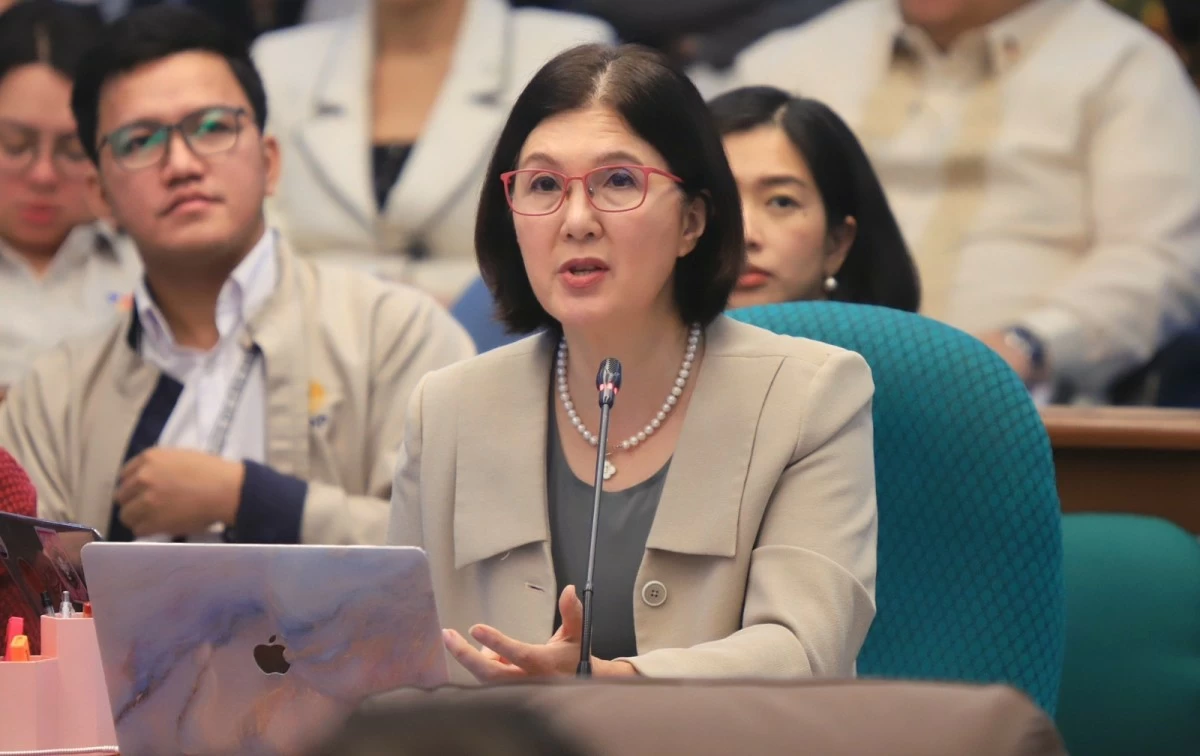
Senator Pia Cayetano cautioned on Thursday, April 9 the Commission on Higher Education (CHED) over its policy allowing higher education institutions (HEIs) to shift to online classes a 100 percent amid the fuel and energy crisis.

Cayetano made the statement after CHEd issued the new guidance through Memorandum from the Office of the Chairperson (No. 117, s. 2026), which was released in response to the declaration of a state of national energy emergency.

The memorandum allows HEIs to adopt 100 percent online delivery as a temporary arrangement, except for laboratory and skill-based classes which will still be conducted onsite or through appropriate alternative modalities.

Cayetano said that while the whole nation has to adapt quickly because of the ongoing global fuel and power crisis caused by the Middle East conflict, such policy should be studied carefully in light of the possible learning gaps that could happen in the long run.

“Families are experiencing difficulties because of the ongoing global fuel and power crisis. These are not easy times, and government agencies, including our education institutions, are being asked to adapt quickly,” Cayetano noted.

“CHED’s move to allow schools to shift to 100% online classes is clearly intended as a temporary solution to ensure learning continuity while supporting energy conservation efforts,”

“As Senior Vice Chairperson of the Senate Committee on Finance, where I handled the education budget for six years, and as a former EDCOM II Commissioner, I feel strongly that we must approach this challenge with great caution,” she stressed.

The senator said recent assessments show that learning gaps remain a serious concern across the country’s education system, and with any shift in modality, educators must first ensure that students are truly learning. 

“We cannot ignore the risk that prolonged or widespread reliance on fully online modalities may further widen existing learning gaps, especially for students who may not have equal access to technology, stable connectivity, or a conducive learning environment at home,” she pointed out.

“Moreover, there is a real concern that what is intended as a temporary measure may gradually become normalized. We saw this emerge after the pandemic, when emergency learning modalities persisted longer than necessary. We must be vigilant to ensure that this does not happen again,” she further said.

Cayetano reiterated that face-to-face learning remains essential not just for academic outcomes but also for discipline, engagement and overall development.

“This is why we must carefully balance the need to respond to the crisis with our responsibility to protect our students’ learning experience,” she said.

“I urge CHED and all HEIs to establish concrete benchmarks, including measurable learning outcome indicators and a defined review timeline, so that this policy remains a genuine emergency measure and does not quietly become the new standard,” the lawmaker warned.

Related Tags

Pia Cayetano CHED online classes OIL CRISIS National energy emergency
ADVERTISEMENT
.most-popular .layout-ratio{ padding-bottom: 79.13%; } @media (min-width: 768px) and (max-width: 1024px) { .widget-title { font-size: 15px !important; } }

{{ articles_filter_1561_widget.title }}

.most-popular .layout-ratio{ padding-bottom: 79.13%; } @media (min-width: 768px) and (max-width: 1024px) { .widget-title { font-size: 15px !important; } }

{{ articles_filter_1562_widget.title }}

.most-popular .layout-ratio{ padding-bottom: 79.13%; } @media (min-width: 768px) and (max-width: 1024px) { .widget-title { font-size: 15px !important; } }

{{ articles_filter_1563_widget.title }}

{{ articles_filter_1564_widget.title }}

.mb-article-details { position: relative; } .mb-article-details .article-body-preview, .mb-article-details .article-body-summary{ font-size: 17px; line-height: 30px; font-family: "Libre Caslon Text", serif; color: #000; } .mb-article-details .article-body-preview iframe , .mb-article-details .article-body-summary iframe{ width: 100%; margin: auto; } .read-more-background { background: linear-gradient(180deg, color(display-p3 1.000 1.000 1.000 / 0) 13.75%, color(display-p3 1.000 1.000 1.000 / 0.8) 30.79%, color(display-p3 1.000 1.000 1.000) 72.5%); position: absolute; height: 200px; width: 100%; bottom: 0; display: flex; justify-content: center; align-items: center; padding: 0; } .read-more-background a{ color: #000; } .read-more-btn { padding: 17px 45px; font-family: Inter; font-weight: 700; font-size: 18px; line-height: 16px; text-align: center; vertical-align: middle; border: 1px solid black; background-color: white; } .hidden { display: none; }
function initializeAllSwipers() { // Get all hidden inputs with cms_article_id document.querySelectorAll('[id^="cms_article_id_"]').forEach(function (input) { const cmsArticleId = input.value; const articleSelector = '#article-' + cmsArticleId + ' .body_images'; const swiperElement = document.querySelector(articleSelector); if (swiperElement && !swiperElement.classList.contains('swiper-initialized')) { new Swiper(articleSelector, { loop: true, pagination: false, navigation: { nextEl: '#article-' + cmsArticleId + ' .swiper-button-next', prevEl: '#article-' + cmsArticleId + ' .swiper-button-prev', }, }); } }); } setTimeout(initializeAllSwipers, 3000); const intersectionObserver = new IntersectionObserver( (entries) => { entries.forEach((entry) => { if (entry.isIntersecting) { const newUrl = entry.target.getAttribute("data-url"); if (newUrl) { history.pushState(null, null, newUrl); let article = entry.target; // Extract metadata const author = article.querySelector('.author-section').textContent.replace('By', '').trim(); const section = article.querySelector('.section-info ').textContent.replace(' ', ' '); const title = article.querySelector('.article-title h1').textContent; // Parse URL for Chartbeat path format const parsedUrl = new URL(newUrl, window.location.origin); const cleanUrl = parsedUrl.host + parsedUrl.pathname; // Update Chartbeat configuration if (typeof window._sf_async_config !== 'undefined') { window._sf_async_config.path = cleanUrl; window._sf_async_config.sections = section; window._sf_async_config.authors = author; } // Track virtual page view with Chartbeat if (typeof pSUPERFLY !== 'undefined' && typeof pSUPERFLY.virtualPage === 'function') { try { pSUPERFLY.virtualPage({ path: cleanUrl, title: title, sections: section, authors: author }); } catch (error) { console.error('ping error', error); } } // Optional: Update document title if (title && title !== document.title) { document.title = title; } } } }); }, { threshold: 0.1 } ); function showArticleBody(button) { const article = button.closest("article"); const summary = article.querySelector(".article-body-summary"); const body = article.querySelector(".article-body-preview"); const readMoreSection = article.querySelector(".read-more-background"); // Hide summary and read-more section summary.style.display = "none"; readMoreSection.style.display = "none"; // Show the full article body body.classList.remove("hidden"); } document.addEventListener("DOMContentLoaded", () => { let loadCount = 0; // Track how many times articles are loaded const offset = [1, 2, 3, 4, 5, 6, 7, 8, 9, 10]; // Offset values const currentUrl = window.location.pathname.substring(1); let isLoading = false; // Prevent multiple calls if (!currentUrl) { console.log("Current URL is invalid."); return; } const sentinel = document.getElementById("load-more-sentinel"); if (!sentinel) { console.log("Sentinel element not found."); return; } function isSentinelVisible() { const rect = sentinel.getBoundingClientRect(); return ( rect.top < window.innerHeight && rect.bottom >= 0 ); } function onScroll() { if (isLoading) return; if (isSentinelVisible()) { if (loadCount >= offset.length) { console.log("Maximum load attempts reached."); window.removeEventListener("scroll", onScroll); return; } isLoading = true; const currentOffset = offset[loadCount]; window.loadMoreItems().then(() => { let article = document.querySelector('#widget_1690 > div:nth-last-of-type(2) article'); intersectionObserver.observe(article) loadCount++; }).catch(error => { console.error("Error loading more items:", error); }).finally(() => { isLoading = false; }); } } window.addEventListener("scroll", onScroll); });

Sign up by email to receive news.