






Manila Bulletin
 Philippines
Metro Manila
Nearly 1M commuters benefit as Manila ends Libreng Sakay program
Philippines
Metro Manila
Nearly 1M commuters benefit as Manila ends Libreng Sakay program
Philippines
Metro Manila
Nearly 1M commuters benefit as Manila ends Libreng Sakay program
Nearly 1M commuters benefit as Manila ends Libreng Sakay program
Published Apr 9, 2026 08:24 am


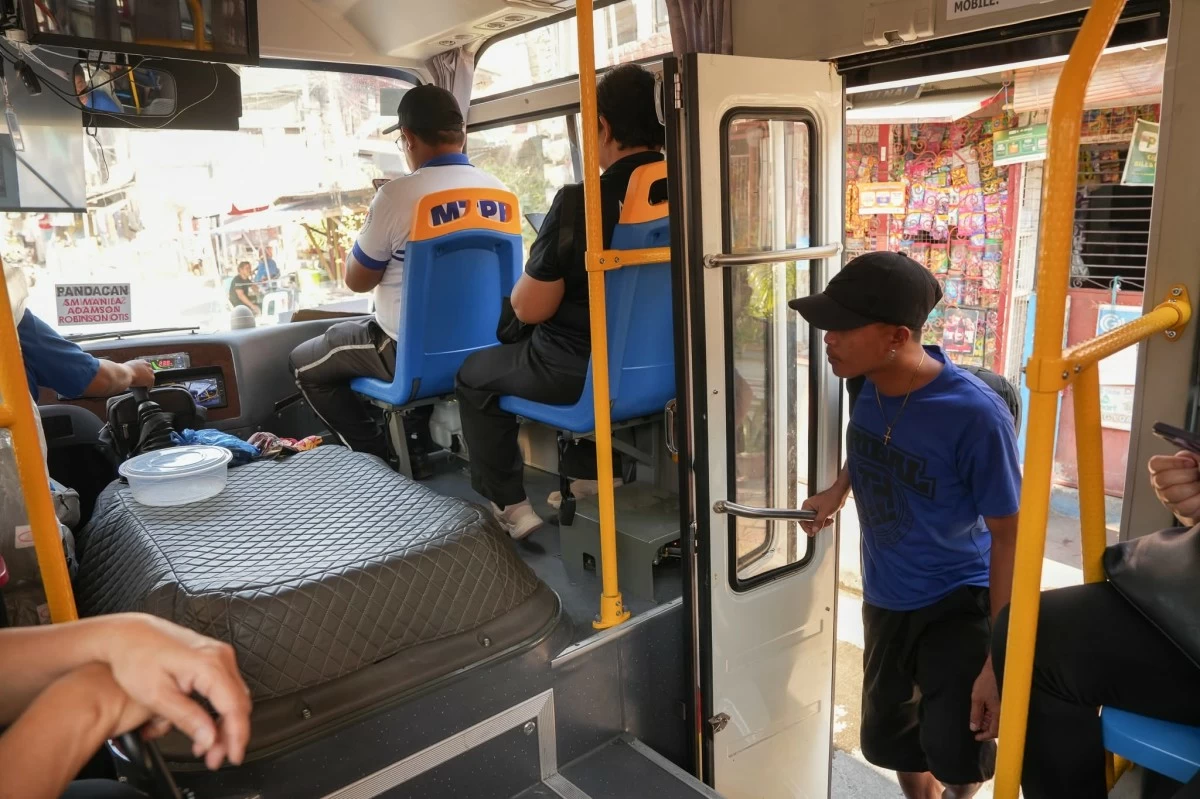
Commuters board free rides on PUJs across Manila on April 8, the last day of the Libreng Sakay program, which served 931,831 commuters, according to the Manila Traffic and Parking Bureau.
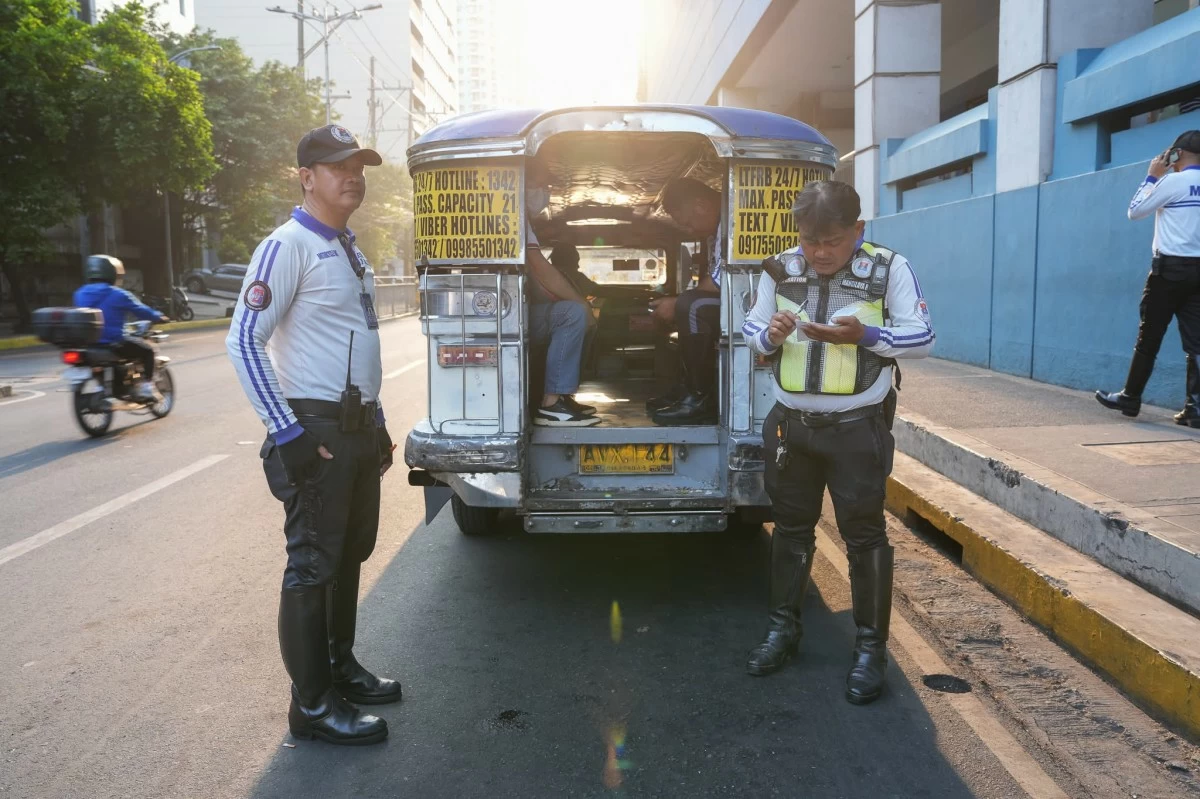
After several days of easing the daily grind for commuters, Manila's Libreng Sakay Program ended on April 8 after serving 931,831 passengers, recording its highest turnout on the final day as the city government decided not to extend the initiative for now.
Records showed a consistent rise in commuter volume over the program’s run:
March 30, 2026 – 129,665 commuters
March 31, 2026 – 179,070 commuters
April 6, 2026 – 194,325 commuters
April 7, 2026 – 213,599 commuters
April 8, 2026 – 215,172 commuters
The final day posted the highest turnout, reflecting sustained and growing reliance on the program.
Hourly data further illustrated peak commuting periods. On April 8 alone, the program served:
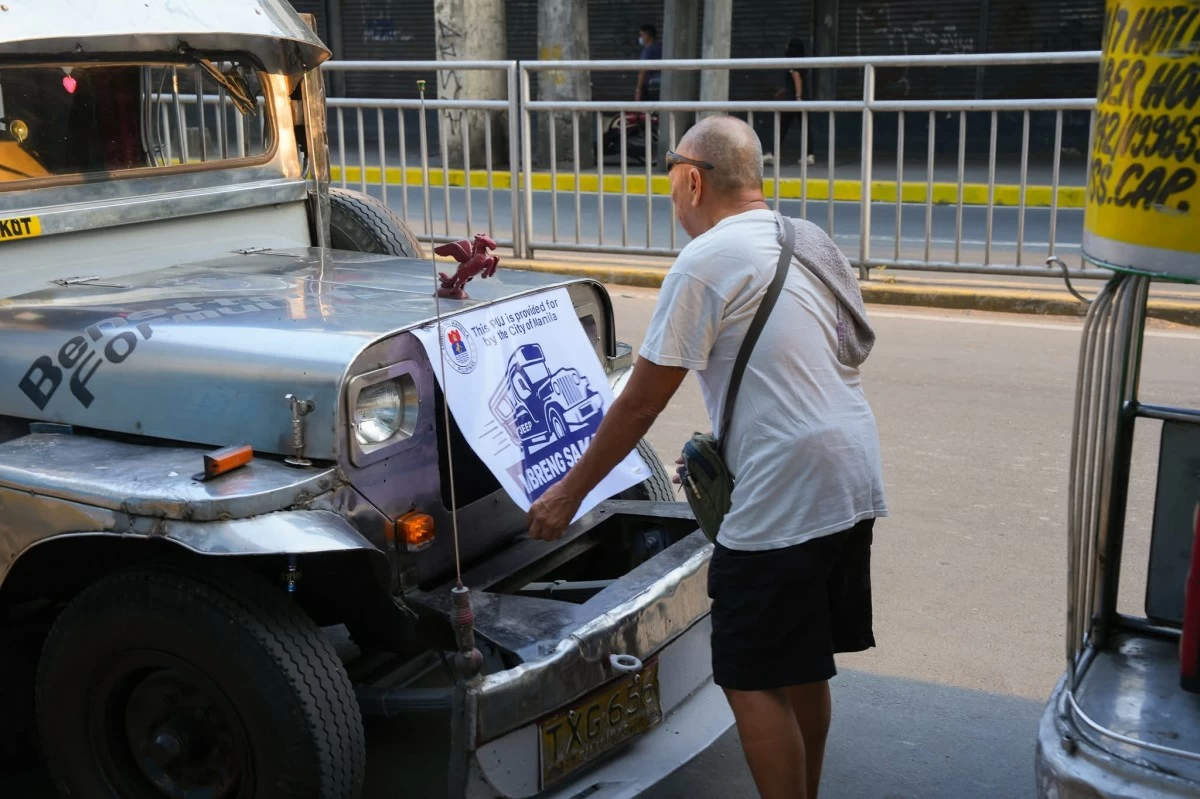
Public utility jeepney drivers display “Libreng Sakay” banners on their units as they ply major routes in Manila. (Photos courtesy of Manila PIO)
4,578 at 6 a.m.
19,579 at 8 a.m.
49,272 at 10 a.m.
103,953 at 2 p.m.
128,482 at 4 p.m.
170,295 at 6 p.m.
207,487 at 8 p.m., before reaching the final total of 215,172
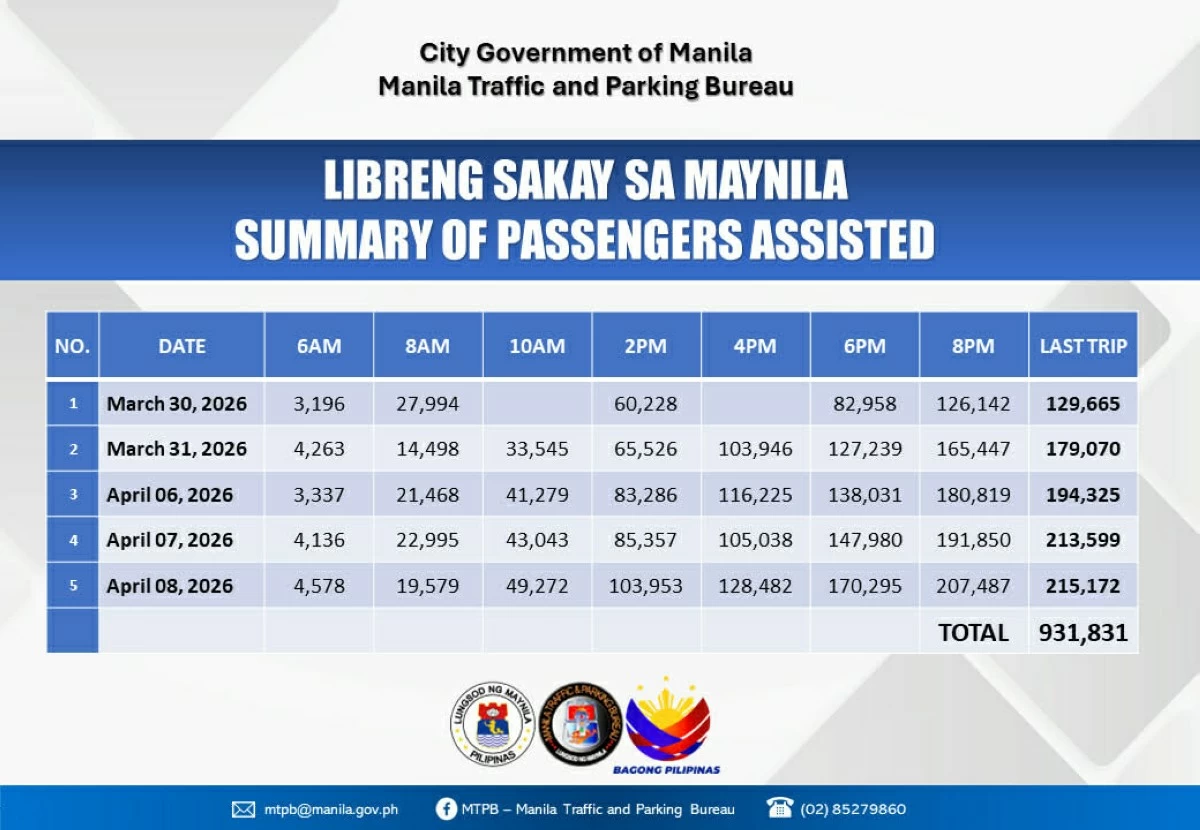
Similar patterns were observed in previous days, with ridership steadily building toward evening peak hours, particularly between 4 p.m. and 8 p.m.
At least 1,442 public utility jeepney (PUJ) drivers participated in the initiative, covering major routes across Manila, including:
Divisoria – Recto – Quiapo
Taft Avenue – United Nations – Lawton
España – Morayta – Quiapo
Sta. Cruz – Blumentritt – Rizal Avenue
Pier – South Harbor routes
To sustain operations, the city government implemented a tiered subsidy for drivers, increasing payouts from P3,000 to P3,500, and eventually to P4,000 per day, in response to rising fuel costs.
City officials said the program not only provided immediate relief to commuters but also ensured stable income support for drivers navigating fluctuating fuel prices.
Despite nearing the one-million mark in total commuters served, Mayor Francisco "Isko Moreno" Domagoso earlier confirmed that there will be no extension for now, as the city reviews funding and long-term sustainability.
Even so, the nearly 1 million commuters assisted in just several days highlight the program’s significant impact, demonstrating the critical role of accessible and subsidized transport in easing the daily burden of Manila’s riding public.