






Manila Bulletin
 Philippines
National
Have oil firms been overcharging Pinoys all this time? Tinio cites DOE's own figures
Philippines
National
Have oil firms been overcharging Pinoys all this time? Tinio cites DOE's own figures
Philippines
National
Have oil firms been overcharging Pinoys all this time? Tinio cites DOE's own figures
Have oil firms been overcharging Pinoys all this time? Tinio cites DOE's own figures
Published Apr 9, 2026 10:53 am


At A Glance
- Has ACT Teachers Party-list Rep. Antonio Tinio found proof of systematic overcharging by local oil companies? In a statement Thursday, April 9, Tinio, a House deputy minority leader flagged what he called the "asymmetric pricing" and profiteering in oil market; which he deduced from his study of the Department of Energy's (DOE) own Monitoring Reports from October 2025 to March 2026.
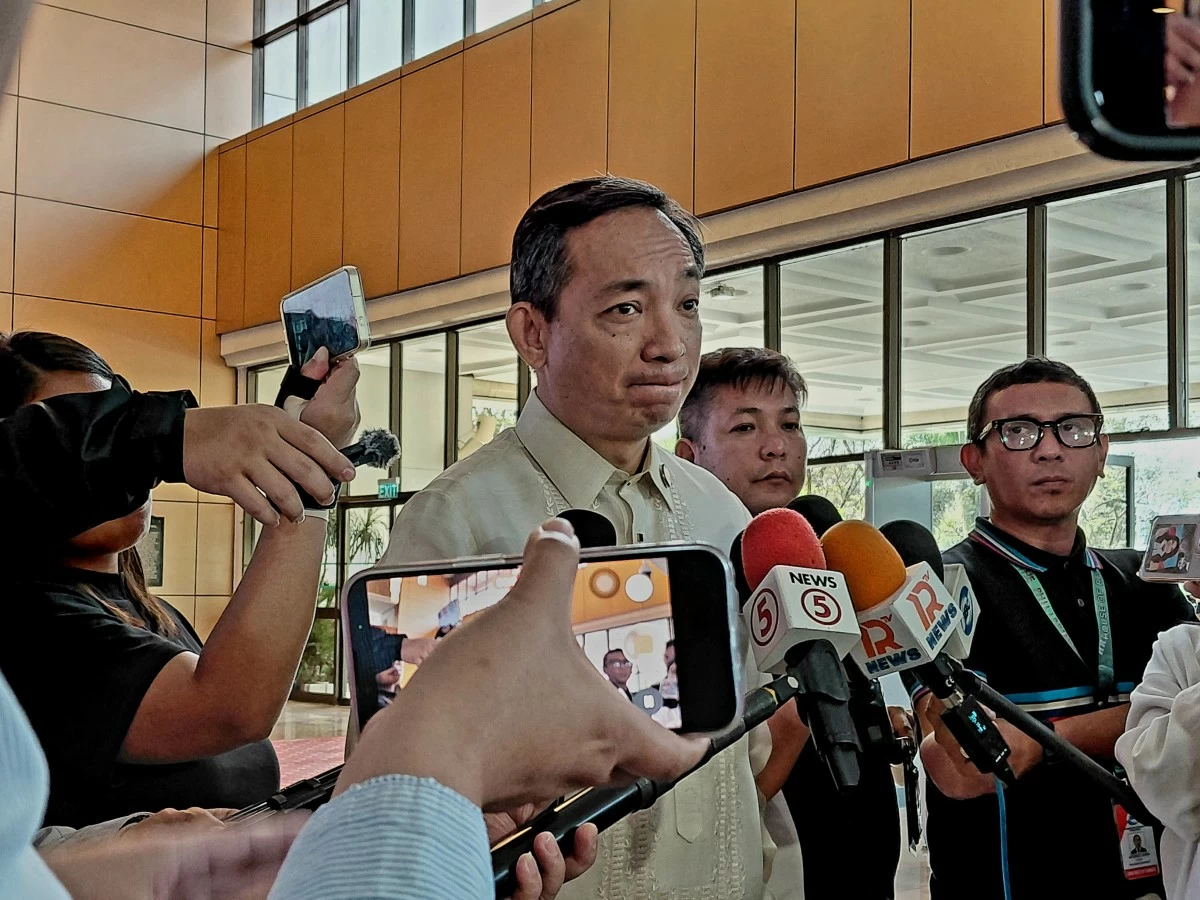
ACT Teachers Party-list Rep. Antonio Tinio (Ellson Quismorio/ MANILA BULLETIN)
Has ACT Teachers Party-list Rep. Antonio Tinio found proof of systematic overcharging by local oil companies?
In a statement Thursday, April 9, Tinio, a House deputy minority leader flagged what he called the “asymmetric pricing” and profiteering in oil market; which he deduced from his study of the Department of Energy's (DOE) own Monitoring Reports from October 2025 to March 2026.
He claimed that based on his comparative analysis, it was consistent that domestic fuel price adjustments exceeded what global benchmark movements and foreign exchange rates would justify under a fair pass-through computation.
“This report shows a pattern, not an accident—domestic price adjustments consistently overshoot what global benchmarks and forex movements would justify,” Tinio said.
“Across 18 weeks, consumers were overcharged by an average of P1.34 per liter for gasoline, P1.90 per liter for diesel, and P1.79 per liter for kerosene beyond fair replacement costs,” said the Makabayan solon.
“The point is basic: if the pump price is rising faster than the world price would warrant, the public is paying extra margin,” Tinio said. “And when this happens week after week, that is profiteering hidden behind the fog of deregulation.”
Tinio highlighted that the most severe anomalies clustered around the geopolitical price shock during the United States (US)-Israel-Iran conflict that began on Feb. 28, 2026—when market volatility was used as "cover" for massive margin expansion.
One extreme example cited in the report is March 31, 2026, when world gasoline benchmarks fell by $7.00 per barrel, which should have justified a P2.65 per liter drop, but domestic prices were instead increased by P2.90 per liter—a discrepancy of P5.55 per liter in a single week.
“That March 31 discrepancy should outrage every commuter and every household when the world indicator falls but local prices still go up, that is the clearest red flag that the market is being gamed,” Tinio said.
'DOE data blackout'
He also criticized the “DOE data blackout", and noted that the DOE failed to release weekly Oil Monitor reports for Feb. 24 and March 3, 2026--the two weeks immediately after the war’s outbreak.
The veteran solon rued that this was exactly when world prices spiked sharply and the public needed transparency the most.
“A data blackout during a geopolitical shock is unacceptable. DOE’s Oil Monitor reports are supposed to inform the public and guide policy. When reporting stops at the most critical moment, consumers are left defenseless and unable to verify whether price hikes are fair.”
Tinio further rejected the industry’s frequent justification for rapid price hikes through “replacement cost accounting". He argued that companies apply this logic asymmetrically—passing on increases immediately while delaying or minimizing price cuts when world prices fall.
“Oil companies invoke replacement costs to hike prices instantly, but they suddenly switch to ‘old stock’ arguments when world prices go down,” Tinio said. “That one-way logic ensures consumers pay fast on the way up, but are denied relief on the way down.”
“Ginagawang one-way ang patakaran. Pinapabilis ang taas-presyo, pinapabagal ang bawas-presyo. Pinagkakakitaan ang bawat galaw ng merkado habang ginagawang taga-salo ang mamamayan," he said.
(Policies are being made one-way. Price increases are sped up, price reductions are slowed. Every market movement is being profited from, while the people are made to bear the burden.)
In light of the findings, Tinio called for concrete regulatory and transparency measures, including: mandatory and uninterrupted DOE reporting during crises, margin transparency requirements when domestic adjustments exceed world-implied changes by wide thresholds, and automatic triggers to ensure prompt pass-through of significant world price drops.
“The DOE has the authority and the obligation to protect the public interest. If government insists there is no overpricing, then it should welcome transparency measures," he said.