







Diwa-Kapwa ethos: Toward shared prosperity
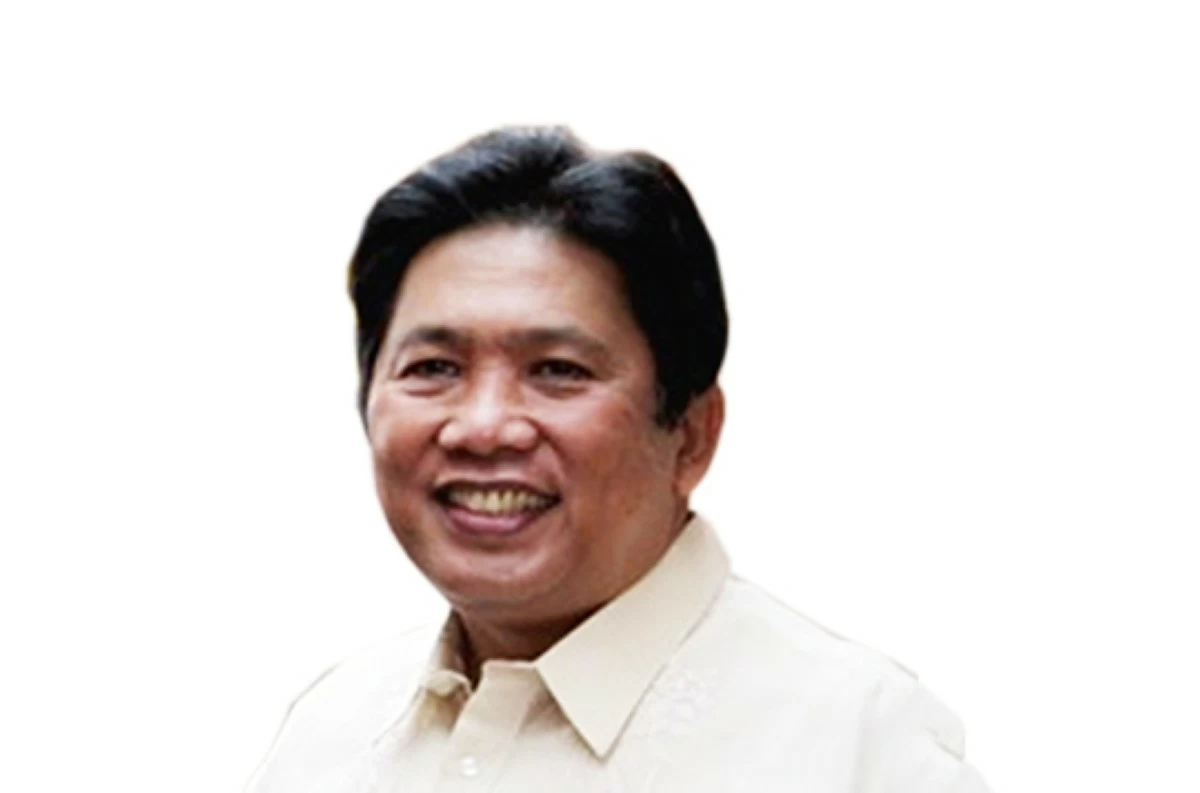
By Sonny Coloma
Published Apr 9, 2026 12:01 am
|
Updated Apr 8, 2026 04:02 pm


ENDEAVORS
There is a phrase we often invoke with pride yet struggle to fully live by: kapwa. It is usually translated as “others” or “fellowmen,” but in truth it goes much deeper—it speaks of a shared identity, a recognition that the self is never separate from the community. In my earlier work on Diwa and in our co-authored book Kapwa, both published in 2017, we advanced a simple yet profound proposition: that a values-based ethos—diwa—naturally leads to a more humane and inclusive regard for kapwa. And from this flows a stronger commitment to the common good.
Today, I would like to revisit that proposition in the context of one of our most persistent national challenges: the pursuit of shared prosperity in a society marked by stark and stubborn inequality.
Let us begin with a candid acknowledgment. Despite periods of economic growth and resilience, income disparity in our country remains deeply entrenched. Wealth continues to concentrate in narrow sectors, while large segments of our population struggle with precarious livelihoods, limited access to quality education, and inadequate social protection. We speak of growth, yet too often, it is growth that excludes.
Why does this persist?
Part of the answer lies in what some have described as a bureaucrat-capitalist state—an ecosystem where political and economic power reinforce each other, often to the detriment of broad-based development. In such a system, policies may be crafted not for the many, but for the few. Opportunities are unevenly distributed, and institutions that should level the playing field instead perpetuate advantage.
This is a structural problem, to be sure. But it is also, at its core, a question of values.
And this is where Diwa-Kapwa becomes not just relevant, but essential.
Diwa, as we have defined it, is the animating spirit—the inner compass that shapes our decisions, our priorities, and our sense of purpose. It is what guides leaders when they choose between self-interest and public service, between expediency and principle. When diwa is anchored on integrity, empathy, and accountability, it transforms governance, business, and civic life.
But diwa does not exist in isolation. It finds its fullest expression in kapwa.
When we truly embrace kapwa, we no longer see inequality as an abstract statistic. We see it as a lived reality affecting people who are, in essence, part of ourselves. The distance between “us” and “them” collapses. Indifference gives way to concern; concern, to action.
Imagine, for a moment, how this perspective reshapes our approach to development.
A business leader guided by Diwa-Kapwa does not measure success solely by profit margins, but by how value is created and shared—how workers are treated, how communities are uplifted, how environmental resources are stewarded. Profit remains important, but it is pursued within a broader framework of responsibility.
A public servant animated by Diwa-Kapwa resists the temptations of patronage and rent-seeking. Instead, he or she prioritizes transparency, fairness, and inclusivity in policymaking. Programs are designed not as dole-outs, but as pathways to empowerment.
A citizen imbued with Diwa-Kapwa moves beyond passive expectation. There is a willingness to participate, to hold institutions accountable, and to contribute—however modestly—to collective well-being.
In this sense, Diwa-Kapwa is not a slogan. It is a discipline. It requires conscious effort to align our actions with our professed values, especially in environments where the opposite is often rewarded.
Now, some might ask: can values alone overcome structural inequality?
The honest answer is no—not by themselves. We still need sound economic policies, institutional reforms, and effective governance. We need to invest in education, healthcare, infrastructure, and innovation. We must strengthen regulatory frameworks to ensure fair competition and curb abuses.
But here is the critical point: without the grounding of Diwa-Kapwa, even the best-designed policies can falter.
Policies are implemented by people. Institutions are run by people. Markets are shaped by human behavior. If the underlying ethos remains self-serving or indifferent, reforms will be diluted, circumvented, or captured.
Conversely, when a critical mass of leaders and citizens internalize Diwa-Kapwa, reforms gain traction. There is greater trust in institutions, stronger cooperation across sectors, and a more resilient commitment to long-term goals.
This is particularly important in our present moment, where the challenges we face—economic inequality, climate vulnerability, technological disruption—are complex and interconnected. They demand not only technical solutions, but also moral clarity.
It is no longer sufficient to be efficient or innovative; we must also be inclusive and compassionate. The measure of leadership is not just how well we grow our organizations, but how meaningfully we contribute to national development.
In practical terms, this means embedding Diwa-Kapwa in corporate strategies—through fair wages, inclusive hiring, responsible sourcing, and community engagement. It means advocating for policies that promote equitable growth, even when these may require short-term adjustments. It means mentoring the next generation of leaders to value not just success, but significance.
Shared prosperity, after all, is not an automatic outcome of economic growth. It is a deliberate choice—a collective decision to ensure that progress benefits the many, not just the few.
If we are to move closer to the dream of a more equitable society, we must reclaim and live out the essence of who we are as a people. Diwa-Kapwa is not an abstract ideal; it is a practical guide for action. It reminds us that our destinies are intertwined, that the well-being of one is bound to the well-being of all.
In the end, the question is not whether shared prosperity is possible. It is whether we have the will—the diwa—to see our kapwa not as others, but as extensions of ourselves.
When we do, the path forward, while still challenging, becomes clearer—and far more attainable.
Comments may be sent to [email protected]