






 Business
Banking & Finance
Barclays sees BSP pause first, then hike as war risks linger
Business
Banking & Finance
Barclays sees BSP pause first, then hike as war risks linger
Barclays sees BSP pause first, then hike as war risks linger


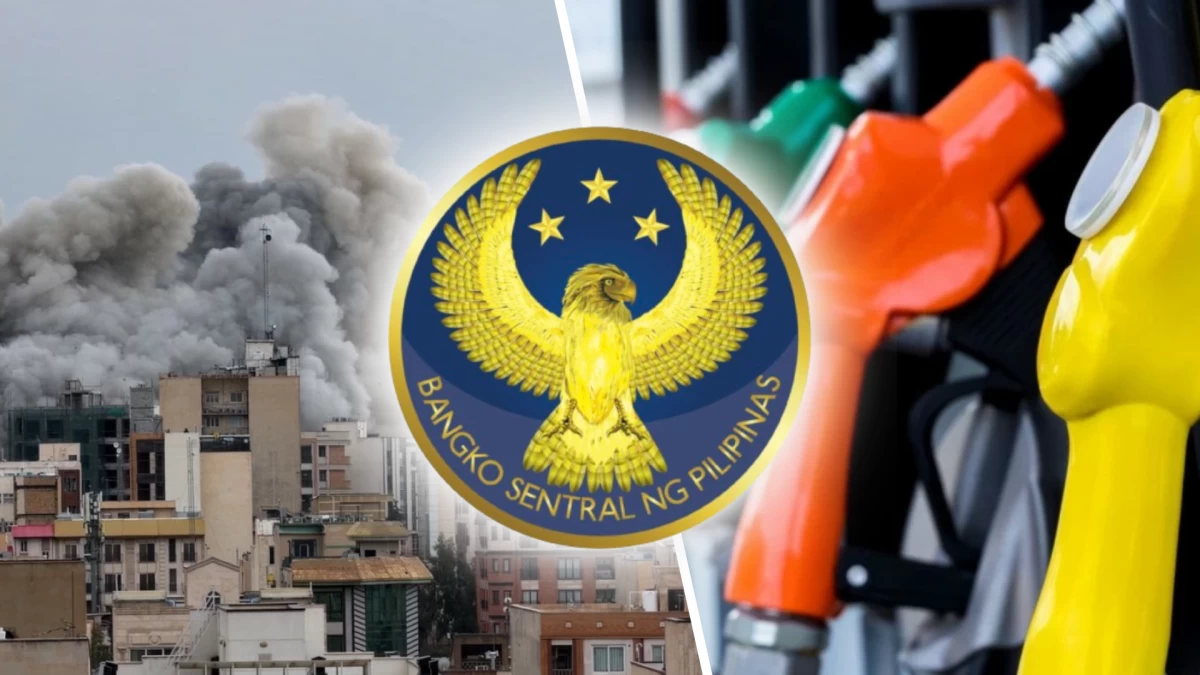
British banking giant Barclays sees the Bangko Sentral ng Pilipinas (BSP) holding key interest rates steady at this month’s policy meeting before possibly hiking in June, in a bid to support the already weak economic growth outlook even prior to the war in the Middle East.
“With the ceasefire likely to raise hopes of a more enduring de-escalation at the BSP—which recently held an off-cycle meeting where policymakers seem to have not been able to agree on a rate hike—focus would likely shift toward the potential damage inflicted by the conflict on the domestic economy,” Asia-based Barclays economists Brian Tan, Bum Ki Son, Aastha Gudwani, and Amruta Ghare said in an April 8 report obtained by Manila Bulletin.
“The Philippines—which shifted to a four-day workweek for the civil service to conserve fuel—would likely be a jurisdiction where policymakers would be concerned over a deepening of the economic challenges already present before the Middle East conflict broke out,” they added, referring to the post-pandemic-low gross domestic product (GDP) growth last year in the aftermath of the flood-control corruption scandal.
“We thus no longer expect a 25-basis-point (bp) rate hike in April,” they said.
Barclays noted that at the onset of the war, it projected two consecutive 25-bp interest rate hikes by the BSP’s Monetary Board (MB) during its policy meetings scheduled on April 23 and June 18.
It was a reversal of its earlier expectations of two straight rate cuts before the war.
As the conflict in the Middle East dragged on, Barclays had forecast that monetary policy tightening would be followed by easing through three 25-bp cuts next year.
However, as Barclays remains “wary of more lasting supply constraints from damages to energy facilities” inflicted by the war, it now expects an April pause and a 25-bp hike in June, to be followed by only two rate cuts in 2027.
“The risk is that a lasting de-escalation would quickly shift the central bank back to easing mode,” Barclays explained.
“The two 25-bp rate cuts we had earlier forecast for this year, to a terminal rate of 3.75 percent, might still be delivered after all after a near-term pause,” it said. The policy rate currently stands at 4.25 percent.
Across emerging Asian central banks, Barclays believes the majority would welcome the de-escalation of the Middle East war but remain cautious in case tensions reignite or the conflict leaves lasting impacts on energy supply, the global economy, and financial stability.
“Despite the ceasefire, emerging Asia is unlikely to escape at least some lasting economic drags from persistent supply constraints—at the least, economic data in the next quarter or two could remain under pressure,” Barclays said.
“We think the economic scarring from the attacks on energy facilities and ports in Iran as well as other Gulf nations could continue to keep supply under stress in emerging Asia,” it added.