ADVERTISEMENT

Ancient seafarers' story of love, identity, and belonging takes center stage in this ballet

Ballet Philippines to close its 56th season with 'Paglalakbay: The Journey of the Sea People'

Published Apr 9, 2026 10:54 pm  |  Updated Apr 11, 2026 10:29 am
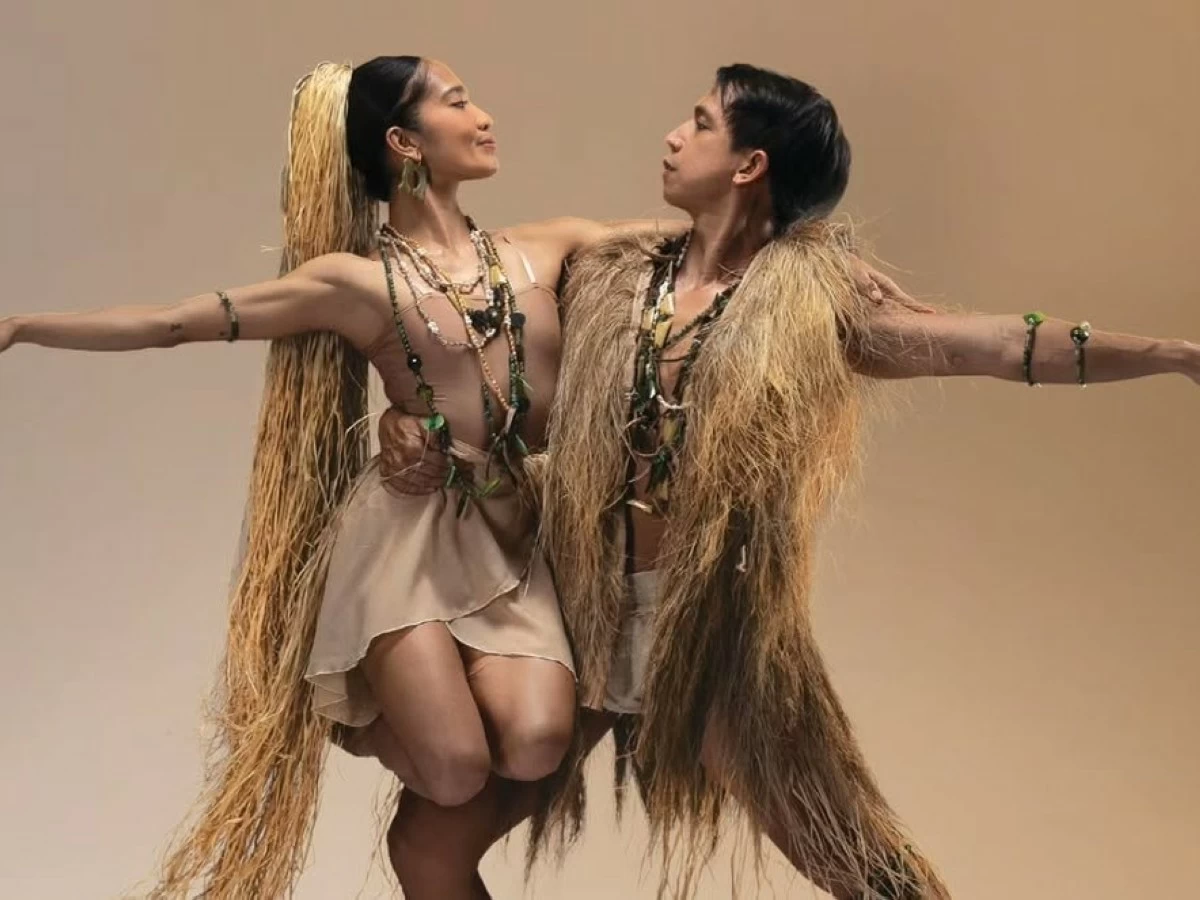
Ballet Philippines successfully concluded the world premiere run of "Paglalakbay: The Journey of the Sea People," a full-length original Filipino ballet that captivated audiences from April 10 to 12, 2026, at The Theatre at Solaire. The production marked a defining close to the company’s 56th season and a bold step in championing Filipino narratives on the classical stage.
Inspired by the Austronesian Migration, “Paglalakbay” tells an epic yet intimate story of movement, identity, and belonging. It follows ancient seafarers in search of a new home, centering on Ama and Kaman in Batanes, whose love endures trials of loss, transformation, and renewal, reflecting a timeless search for home across generations.
Choreographed by artistic director Mikhail Martynyuk, with a libretto by Sheree Chua and music by Ronald Vincenzo Khaw de Leon, the ballet reimagines classical technique through a distinctly Filipino lens.
“Academic technique is a form, not a style,” Mikhail shared. “In ‘Paglalakbay,’ choreographic language becomes the main narrator,” grounding movement in the forces of wind, land, and sea.
For Sheree, the work is both cultural and deeply personal. “Migration is often framed as displacement, but it can also be expansion,” she said. “This ballet becomes both historical and intimate.”
The production’s immersive design, led by Leeroy New, brought Batanes to life onstage, drawing from the team’s firsthand cultural immersion with local communities. This experience stemmed from Ballet Philippines’ Ballet Brigade outreach in Batanes, where artists engaged with over 200 locals.
“‘Paglalakbay’ was a bold investment for the company,” said Ballet Philippines president Kathleen Liechtenstein. “It reflects our belief that local indigenous stories deserve the grand scale and artistic rigor of the classical stage.”
Praised for its powerful storytelling and cultural resonance, “Paglalakbay” reinforces Ballet Philippines’ continuing mission: to bring Filipino stories to the forefront—epic, resilient, and universally human.
For more information on Ballet Philippines and its upcoming productions, visit www.ballet.ph
.

Related Tags

Arts and Culture Ballet Ballet Philippines Paglalakbay: The Journey of the Sea People Batanes
ADVERTISEMENT
.most-popular .layout-ratio{ padding-bottom: 79.13%; } @media (min-width: 768px) and (max-width: 1024px) { .widget-title { font-size: 15px !important; } }

{{ articles_filter_1561_widget.title }}

.most-popular .layout-ratio{ padding-bottom: 79.13%; } @media (min-width: 768px) and (max-width: 1024px) { .widget-title { font-size: 15px !important; } }

{{ articles_filter_1562_widget.title }}

.most-popular .layout-ratio{ padding-bottom: 79.13%; } @media (min-width: 768px) and (max-width: 1024px) { .widget-title { font-size: 15px !important; } }

{{ articles_filter_1563_widget.title }}

{{ articles_filter_1564_widget.title }}

.mb-article-details { position: relative; } .mb-article-details .article-body-preview, .mb-article-details .article-body-summary{ font-size: 17px; line-height: 30px; font-family: "Libre Caslon Text", serif; color: #000; } .mb-article-details .article-body-preview iframe , .mb-article-details .article-body-summary iframe{ width: 100%; margin: auto; } .read-more-background { background: linear-gradient(180deg, color(display-p3 1.000 1.000 1.000 / 0) 13.75%, color(display-p3 1.000 1.000 1.000 / 0.8) 30.79%, color(display-p3 1.000 1.000 1.000) 72.5%); position: absolute; height: 200px; width: 100%; bottom: 0; display: flex; justify-content: center; align-items: center; padding: 0; } .read-more-background a{ color: #000; } .read-more-btn { padding: 17px 45px; font-family: Inter; font-weight: 700; font-size: 18px; line-height: 16px; text-align: center; vertical-align: middle; border: 1px solid black; background-color: white; } .hidden { display: none; }
function initializeAllSwipers() { // Get all hidden inputs with cms_article_id document.querySelectorAll('[id^="cms_article_id_"]').forEach(function (input) { const cmsArticleId = input.value; const articleSelector = '#article-' + cmsArticleId + ' .body_images'; const swiperElement = document.querySelector(articleSelector); if (swiperElement && !swiperElement.classList.contains('swiper-initialized')) { new Swiper(articleSelector, { loop: true, pagination: false, navigation: { nextEl: '#article-' + cmsArticleId + ' .swiper-button-next', prevEl: '#article-' + cmsArticleId + ' .swiper-button-prev', }, }); } }); } setTimeout(initializeAllSwipers, 3000); const intersectionObserver = new IntersectionObserver( (entries) => { entries.forEach((entry) => { if (entry.isIntersecting) { const newUrl = entry.target.getAttribute("data-url"); if (newUrl) { history.pushState(null, null, newUrl); let article = entry.target; // Extract metadata const author = article.querySelector('.author-section').textContent.replace('By', '').trim(); const section = article.querySelector('.section-info ').textContent.replace(' ', ' '); const title = article.querySelector('.article-title h1').textContent; // Parse URL for Chartbeat path format const parsedUrl = new URL(newUrl, window.location.origin); const cleanUrl = parsedUrl.host + parsedUrl.pathname; // Update Chartbeat configuration if (typeof window._sf_async_config !== 'undefined') { window._sf_async_config.path = cleanUrl; window._sf_async_config.sections = section; window._sf_async_config.authors = author; } // Track virtual page view with Chartbeat if (typeof pSUPERFLY !== 'undefined' && typeof pSUPERFLY.virtualPage === 'function') { try { pSUPERFLY.virtualPage({ path: cleanUrl, title: title, sections: section, authors: author }); } catch (error) { console.error('ping error', error); } } // Optional: Update document title if (title && title !== document.title) { document.title = title; } } } }); }, { threshold: 0.1 } ); function showArticleBody(button) { const article = button.closest("article"); const summary = article.querySelector(".article-body-summary"); const body = article.querySelector(".article-body-preview"); const readMoreSection = article.querySelector(".read-more-background"); // Hide summary and read-more section summary.style.display = "none"; readMoreSection.style.display = "none"; // Show the full article body body.classList.remove("hidden"); } document.addEventListener("DOMContentLoaded", () => { let loadCount = 0; // Track how many times articles are loaded const offset = [1, 2, 3, 4, 5, 6, 7, 8, 9, 10]; // Offset values const currentUrl = window.location.pathname.substring(1); let isLoading = false; // Prevent multiple calls if (!currentUrl) { console.log("Current URL is invalid."); return; } const sentinel = document.getElementById("load-more-sentinel"); if (!sentinel) { console.log("Sentinel element not found."); return; } function isSentinelVisible() { const rect = sentinel.getBoundingClientRect(); return ( rect.top < window.innerHeight && rect.bottom >= 0 ); } function onScroll() { if (isLoading) return; if (isSentinelVisible()) { if (loadCount >= offset.length) { console.log("Maximum load attempts reached."); window.removeEventListener("scroll", onScroll); return; } isLoading = true; const currentOffset = offset[loadCount]; window.loadMoreItems().then(() => { let article = document.querySelector('#widget_1690 > div:nth-last-of-type(2) article'); intersectionObserver.observe(article) loadCount++; }).catch(error => { console.error("Error loading more items:", error); }).finally(() => { isLoading = false; }); } } window.addEventListener("scroll", onScroll); });

Sign up by email to receive news.