






Manila Bulletin
 Spotlight Features
Sweet Success: High school graduate earns ₱1M a year as a sugarcane farmer
Spotlight Features
Sweet Success: High school graduate earns ₱1M a year as a sugarcane farmer
Spotlight Features
Sweet Success: High school graduate earns ₱1M a year as a sugarcane farmer
Sweet Success: High school graduate earns ₱1M a year as a sugarcane farmer
By AJ Gomez
Published Apr 8, 2026 04:12 pm


When Solomon Pagunsan left Bayawan City, Negros Oriental for Manila, he believed opportunity awaited him at every corner. Like many provincial dreamers, he hoped for an easier life in the capital.
But reality proved otherwise, especially without a diploma.
A high school graduate, Pagunsan spent years finding his footing before becoming a tourist assistant at the Department of Foreign Affairs, where he worked with embassies from Korea, Japan, Taiwan, and China for a decade.
“I had this desire to explore further. I wanted my life to be different, so I went to Manila. I was employed for 10 years as a tourist assistant,” he said in Tagalog.
But even as he worked as an employee, he kept thinking about life on a farm and building a livelihood from it.
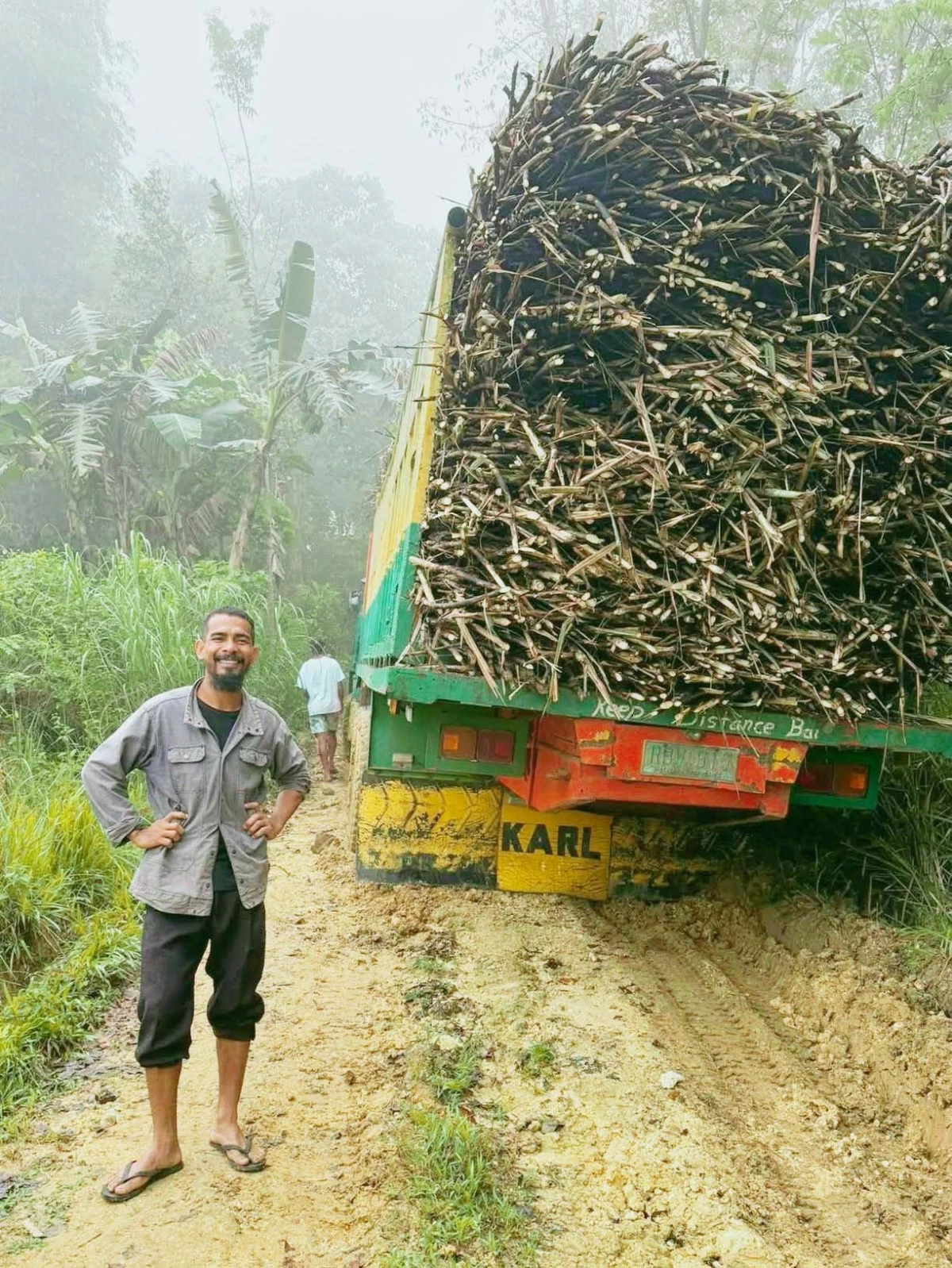
GOOD BUSINESS — Freshly harvested sugarcane from Solomon Pagunsan’s farm are loaded onto a truck for delivery.
Pagunsan had been engaged in farming since he was seven years old. He said he learned how to plant from his mother, Editha, 60, the sole farmer in the family.
“When I was in school, I remember rushing home because I really wanted to plant. I feel like that’s where my heart is,” he shared.
“At that time, I was really saving money. When I traveled to our office from Binondo to Manila, I rode my bike and brought my own food to minimize my expenses,” he recalled.
Pagunsan was able to save around ₱30,000 and figured it was time to return to his province. But he eventually admitted he had made a mistake. “I ran out of money. It simply wasn’t enough. I was back to square one.”
Starting over in Negros
When he returned in 2017, Pagunsan did not immediately establish his own farm. Instead, he worked for two years as a farm worker in a sugarcane plantation, determined to learn the crop from the ground up.
When he eventually started his own farm, he first planted bananas, cassava, sweet potatoes, corn, and rice. Eventually, he ventured into sugarcane. Today, his rented sugarcane fields span around 18 hectares across different locations, totaling 20 hectares including other crops.
Unlike vegetables and other produce that often sell at negotiated, sometimes unfavorable prices, sugarcane offered more stability.
Thriving with sugarcane
Sugarcane from Pagunsan’s farm is harvested once a year, which means income from it also comes annually. But if there is one thing he can say about planting sugarcane, Pagunsan says it is worth it.
Centrals often start milling in October and end in May. Pagunsan usually brings his harvest to the nearest central, Sta. Catalina Tolong Milling Corporation (SCTMC).
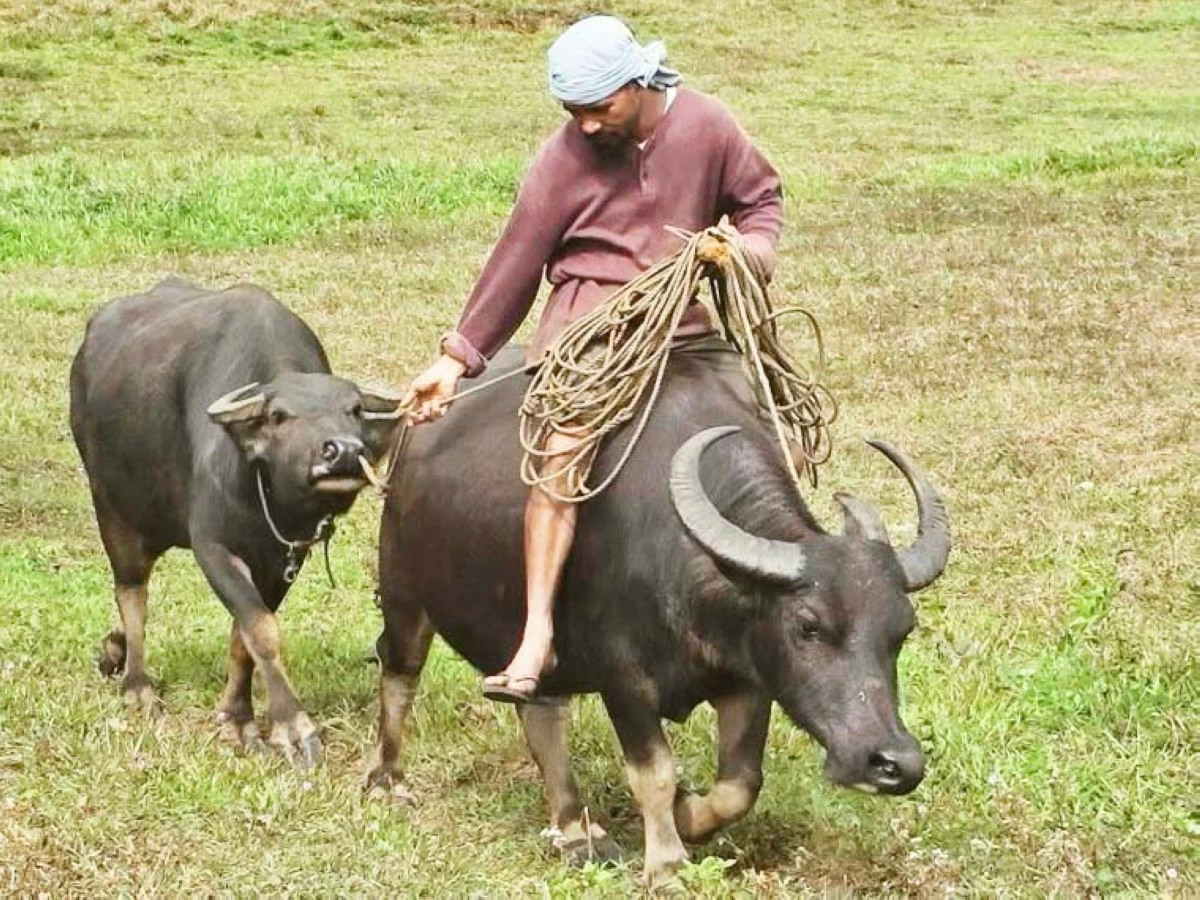
SOLOMON PAGUNSAN rides a carabao across his farm in Negros Oriental.
According to Pagunsan, these centrals buy their harvest and sell it at their own discretion, conducting bidding sessions among different companies to determine who will secure the sugar.
Last year, Pagunsan sold 400 tons of sugarcane, grossing around ₱1.2 million. When sugar prices surged, his gross income reached about ₱2 million—enough for him to purchase a pick-up truck to help transport his harvest.
Pagunsan then begins replanting sugarcane and waits for the next milling season. “If the price of sugar is high, I can tell you that you'll be a millionaire in a year. That’s the reality,” he shared.
Surviving the in-between
Despite the promising returns, Pagunsan said sugarcane income alone cannot sustain a family year-round.
Pagunsan and his wife, Jemimah, who works for a Manila-based company, have a 12-year-old son to support. To bridge the long gap between harvests, he raises pigs, chickens, and carabaos.
He earns more or less ₱10,000 a month from his chickens and ₱60,000 every four months from his pigs. He occasionally sells his carabaos when they are tight on budget.
“If I don't look for another source of income, we’ll starve. That’s the reality of how we are able to go through the year,” he said.
As he told his story, Pagunsan emphasized that farming is “no joke.” He remembered working all day just to make his dream happen. He had no time to rest except when he ate. From planting to weeding, he did all the work.
No retreat, no surrender
Farming could be fun, Pagunsan said, especially when you start seeing the fruits of your hard work. For farmers like him, giving up never crossed his mind.
“Some farmers often feel discouraged and choose to stop planting when problems arise on the farm. I don’t plan on doing the same. I have worked hard and long enough to get where I am to stop my journey now,” he said.
Pagunsan believed his success was not found in Manila’s busy streets. He left home chasing an opportunity but returned home to build it. (Photos courtesy of Solomon Pagunsan)