






 Business
Trade & Industry
Negros Power modernizes grid with ₱1.3-billion infra upgrades
Business
Trade & Industry
Negros Power modernizes grid with ₱1.3-billion infra upgrades
Negros Power modernizes grid with ₱1.3-billion infra upgrades


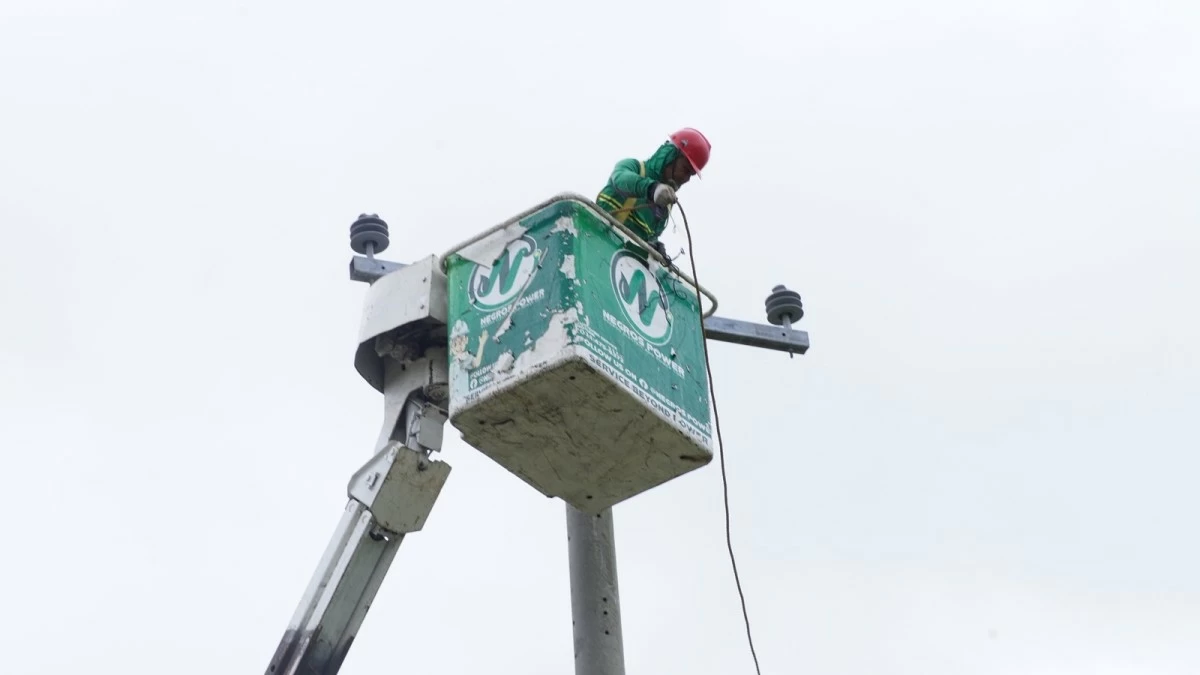
Enrique K. Razon Jr.-led Negros Electric and Power Corp. (Negros Power) announced that it is infusing ₱1.3 billion to modernize its grid and improve the power system in the region.
In a statement on Wednesday, April 8, Negros Power said the investment would be utilized for substation upgrades, as well as retrofitting its power lines, transformers, and poles.
According to the local distribution utility (DU), the redevelopments reduced the average number of power interruptions by 59 percent in 2025, while power outages became shorter, averaging 129 minutes per month last year compared with 993 minutes per month in 2024.
It is also planning to expedite major infrastructure improvements in urbanized parts of Negros Island through the rollout of underground distribution systems (UDS), which would develop underground cables to replace the current overhead lines.
Negros Power is also rolling out a 37.5-megavolt-ampere (MVA) mobile substation scheduled for installation within the year. Valued at ₱192 million, the project is designed to secure a stable power supply while permanent substations are upgraded to accommodate growing power demand.
Through its sitio electrification program (SEP), the company has energized 2,061 households within 41 sitios. Negros Power aims to expand this number to 10,241 households in 318 more sitios over the next few years.
Roel Z. Castro, Negros Power president and chief executive officer (CEO), said that these financial injections for system upgrades align with the company’s goals to secure electrification in rural areas.
“Our goal is to ensure that our customers continue to enjoy affordable power while supporting our long-term sustainability through renewable energy (RE),” he said.
Similar programs and initiatives were conducted in parts of Iloilo City in January 2026, aimed at improving grid resilience and enhancing the urbanized cities’ appeal through the reduction of spaghetti wires.
Negros Power hopes that these efforts will serve as a model for other distribution utilities seeking to improve reliability and expand coverage.