








Nowadays, Poblacion is known as one of the biggest party districts in Metro Manila. What most people don’t know is that one of Makati’s most popular barangays is actually home to a 106-year-old religious tradition.
Every Holy Week, the parties at Poblacion die down, to be replaced by the Kalbaryo, street grottos or “churches” set up around Samprio, the barangay’s old name. Tour group WanderManila, most known for its One Night in Intramuros dark history nighttime tour, has been offering a walking tour of Poblacion every Holy Thursday for the past four years. “The kalbaryos were named as such because the first time they started popping up, walking from grotto to grotto was ‘nangangalbaryo,’” said Benjamin Canapi, WanderManila’s head tour guide.
The tradition started in 1920 with a group called Samahang Ilaya. “They were already doing Pabasas in their living rooms. And when more and more people came in, they transferred to their garage. And after their garage got filled up, they put up a grotto on the street, which became so popular that it inspired other organizations and families to do the same. The tradition has been growing ever since,” Canapi said. “Currently there are 54 such grottos across Poblacion.”
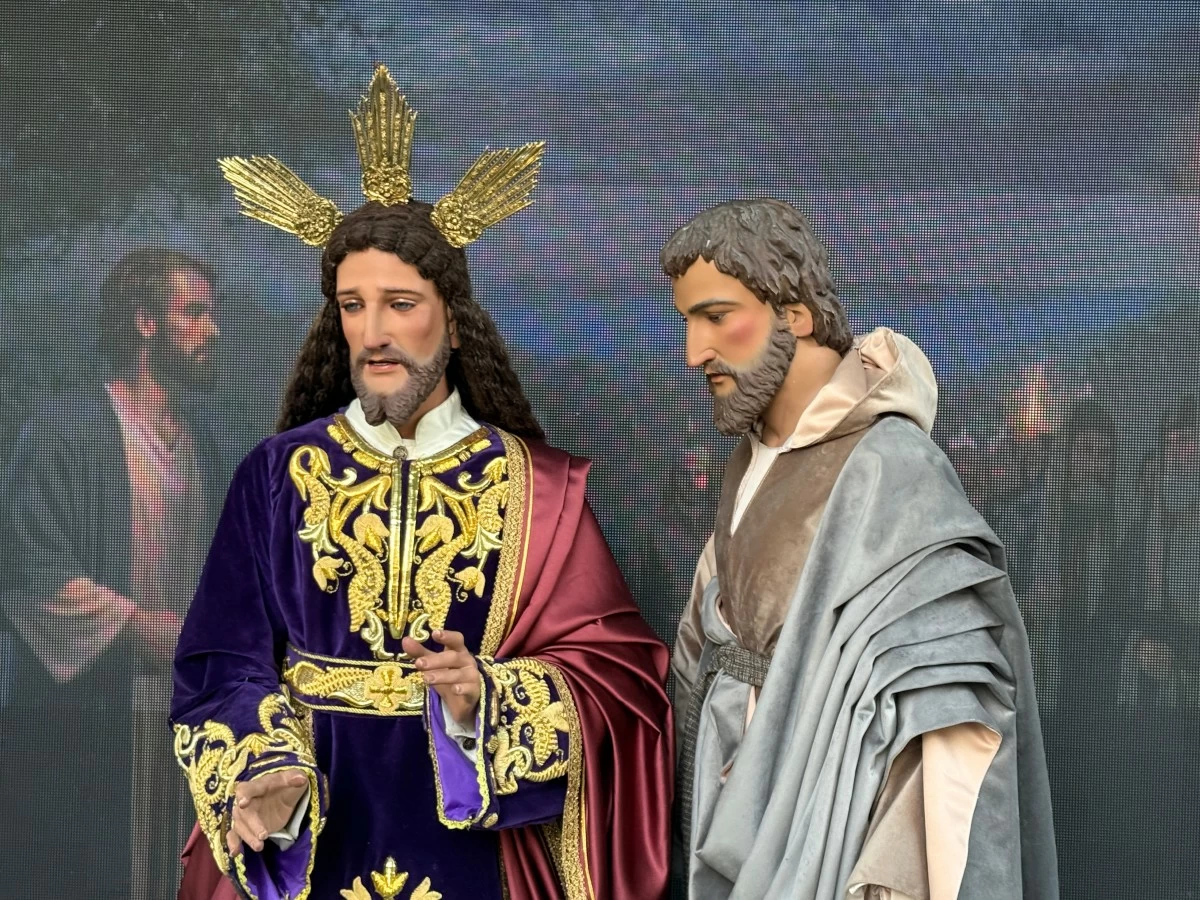
IT WAS ONLY A KISS - A close up of Judas’ betrayal of Jesus at the Garden of Gethsemane at the grotto of Samahang Ilaya, the organization that started Poblacion’s Kalbaryo tradition.
The street grottos, some of which are permanent chapels, feature larger-than-life-sized statues that depict various events leading up to Christ’s crucifixion, all of them rendered in loving detail, each one with its own personal touch.
OG Makati
“Poblacion is actually old Makati,” Canapi shared. “This was the settlement that Miguel Lopez de Legaspi found back in 1571. And while he brushed the settlement off as useless, the Jesuits were able to develop it into a place of commerce, [known for] for pottery and earthenware. For most of its existence, aside from a nice church, Makati has always been a gentle, sleeping town. It kind of shifted a little bit during the American period, but great change happened here in the 50s when the Ayalas developed the business district and that trickled down to Poblacion, which became its nightlife and dining center.”
Vestiges of this “small, sleepy town” can be felt as one strolls through Poblacion on Holy Thursday. There are no cars on the usually traffic-jammed streets, and prayers can be heard from almost every corner as people commemorate the holy days through the Pabasa ng Pasyon, the reading of the epic poem narrating Jesus’ life, death, and resurrection.
What’s in a name
The grottos are set up by different religious organizations with the support of the parish and local government. The name of the organization is prominently displayed in front of or beside its respective grotto, and a quick look at these offers a glimpse into the quirky creativity of the Filipino psyche. There are “safe” names like “Holy Cross” and the aforementioned “Samahang Ilaya,” and then there are the more imaginative ones like “Poultry,” named after a neighborhood chicken coop; “D’SAINT,” an acronym for Samahang Ilalim ng Tulay (Organization Under the Bridge), and “Bla-Gag,” “literally—and this is how they describe it—the sound you make when you fall off a chair after getting drunk.”
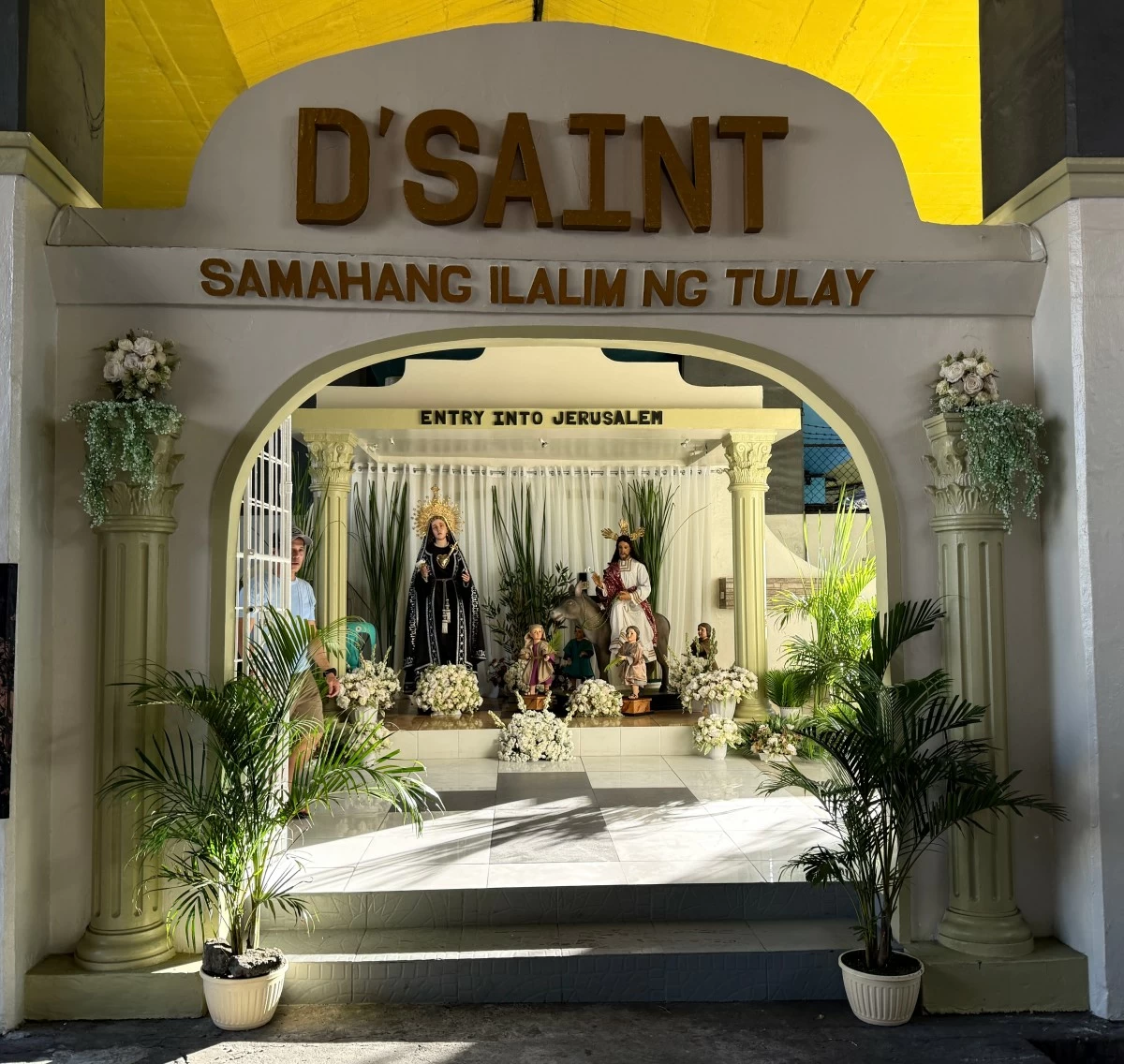
UNDER THE BRIDGE — A grotto underneath a bridge depicting Jesus’ entry into Jerusalem with its organizer’s name prominently displayed at the entrance.
“I think it's reflective of Philippine culture that we don't take anything 100% seriously. There's always time for a little levity,” Canapi said.
The Kalbaryo is just a part of Poblacion’s Holy Week tradition. “The images are also pulled out of the churches on Friday noon, and they are brought to the church for a grand procession…. [which] will go all across Poblacion, visiting all 54 street churches, and usually takes two to three hours.”
Enduring tradition
The tour ended at the old Sampiro church, now called Sts. Peter and Paul Parish Church. “The parish is the heart of Poblacion. I can also argue it's the heart of Makati itself because the church was founded in 1620 and has been the anchor of the district ever since.”
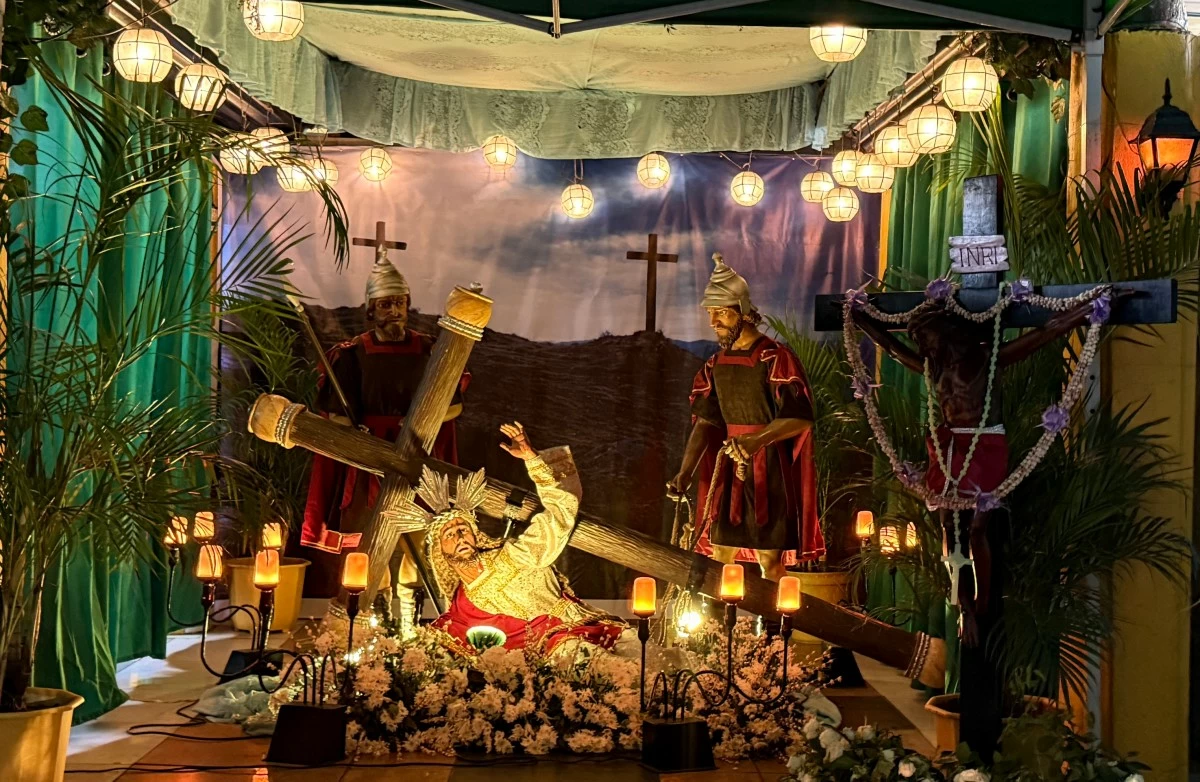
WALK THIS WAY — A grotto depicting Jesus’ carrying of the cross organized by Samahang Guardians.
The crowds swell after sunset, the air of holiness now tinged with an atmosphere of small-town festivity. “There's a bit about living specifically in Metro Manila that can get people very jaded… but if you really look hard enough, across Metro Manila, there are enduring traditions that are worth checking out. If you are looking for that kind of activity, Poblacion should be one to visit,” Canapi said. “There’s two parts of Poblacion. There’s the Poblacion that everybody knows: the party center, all the nice swanky bars, dining options and stuff like that, but there's also a Poblacion that is steeped in tradition and history… a side of Poblacion trying to push back [against] all the modernity coming in.” (Photos by Yvette Tan)