






Manila Bulletin
 Philippines
National
House assured of stable fuel supply in 1st crisis response council hearing
Philippines
National
House assured of stable fuel supply in 1st crisis response council hearing
Philippines
National
House assured of stable fuel supply in 1st crisis response council hearing
House assured of stable fuel supply in 1st crisis response council hearing
Published Apr 8, 2026 01:34 pm


At A Glance
- The House of Representatives was assured on Wednesday, April 8 that the country's fuel supply was stable despite global volatility, even as the chamber convened 13 committees to draw up a legislative response to the fuel price crisis.
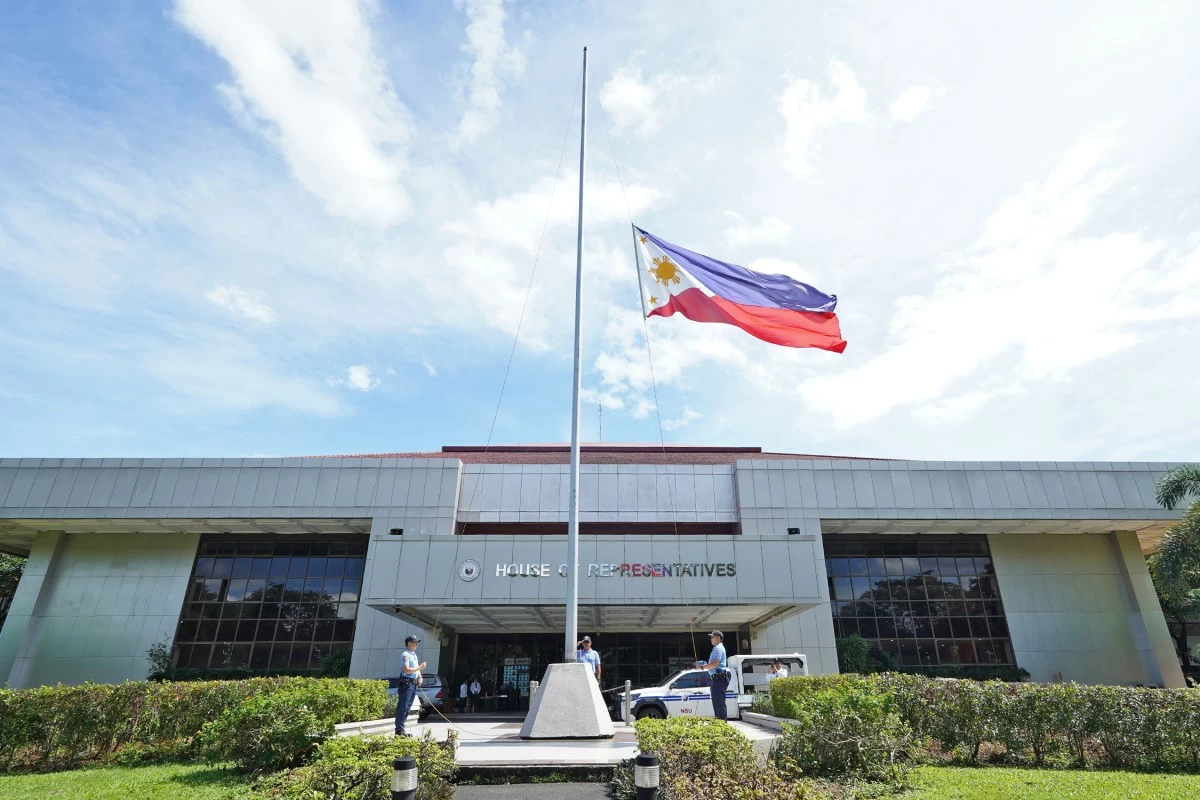
The House of Representatives (Contributed photo)
The House of Representatives was assured on Wednesday, April 8 that the country’s fuel supply was stable despite global volatility, even as the chamber convened 13 committees to draw up a legislative response to the fuel price crisis.
During the first hearing of the 13-panel Legislative Energy Action Development (LEAD) Council, Department of Energy (DOE) Secretary Sharon Garin assured congressmen that current fuel supply levels remained sufficient.
“Currently, our supply is on average 50.42 days. It’s not like we’re finished after 50 days. It’s the time for us to get replenishment of what we consume,” Garin told the mega-panel formed by no less than House Speaker Faustino “Bojie” Dy III and Majority Leader Ilocos Norte 1st district Rep. Sandro Marcos.
Garin said deliveries from key suppliers continue to flow following sustained coordination by the government.
“So far, there has been minimal disruptions. Most of them are delivering,” she said.
The briefing outlined early actions taken to stabilize supply chains and prevent disruptions, with the government working alongside oil companies, foreign suppliers, and Philippine embassies.
To strengthen reserves, the government moved to build additional buffer stocks. “The government decided to purchase two million barrels. So far, we have procured one million,” she shared.
However, the DOE chief noted that storage capacity remains limited, with total nationwide capacity good for only 60 days.
Garin told lawmakers that while price controls are not allowed under the Oil Deregulation Law, enforcement has been intensified to curb profiteering and hoarding.
“To mandate a certain price or cap a price, that’s beyond the powers of DOE, but we make sure there’s no profiteering,” she pointed out.
Garin said early incidents of market abuse were addressed through joint inspections with local governments and law enforcement, with monitoring now scaled up nationwide.
The DOE is also pursuing non-regulatory measures to ease the burden on consumers, particularly in the transport sector. “We push for the staggering and for the discounts. We’re pushing them to have more discounts for our PUVs (public utility vehicles),” Garin noted.
On electricity, she reported that government interventions helped temper potential increases in generation costs. “Instead of four pesos increase, it will only be one peso."
She added that 1,471 megawatts (MW) of renewable energy (RE) capacity are being fast-tracked to reduce dependence on volatile fuel sources.
Garin emphasized that managing demand is now critical to extending supply and stabilizing the situation. “If we have 50 days today, if we save 50% on fuel efficiency, the 50 days can be 75 days.”
She cited conservation efforts such as Earth Hour, which saved 145.5 megawatts in one hour, and said similar measures are being expanded across government agencies.
Speaker Dy sets tone of LEAD hearings
Speaker Dy set the tone early during Wednesday hearing, the discussions of which was expected to help the solons craft the so-called "Bayanihan 3" bill. This measure is patterned after the two Bayanihan laws that were enacted during the height of the Covid-19 pandemic in 2020.

House Speaker Faustino "Bojie" Dy III (Ellson Quismorio/ MANILA BULLETIN)
“Hindi tayo magkakanya-kanya, bagkus tayo ay magsasama-sama (We will not do this as individuals; instead we will do this together). This is exactly the kind of whole-of-government response our people expect—a Congress that has chosen to work with the executive to find lasting and forward-looking solutions," Dy said in opening statement.
The Speaker from Isabela's 6th district outlined two priorities for the hearing: immediate assistance and long-term reforms.
“Una, ang agarang pagtugon—targeted assistance para maibsan ang pasanin ng ating mga kababayan. Ikalawa, ang mga pangmatagalang solusyon—mga reporma sa enerhiya, ekonomiya, at seguridad sa suplay upang hindi na tayo paulit-ulit na tinatamaan ng ganitong krisis,” he said.
(First, the immediate response—targeted assistance to ease the burden on our people. Second, the long-term solutions—reforms in energy, the economy, and supply security so that we are no longer repeatedly struck by crises like this.)
“The objective is clear: protect the Filipino people, stabilize the economy, and build resilience against future shocks,” underscored Dy.
Panel chairmen chime in
The LEAD Council's presiding officer, Marikina City 2nd district Rep Miro Quimbo, said the House was no longer dealing with a passing disturbance but with a structural weakness that the tensions in the Middle East had simply exposed more brutally.
“Fuel has always been a vulnerability of our economy. But it is in moments like this – when global trade is disrupted and geopolitical tensions escalate – that we fully see the depth of our structural weaknesses,” Quimbo, chairman of the Committee on Ways and Means, said.
“Our country remains heavily dependent on imported oil with almost 100% of our fuel supply sourced from abroad, and only one remaining refinery operating in the country. Ang ibig sabihin nito, sa hirap o ginhawa, nakatali ang ekonomiya natin sa ngayon sa kalagayan ng ibang mga bansa. Wala tayong sapat na kakayahan ngayon upang kontrolin ang presyo at daloy ng enerhiya sa loob ng ating sariling bansa,” he noted.
(This means that, whether in hardship or ease, our economy is currently tied to the conditions of other countries. We do not yet have sufficient capacity to control the price and flow of energy within our own nation.)
“Dama na ng bawat Pilipino ang epekto ng krisis. Pumalo na ang gasoline sa halos P110 per liter at ang diesel halos nasa P130 per liter na. Hindi lang transport sector ang napupuruhan dahil nadarama na din ng ibang sektor ang bigat ng presyo ng langis, tulad ng agricultural industry,” Quimbo said.
(Every Filipino already feels the impact of the crisis. Gasoline has surged to nearly P110 per liter, and diesel is hovering around P130 per liter. It is not only the transport sector that is suffering as the weight of oil prices is also being felt by other sectors, such as the agricultural industry.)
Meanwhile, AGIMAT Party-list Rep. Bryan Revilla, chairman of the Committee on on Overseas Workers Affairs, shifted the hearing’s focus to the human stakes of the conflict. He told his colleagues not to let the economic story erase the danger faced by Filipinos working in the Middle East.
“Today, we gather under the shadow of a war whose devastation is measured primarily in disrupted markets and rising fuel costs. Yet, before we speak of oil prices, inflationary pressures, fiscal stability, and economic contingencies, let us first speak of the human cost of this conflict,” Revilla said.
"This representation’s priority remains the unwavering protection of the welfare, safety, and rights of our OFWs (overseas Filipino workers) currently in the region. With millions of our kababayans living and working in the Middle East, this conflict is not merely a geopolitical event, it is a direct threat to the lives and livelihood of our people,” he said.