






Manila Bulletin
 Philippines
National
'Cartels threaten farmers selling produce at lower price to community pantries' — organizer
Philippines
National
'Cartels threaten farmers selling produce at lower price to community pantries' — organizer
Philippines
National
'Cartels threaten farmers selling produce at lower price to community pantries' — organizer
'Cartels threaten farmers selling produce at lower price to community pantries' — organizer
Published Apr 8, 2026 01:27 pm


At A Glance
- Ana Patricia Non, initiator of the Community Pantry Philippines, said Wednesday, April 8, such an issue has been persistent in the country's food supply but is further exacerbated by the ongoing crisis brought by the Middle East conflict.
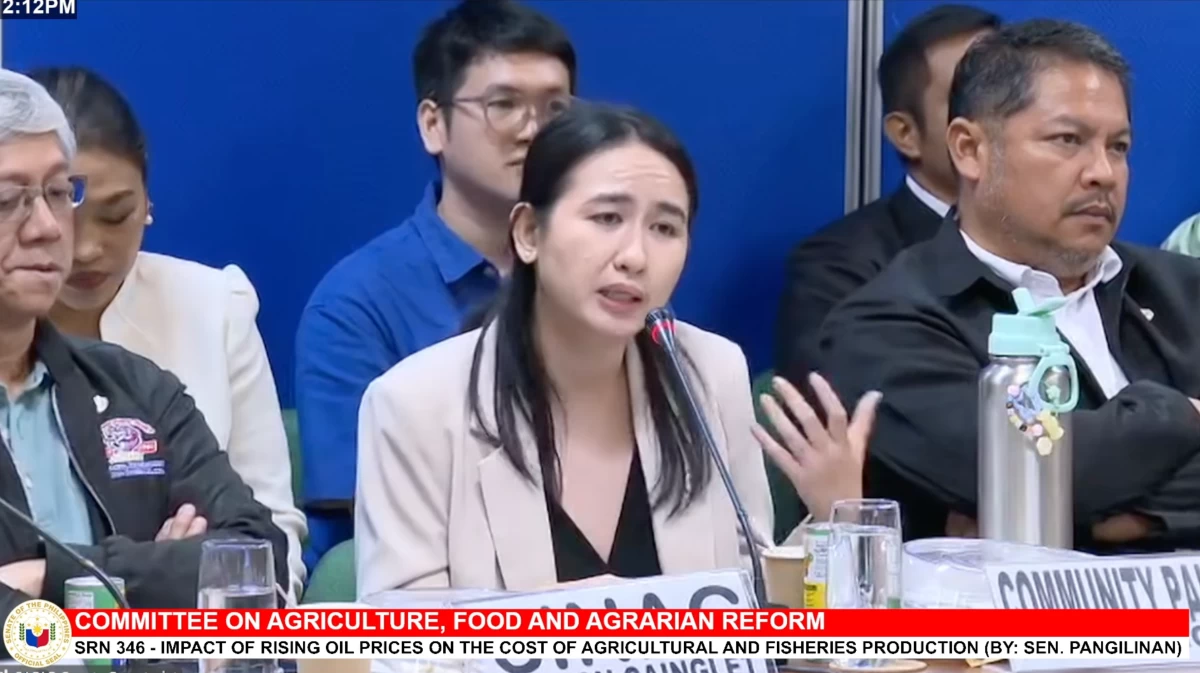
Vegetable cartels are allegedly threatening farmers who are selling their produce at a lower price to community pantries that provide free food to those in need.
Ana Patricia Non, initiator of the Community Pantry Philippines, said Wednesday, April 8, such an issue has been persistent in the country's food supply but is further exacerbated by the ongoing crisis brought by the Middle East conflict.
During a Senate hearing that tackled the impact of the hostilities on the government's agriculture sector, Non laid out challenges that advocacy groups, such as those that hold community pantries, are facing in helping those hardly hit by the worsening crisis.
Non said organizers of community pantries are restricted from identifying farmers who sell lower price of vegetables amid threats to their lives and safety.
That prevents them from helping both farmers, who end up with losses because of unsold produce, as well as poor consumers, who want to avail affordable food.
"Bawal naming i-advertise na bumili derecho sa mga farmers na 'to kasi yung mga middlemen or yung ibang traders, nakaabang po sila (We cannot tell people to buy directly from these farmers because the middlemen, the traders are monitoring them)," Non told a Senate Committee on Agriculture, Food and Agrarian Reform hearing.
"Ah kumita kayo last season, bumili sa inyo si community pantry. So ngayon this season, mas mura yung bili ko sa inyo. So may mga ganoon din pong threats sa security, sa safety ng mga farmers at mga organizers din po (Traders are telling them, 'so you earn because community pantries have brought from you. So, this season, I'll buy your produce at a lower price.' So there are those kinds of threats to the security and safety of the farmers and organizers)," she added.
The Philippine government is scrambling to contain the impact of the US, Israel and Iran conflict that has since spiked oil prices, and eventually, basic goods.
Community pantries first emerged during the COVID-19 pandemic. They start popping up again as many poor Filipinos struggle to make ends meet because of increasing food prices.
Aside from vegetable cartels, Non said organizers also face challenges because of government policies as well as in logistics.
She said community pantry organizers are prohibited from operating the same community pantry in another city because of "limitations" supposedly of the Department of Social Welfare and Development (DSWD). Non was referring to the public solicitation permit.
"So ang ni-rerequest lng po namin sa mga panahon po gaya ng ganitong emergency, madali lang po sa aming tumulong, medyo na-lilimit lng po kami sa mga policies natin. Nahihirapan po kami gumalaw (All we are requesting during times of emergency like this is to make it easier for us to help, as we are currently being somewhat limited by our existing policies. We are finding it difficult to move)," she said.
Non also said community pantries have ample supply but they cannot mobilize them due to logistical problems. The Department of Agriculture (DA), she said, can only lend one Kadiwa truck.
"Yung mga problema pong na-raise namin existing na po na problema sa food supply natin. Hindi na po sya bago, siguro mas lumala or nahighlight dahil sa oil crisis (The problems we raised are existing issues within our food supply. They are not new; they have likely just worsened or been highlighted because of the oil crisis)," she said.
Rice production to go down
Meanwhile, DA Undersecretary Asis Perez said in the same hearing that the country's rice production could go down by 20 to 50 percent by the middle of the year.
Perez said this is due to the limited production of fertilizers from other countries as well as their rising cost.
"Based on the existing data, we expect that what will be affected actually will be season or the harvest that will be planted in May and June... And so what will be affected will be the production come September, August, during that month, and it's around 10 million metric tons of rice," he said.
Currently, the Philippines can only produce 78 percent of its domestic production, while the rest is already imported."Initial projection, what we say the minimum, or the best case scenario, is 20 percent reduction. That's the best case scenario. It can even go up to 50 percent decline in productivity," he added.
Pangilinan said the government is now preparing "for a food shock."
"And therefore, unusual, extraordinary intervention may be needed. This is an unusual situation, so therefore, we would look at an unusual or out of the box intervention to be able to tide over the crisis," he added.