






 Business
The Stock Market
SEC targets government contractors in tighter rules for auditors
Business
The Stock Market
SEC targets government contractors in tighter rules for auditors
SEC targets government contractors in tighter rules for auditors


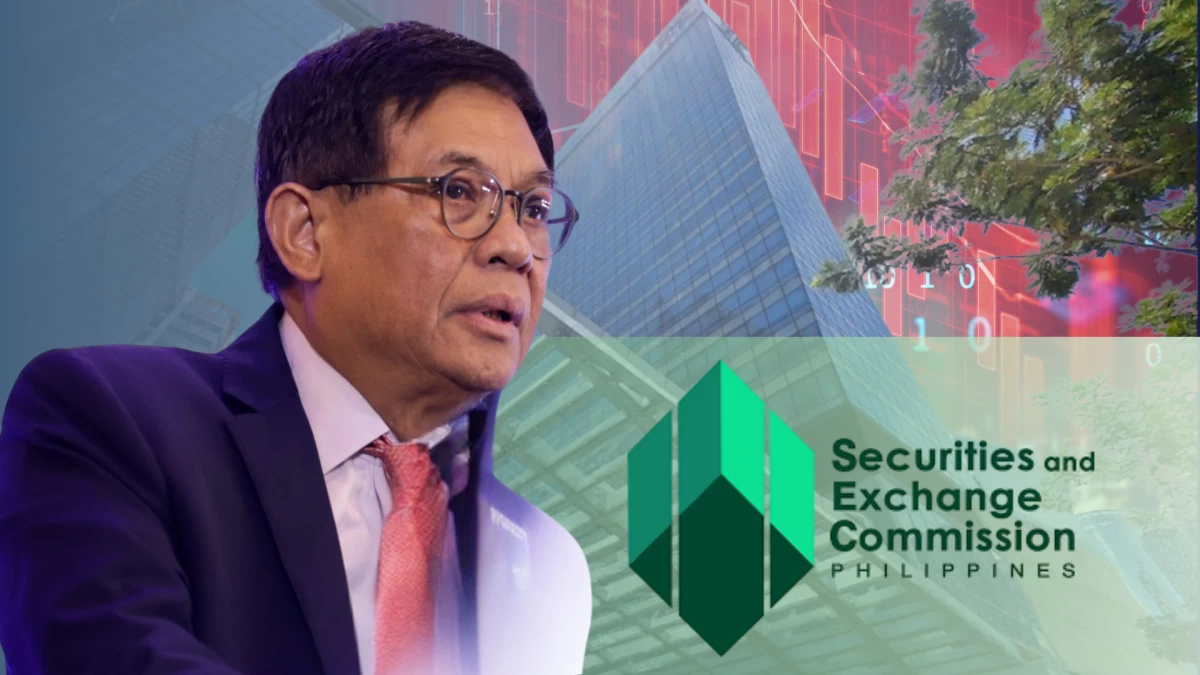
The Securities and Exchange Commission (SEC) is putting government contractors in its sights by tightening oversight and elevating qualification standards for auditing firms and external auditors.
The commission said this move will further safeguard the investing public and prevent corruption by expanding scrutiny to government contractors.
The commission last April 1 issued for public comment the draft memorandum circular (MC) containing amendments to SEC accreditation guidelines for auditing firms and external auditors.
The proposal seeks to amend pertinent provisions on the accreditation of independent auditors of SEC-regulated entities under Revised Rule 68 of the Securities Regulation Code (SRC).
The proposed guidelines seek to strengthen the accreditation framework and protect the public’s interest by expanding oversight for government contractors, elevating qualification and track record standards, and providing a more rigorous evaluation process, among others.
The SEC accredits auditing firms and independent auditors for quality assurance review. They are classified into three categories: Group A is for issuers of registered securities, except timeshares/membership certificates; listed companies; public companies with assets of at least ₱50 million and 200 or more holders; clearing agencies and depositories; as well as stock exchanges and other self-regulatory organizations.
Group B covers investment houses, brokers and dealers of securities, investment companies, government securities eligible dealers (GSEDs), and universal banks registered as underwriters, as well as issuers of registered timeshares and membership certificates.
Meanwhile, Group C includes financing companies with assets over ₱10 million, lending companies with assets over ₱5 million, and transfer agents.
Under the proposed rules, corporations awarded a single government contract amounting to at least ₱100 million, or combined government contracts totaling at least ₱150 million within the reporting year, shall be required to engage an SEC-accredited external auditor under the Group A category.
The duly accredited external auditor shall be engaged until the projects have been fully completed or delivered.
To facilitate oversight, these corporations will be required to submit a notarized schedule disclosing project descriptions, costs, and status, which must be covered by an auditor’s report.
To ensure that only auditors with sufficient experience handle regulated entities, the SEC is proposing to increase the track record threshold for all accreditation groups.
For Group A, applicants must now have at least five corporate clients with total assets of at least ₱100 million each, compared to ₱50 million under the current rules.
The requirement for Group B will be set to five corporate clients with assets of at least ₱50 million each, up from the current standard of three corporate clients with total assets of at least ₱20 million.
Meanwhile, applicants for Group C accreditation must have at least five corporate clients, instead of the current rule requiring three, with assets of at least ₱5 million each.
The proposed amendments also introduce more rigorous evaluation standards by providing additional grounds for the outright denial of applications for accreditation.
Under the current rules, an accreditation shall be denied if the applicant has committed gross negligence in the conduct of audit work; conducted an audit despite the lack or eventual loss of independence as provided under the code of ethics for professional accountants in the Philippines; or performed any non-audit services for statutory audit clients without safeguards to reduce threats to independence.
The proposal seeks to add as grounds for outright denial: misrepresentation or concealment of information during evaluation; expressing an unqualified opinion when a client uses an incorrect accounting framework despite material misstatements; discovery of six or more material findings in a single set of financial statements (FS); and failure to maintain independence, including cases where the auditor directly prepared the FS.
The public may submit comments on the proposed draft to the SEC Office of the General Accountant via email at [email protected] on or before May 15.