ADVERTISEMENT

'Sanib-pwersa!': AFP expands joint war drills with US as 'largest' Salaknib, Cope Thunder kick off

Published Apr 7, 2026 04:17 pm
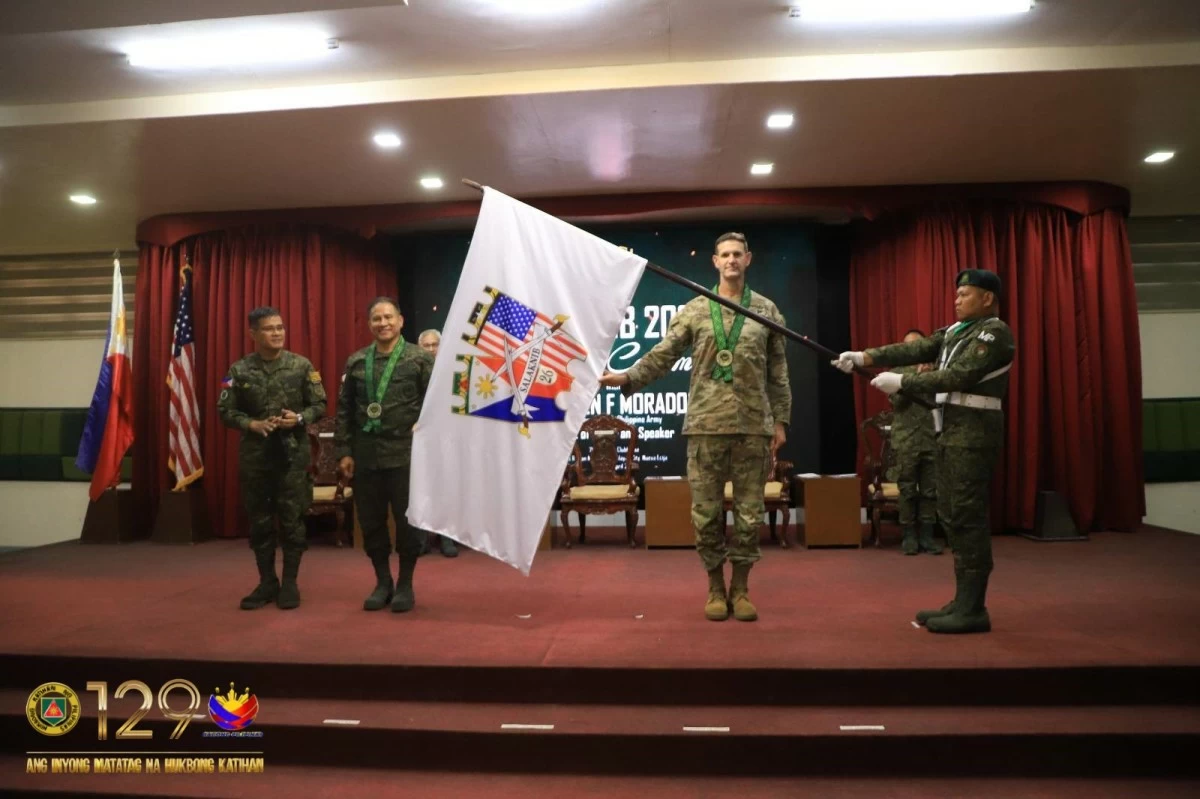
Philippine Army (PA) Vice Commander, Maj. Gen. Efren F. Morados (second from left) and Maj. Gen. James Bartholomees (second from right), commanding general of the United States Army 25th Infantry Division, unfurl the official SALAKNIB 2026 Flag during the opening ceremony at Fort Ramon Magsaysay in Palayan City, Nueva Ecija on April 6, 2026.⁩ (Photo: PA)
The Armed Forces of the Philippines (AFP) and the United States military launched expanded joint military exercises with ground and air drills unfolding simultaneously in Luzon in a major step in strengthening alliance readiness amid worsening tensions in the Middle East and, as an effect, the rising cost of fuel.
More than 7,000 troops from the Philippine Army (PA) and United States Army took part in the opening of Exercise “Salaknib” 2026 Phase I at Fort Ramon Magsaysay in Palayan City, Nueva Ecija on Monday, April 6. The number of participants exceeded last year's 5,000.
The exercise also includes troops from the Japan Ground Self-Defense Force (JGSDF) and the Australian Army for the first time.
In his keynote remarks, Philippine Army Vice Commander Maj. Gen. Efren F. Morados underscored the importance of cooperation among allied forces.
“Salaknib is guided by a clear and strategic purpose to strengthen combined arms operations, deepen multi-domain interoperability, and reinforce a credible and resilient regional security architecture,” Morados said.
The annual Salaknib exercises have been conducted by the Philippine Army and the US Army Pacific since 2015. The training is anchored on the two countries’ Mutual Defense Treaty (MDT), which has long served as the backbone of their security ties.
This year’s iteration marks its largest run yet, reflecting what the PA described as an “elevation” of its training model amid evolving security challenges.
Meanwhile, US forces highlighted the enduring alliance of Washington and Manila.
“The United States is proud to call the Philippines our oldest treaty ally in the Pacific, with a bond forged 73 years ago that has strengthened decades of shared sacrifice, trust, and friendship,” said Maj. Gen. James Bartholomees, commanding general of the US Army 25th Infantry Division.
“While our shields are interwoven, potential adversaries clearly see the unity, the capability, and the resolve of our land forces. Together, we will ensure peace, deter aggression, and preserve a free and open Indo-Pacific,” Bartholomees added.
Salaknib Phase 1 will run until April 17, then it would be followed by Balikatan exercises from April to May and Salaknib Phase 2 from May to June.
As ground troops train in Nueva Ecija, air forces from both countries also began high-level drills in Pampanga.
Cope Thunder
At Clark Air Base, the Philippine Air Force (PAF) and the United States Pacific Air Forces (USPACAF) opened Exercise Cope Thunder 26-1 on the same day.
The exercise involves around 2,800 personnel and will be held across Northern Luzon.
A key highlight is a simulated aerial engagement between the PAF’s FA-50 fighter jet and the US F-22 Raptor.
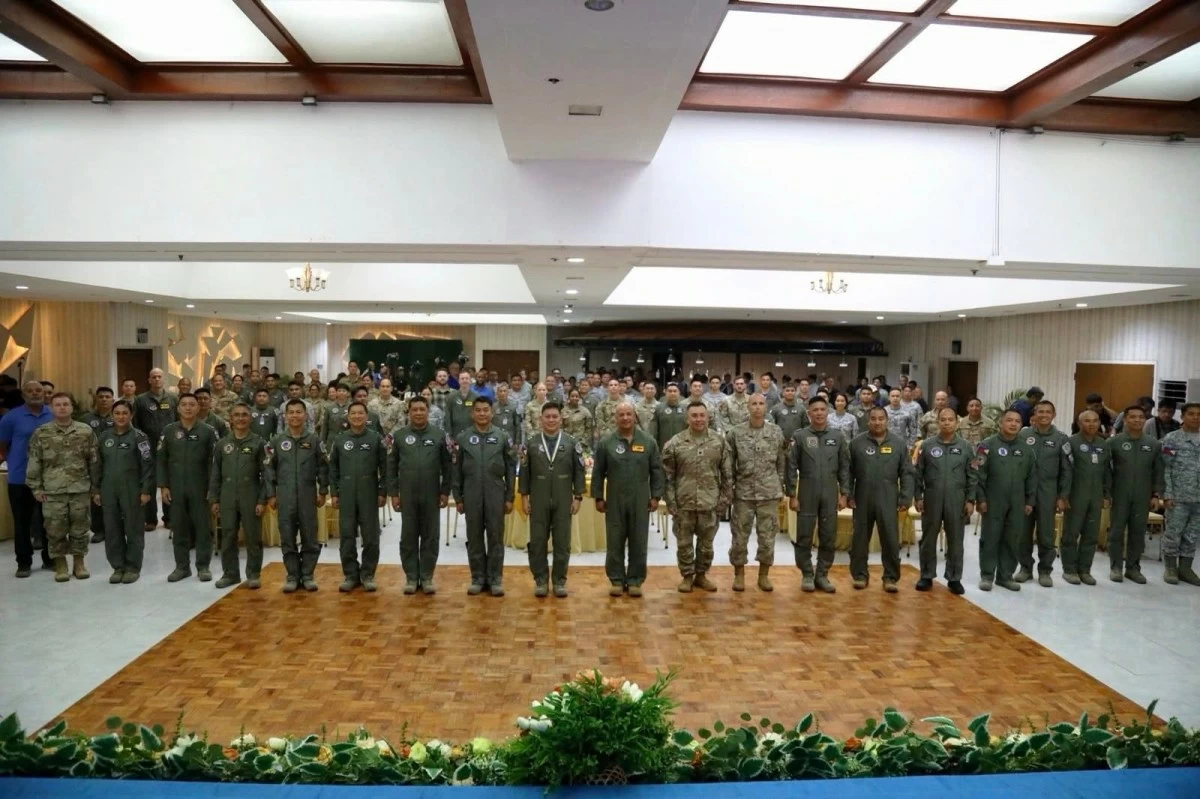
Troops from the Philippine Air Force (PAF) and United States Air Force Pacific (US PACAF) kick off Exercise Cope Thunder 26-1 at Clark Air Base in Pampanga on April 6, 2026. (Photo: PAF)
The Cope Thunder exercises trace their roots to earlier US-led air combat training programs and have evolved into a bilateral platform aimed at improving interoperability and combat readiness.
Major General Dennis G. Estrella, commander of the Air Logistics Command, said the drills are meant to sharpen tactical coordination and response capabilities.
He said the training “serves as a vital platform for refining the PAF’s operational capabilities and ensuring a collective readiness to maintain peace and stability in the region.”
Both Salaknib and Cope Thunder will focus on territorial defense, humanitarian assistance and disaster response, and combined operations.
The AFP stressed that the simultaneous staging of large-scale exercises signals its readiness to respond to multiple threats while deepening defense ties with allies.

Related Tags

AFP Philippine Army Philippine Air Force US Army US Air Force Salaknib Cope Thunder
ADVERTISEMENT
.most-popular .layout-ratio{ padding-bottom: 79.13%; } @media (min-width: 768px) and (max-width: 1024px) { .widget-title { font-size: 15px !important; } }

{{ articles_filter_1561_widget.title }}

.most-popular .layout-ratio{ padding-bottom: 79.13%; } @media (min-width: 768px) and (max-width: 1024px) { .widget-title { font-size: 15px !important; } }

{{ articles_filter_1562_widget.title }}

.most-popular .layout-ratio{ padding-bottom: 79.13%; } @media (min-width: 768px) and (max-width: 1024px) { .widget-title { font-size: 15px !important; } }

{{ articles_filter_1563_widget.title }}

{{ articles_filter_1564_widget.title }}

.mb-article-details { position: relative; } .mb-article-details .article-body-preview, .mb-article-details .article-body-summary{ font-size: 17px; line-height: 30px; font-family: "Libre Caslon Text", serif; color: #000; } .mb-article-details .article-body-preview iframe , .mb-article-details .article-body-summary iframe{ width: 100%; margin: auto; } .read-more-background { background: linear-gradient(180deg, color(display-p3 1.000 1.000 1.000 / 0) 13.75%, color(display-p3 1.000 1.000 1.000 / 0.8) 30.79%, color(display-p3 1.000 1.000 1.000) 72.5%); position: absolute; height: 200px; width: 100%; bottom: 0; display: flex; justify-content: center; align-items: center; padding: 0; } .read-more-background a{ color: #000; } .read-more-btn { padding: 17px 45px; font-family: Inter; font-weight: 700; font-size: 18px; line-height: 16px; text-align: center; vertical-align: middle; border: 1px solid black; background-color: white; } .hidden { display: none; }
function initializeAllSwipers() { // Get all hidden inputs with cms_article_id document.querySelectorAll('[id^="cms_article_id_"]').forEach(function (input) { const cmsArticleId = input.value; const articleSelector = '#article-' + cmsArticleId + ' .body_images'; const swiperElement = document.querySelector(articleSelector); if (swiperElement && !swiperElement.classList.contains('swiper-initialized')) { new Swiper(articleSelector, { loop: true, pagination: false, navigation: { nextEl: '#article-' + cmsArticleId + ' .swiper-button-next', prevEl: '#article-' + cmsArticleId + ' .swiper-button-prev', }, }); } }); } setTimeout(initializeAllSwipers, 3000); const intersectionObserver = new IntersectionObserver( (entries) => { entries.forEach((entry) => { if (entry.isIntersecting) { const newUrl = entry.target.getAttribute("data-url"); if (newUrl) { history.pushState(null, null, newUrl); let article = entry.target; // Extract metadata const author = article.querySelector('.author-section').textContent.replace('By', '').trim(); const section = article.querySelector('.section-info ').textContent.replace(' ', ' '); const title = article.querySelector('.article-title h1').textContent; // Parse URL for Chartbeat path format const parsedUrl = new URL(newUrl, window.location.origin); const cleanUrl = parsedUrl.host + parsedUrl.pathname; // Update Chartbeat configuration if (typeof window._sf_async_config !== 'undefined') { window._sf_async_config.path = cleanUrl; window._sf_async_config.sections = section; window._sf_async_config.authors = author; } // Track virtual page view with Chartbeat if (typeof pSUPERFLY !== 'undefined' && typeof pSUPERFLY.virtualPage === 'function') { try { pSUPERFLY.virtualPage({ path: cleanUrl, title: title, sections: section, authors: author }); } catch (error) { console.error('ping error', error); } } // Optional: Update document title if (title && title !== document.title) { document.title = title; } } } }); }, { threshold: 0.1 } ); function showArticleBody(button) { const article = button.closest("article"); const summary = article.querySelector(".article-body-summary"); const body = article.querySelector(".article-body-preview"); const readMoreSection = article.querySelector(".read-more-background"); // Hide summary and read-more section summary.style.display = "none"; readMoreSection.style.display = "none"; // Show the full article body body.classList.remove("hidden"); } document.addEventListener("DOMContentLoaded", () => { let loadCount = 0; // Track how many times articles are loaded const offset = [1, 2, 3, 4, 5, 6, 7, 8, 9, 10]; // Offset values const currentUrl = window.location.pathname.substring(1); let isLoading = false; // Prevent multiple calls if (!currentUrl) { console.log("Current URL is invalid."); return; } const sentinel = document.getElementById("load-more-sentinel"); if (!sentinel) { console.log("Sentinel element not found."); return; } function isSentinelVisible() { const rect = sentinel.getBoundingClientRect(); return ( rect.top < window.innerHeight && rect.bottom >= 0 ); } function onScroll() { if (isLoading) return; if (isSentinelVisible()) { if (loadCount >= offset.length) { console.log("Maximum load attempts reached."); window.removeEventListener("scroll", onScroll); return; } isLoading = true; const currentOffset = offset[loadCount]; window.loadMoreItems().then(() => { let article = document.querySelector('#widget_1690 > div:nth-last-of-type(2) article'); intersectionObserver.observe(article) loadCount++; }).catch(error => { console.error("Error loading more items:", error); }).finally(() => { isLoading = false; }); } } window.addEventListener("scroll", onScroll); });

Sign up by email to receive news.