ADVERTISEMENT

Rice imports jump 37% to 1.26 million MT in Q1 2026

Published Apr 7, 2026 04:00 pm
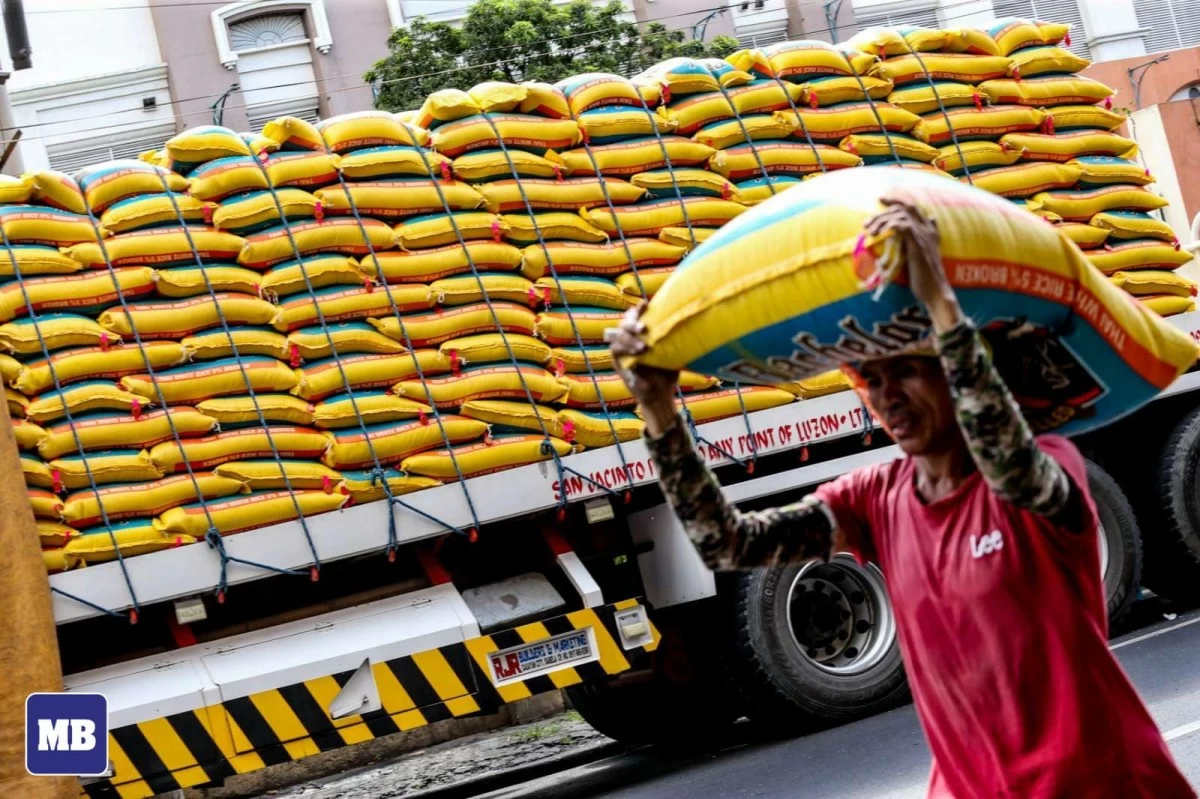
(Manila Bulletin file photo)

The country’s rice imports in the first quarter rose by nearly 37 percent to more than one million metric tons (MT) compared to a year ago, according to the Bureau of Plant Industry (BPI).

The latest BPI data showed that rice imports from January to March reached 1.26 million MT, higher than the 917,854 MT recorded in the same period last year.

Rice imports by the end of March were about 500,000 MT higher than the Department of Agriculture’s (DA) request to industry players to limit shipments to around 750,000 MT.

Last month, Agriculture Secretary Francisco Tiu Laurel told Manila Bulletin that the DA will not adjust its requested volume despite the inflationary impact of the Middle East conflict, as the measure is voluntary.

Since there is no law authorizing limits on rice importation, the DA is securing commitments from rice importers to minimize the entry of foreign rice and ensure that farmgate prices remain stable.

Through this initiative, the DA hopes to replicate the gains from the four-month rice import ban last year, which helped improve farmgate prices, without implementing another ban that could disrupt supply.

Amid ongoing tensions in the Middle East, Tiu Laurel said the country still has sufficient food supply, although he noted that prices are expected to remain elevated in the near term.

The Philippine Statistics Authority (PSA) reported on Tuesday, April 7, that the country’s inflation rate accelerated to 4.1 percent in March, up from 2.4 percent in the previous month, partly driven by steep increases in food prices.

To keep prices stable, especially for this household staple, the government plans to impose a price ceiling of ₱50 per kilo on imported rice to curb unreasonable price hikes.

The interagency National Price Coordinating Council (NPCC) earlier adopted the DA’s proposal to implement a price cap on five-percent broken imported rice, the most commonly consumed variety of the imported staple.

The implementation of this policy is still awaiting the corresponding issuance of an executive order (EO) by President Ferdinand R. Marcos Jr.

Based on BPI data, Vietnam is the country’s top rice supplier for the first quarter, shipping a total of 1.07 million MT, or nearly 85 percent of total import volume.

The Philippines also imported 98,121 MT of rice from Thailand, 67,036 MT from Myanmar, and 22,810 MT from Cambodia, among other sources.

As of April 1, BPI had approved 1,456 sanitary and phytosanitary (SPS) import clearances for 1.47 million MT of milled rice, but only 86 percent of this volume has so far arrived in the country.

Related Tags

rice imports Bureau of Plant Industry (BPI) Department of Agriculture (DA)
ADVERTISEMENT
.most-popular .layout-ratio{ padding-bottom: 79.13%; } @media (min-width: 768px) and (max-width: 1024px) { .widget-title { font-size: 15px !important; } }

{{ articles_filter_1561_widget.title }}

.most-popular .layout-ratio{ padding-bottom: 79.13%; } @media (min-width: 768px) and (max-width: 1024px) { .widget-title { font-size: 15px !important; } }

{{ articles_filter_1562_widget.title }}

.most-popular .layout-ratio{ padding-bottom: 79.13%; } @media (min-width: 768px) and (max-width: 1024px) { .widget-title { font-size: 15px !important; } }

{{ articles_filter_1563_widget.title }}

{{ articles_filter_1564_widget.title }}

.mb-article-details { position: relative; } .mb-article-details .article-body-preview, .mb-article-details .article-body-summary{ font-size: 17px; line-height: 30px; font-family: "Libre Caslon Text", serif; color: #000; } .mb-article-details .article-body-preview iframe , .mb-article-details .article-body-summary iframe{ width: 100%; margin: auto; } .read-more-background { background: linear-gradient(180deg, color(display-p3 1.000 1.000 1.000 / 0) 13.75%, color(display-p3 1.000 1.000 1.000 / 0.8) 30.79%, color(display-p3 1.000 1.000 1.000) 72.5%); position: absolute; height: 200px; width: 100%; bottom: 0; display: flex; justify-content: center; align-items: center; padding: 0; } .read-more-background a{ color: #000; } .read-more-btn { padding: 17px 45px; font-family: Inter; font-weight: 700; font-size: 18px; line-height: 16px; text-align: center; vertical-align: middle; border: 1px solid black; background-color: white; } .hidden { display: none; }
function initializeAllSwipers() { // Get all hidden inputs with cms_article_id document.querySelectorAll('[id^="cms_article_id_"]').forEach(function (input) { const cmsArticleId = input.value; const articleSelector = '#article-' + cmsArticleId + ' .body_images'; const swiperElement = document.querySelector(articleSelector); if (swiperElement && !swiperElement.classList.contains('swiper-initialized')) { new Swiper(articleSelector, { loop: true, pagination: false, navigation: { nextEl: '#article-' + cmsArticleId + ' .swiper-button-next', prevEl: '#article-' + cmsArticleId + ' .swiper-button-prev', }, }); } }); } setTimeout(initializeAllSwipers, 3000); const intersectionObserver = new IntersectionObserver( (entries) => { entries.forEach((entry) => { if (entry.isIntersecting) { const newUrl = entry.target.getAttribute("data-url"); if (newUrl) { history.pushState(null, null, newUrl); let article = entry.target; // Extract metadata const author = article.querySelector('.author-section').textContent.replace('By', '').trim(); const section = article.querySelector('.section-info ').textContent.replace(' ', ' '); const title = article.querySelector('.article-title h1').textContent; // Parse URL for Chartbeat path format const parsedUrl = new URL(newUrl, window.location.origin); const cleanUrl = parsedUrl.host + parsedUrl.pathname; // Update Chartbeat configuration if (typeof window._sf_async_config !== 'undefined') { window._sf_async_config.path = cleanUrl; window._sf_async_config.sections = section; window._sf_async_config.authors = author; } // Track virtual page view with Chartbeat if (typeof pSUPERFLY !== 'undefined' && typeof pSUPERFLY.virtualPage === 'function') { try { pSUPERFLY.virtualPage({ path: cleanUrl, title: title, sections: section, authors: author }); } catch (error) { console.error('ping error', error); } } // Optional: Update document title if (title && title !== document.title) { document.title = title; } } } }); }, { threshold: 0.1 } ); function showArticleBody(button) { const article = button.closest("article"); const summary = article.querySelector(".article-body-summary"); const body = article.querySelector(".article-body-preview"); const readMoreSection = article.querySelector(".read-more-background"); // Hide summary and read-more section summary.style.display = "none"; readMoreSection.style.display = "none"; // Show the full article body body.classList.remove("hidden"); } document.addEventListener("DOMContentLoaded", () => { let loadCount = 0; // Track how many times articles are loaded const offset = [1, 2, 3, 4, 5, 6, 7, 8, 9, 10]; // Offset values const currentUrl = window.location.pathname.substring(1); let isLoading = false; // Prevent multiple calls if (!currentUrl) { console.log("Current URL is invalid."); return; } const sentinel = document.getElementById("load-more-sentinel"); if (!sentinel) { console.log("Sentinel element not found."); return; } function isSentinelVisible() { const rect = sentinel.getBoundingClientRect(); return ( rect.top < window.innerHeight && rect.bottom >= 0 ); } function onScroll() { if (isLoading) return; if (isSentinelVisible()) { if (loadCount >= offset.length) { console.log("Maximum load attempts reached."); window.removeEventListener("scroll", onScroll); return; } isLoading = true; const currentOffset = offset[loadCount]; window.loadMoreItems().then(() => { let article = document.querySelector('#widget_1690 > div:nth-last-of-type(2) article'); intersectionObserver.observe(article) loadCount++; }).catch(error => { console.error("Error loading more items:", error); }).finally(() => { isLoading = false; }); } } window.addEventListener("scroll", onScroll); });

Sign up by email to receive news.