






 Business
Trade & Industry
Meat imports rise 23% at end-February as traders boost supply
Business
Trade & Industry
Meat imports rise 23% at end-February as traders boost supply
Meat imports rise 23% at end-February as traders boost supply


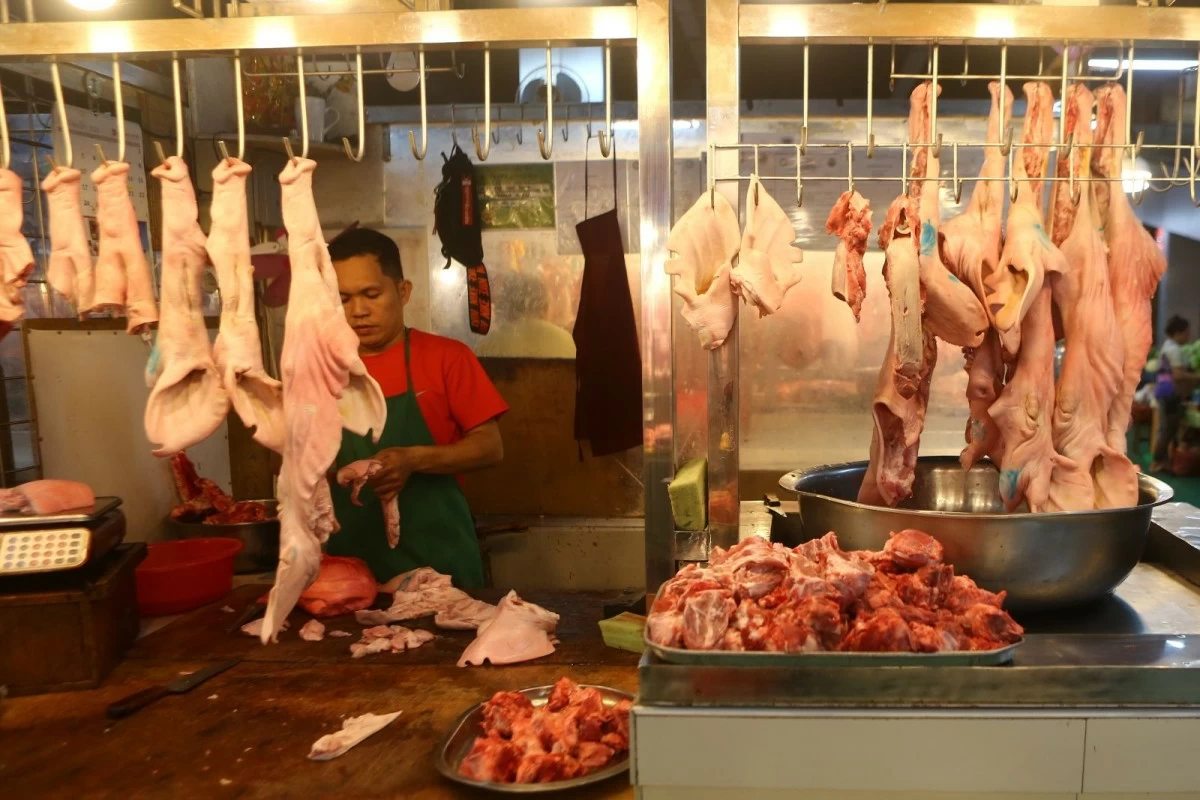
The country’s meat imports in the first two months increased by nearly a quarter to more than 290,000 metric tons (MT), as traders looked to strengthen inventories despite sufficient domestic output.
The latest data from the Bureau of Animal Industry (BAI) showed that total meat imports from January to February reached 292,105 MT, an increase of 23 percent from 237,681 MT in the same period last year.
Pork remained the most sought-after meat product by the end of February, with imports totaling 151,788 MT, or 52 percent of total import volume. Pork imports this year increased by nearly 23 percent from last year’s shipments of 124,047 MT.
Broken down, pork cuts were the leading foreign-sourced pork product in the two-month period, reaching 63,784 MT, or 40 percent of total. This was followed by pork offal at 45,872 MT, pork bellies at 24,016 MT, and pork fats at 10,767 MT.
The increase in pork imports this year continues the trend of local traders purchasing from abroad to help meet the country’s strong demand amid subpar domestic production.
Agriculture Secretary Francisco Tiu Laurel earlier assured the public that local pork inventories remain sufficient as the swine population continues to increase.
He said this in response to growing concerns over a potential food price spike as oil prices continue to escalate due to supply disruptions caused by the conflict in the Middle East.
In a Senate hearing last month, Agriculture Assistant Secretary U-Nichols Manalo said prices of pork products, alongside other key commodities, could soar to unprecedented levels in the coming months should fuel costs remain elevated.
Should oil prices reach $200 per barrel through September, pork liempo (belly) and pigue (ham), which fetch around ₱350 per kilo and ₱370 per kilo in February, respectively, may increase to ₱588.10 per kilo.
Tiu Laurel has since said that these projections were based on “extreme assumptions,” which excluded the government’s mitigating measures to cushion the impact of fuel costs.
“Current conditions suggest the sector is better positioned to absorb shocks than initial projections imply,” he said in a statement.
BAI data also showed that chicken imports rose by 28 percent to 98,926 MT in the first two months, compared to 77,310 MT in the same period last year.
Mechanically deboned meat (MDM), a key ingredient in processed foods, was the top chicken product, with imports reaching 53,849 MT, or 54 percent of total.
The country’s beef imports increased slightly to 33,191 MT from last year’s volume of 32,386 MT.
Shipments of buffalo meat more than doubled to 7,475 MT by the end of February from 3,808 MT a year ago.
For other protein sources, duck imports stood at 552 MT, lamb imports at 170 MT, while turkey imports amounted to just over one MT.
According to BAI, Brazil was the country’s main source of meat imports for the two-month period, with an estimated import volume of 142,500 MT, or nearly 49 percent of total.
The United States (US) ranked second with 34,789 MT, followed by Spain with 22,222 MT, Australia with 14,582 MT, and Canada with 10,976 MT.