







Understanding the united front: How influence shapes today's conflicts
Published Apr 6, 2026 12:05 am
|
Updated Apr 5, 2026 03:43 pm


BARRACKS AND STRATEGY
Today, waging war does not only consider drones, warships, and artificial intelligence (AI). It is also shaped in the perceptions of truth, risk assessment, and decision-making. In this shifting approach to waging war, the Chinese Communist Party (CPP) follows the United Front (UF) strategy, which evolved from its past experiences to shape and influence the environment without resorting to open warfare.
The CPP doctrine publicly recognizes the UF, with Chinese Premier Xi Jinping stating that it is a “magic weapon” of the Party. Xi further articulates that UF efforts shore up support for China’s national interests by shaping favorable opinion while lessening opposition and influencing populations, elites, and institutions. UF activities include engagements with community, cultural and academic organizations, business entities, and, more recently, the use of digital communication. UF work is subtle and direct, unlike diplomacy, which relies on open bilateral contacts. Its power to remain invisible while influencing perceptions makes it an effective tool to shape the environment.
Interestingly, the UF approach is not new to the country. As a follower of the Marxism–Leninism–Mao Zedong Thought, the Communist Party of the Philippines (CPP) uses the UF concept. It employs the UF to support the overthrow of the government by influencing public opinion, legitimizing its cause, and isolating the government, both locally and internationally, through legal and semi-legal sectoral organizations. The National Democratic Front (NDF) serves as the CPP UF organization. It promotes a centralized ideological agenda while projecting an illusion of wide representation. The National Task Force to End Local Communist Armed Conflict (NTF-ELCAC) has documented numerous instances in which CPP-affiliated front groups were used to influence peace negotiations, foreign policy, and human rights narratives in local and international arenas. Importantly, this shows that Filipinos have already experienced and resisted United Front shaping operations.
By contrast, the CCP UF is both a strategy and an instrument of national power, used to achieve national objectives. Its approach is to influence opinions, form alliances, persuade rather than coerce, and reduce resistance.
In the Indo-Pacific region, the nation is strategically vital. Our location straddles major sea lanes. We are close to Taiwan and partly cover the first island chain. Lastly, the country has an RP-US mutual defense pact. This puts the nation at the crosshairs of the escalating rivalry between two great powers. When the nation won the Arbitral ruling in the West Philippine Sea (WPS) in 2016, which secured us sovereign rights, Beijing disagreed, but it did not overlook its implications. Since then, the country has experienced numerous instances of Chinese navy, coast guard, and maritime militia ships using water cannons, blocking maneuvers, and ramming, which bred increasing tensions. Simultaneously, online and offline actions to exert influence have increased. Observed was a two-pronged strategy of pressure in the WPS and persuasion inside our society.
Furthermore, investigative reporting by The Diplomat demonstrated Beijing UF activities, as a certain Filipino-Chinese association has supported the Chinese narratives on sensitive political matters. Filipinos of Chinese heritage have a natural affinity to maintain historical and cultural ties to their ancestral homeland, just as Filipino-Americans have a positive bias towards the Philippines. These ties are not problematic by themselves. However, when these platforms are tapped for coordinated political lobbying on behalf of another country, issues arise.
In recent times, national security agencies have noticed that shaping and influence operations by foreign powers have evolved into espionage. Chinese nationals arrested in 2024 and 2025 for allegedly surveilling military camps displayed links to civic organizations that held contributions, community events, and outreach programs. The security agencies have raised concerns that foreign intelligence agents may be using this as their cover story to build influence and access. This is a typical approach to recruiting action agents: from influence to access and from access to espionage. The recent arrests of Filipino nationals working in the defense and navy establishments follow a similar pattern. This pattern highlights why UF operations should be viewed not as isolated events but as part of a longer, larger strategy.
Understanding the presence of foreign shaping and influence operations does not weaken democracy; it arms democracy to secure itself. Having experienced and resisted the United Front in the nation’s internal security struggles, the Filipinos are in the best position to identify and oppose such strategies. Awareness builds knowledge, and knowledge shields the minds of our people from being influenced by hostile United Front works.
In my next article on the CPP United Front works, I will shift focus to how the average Filipino might identify influence strategies in their everyday lives and support resilience by actively participating.
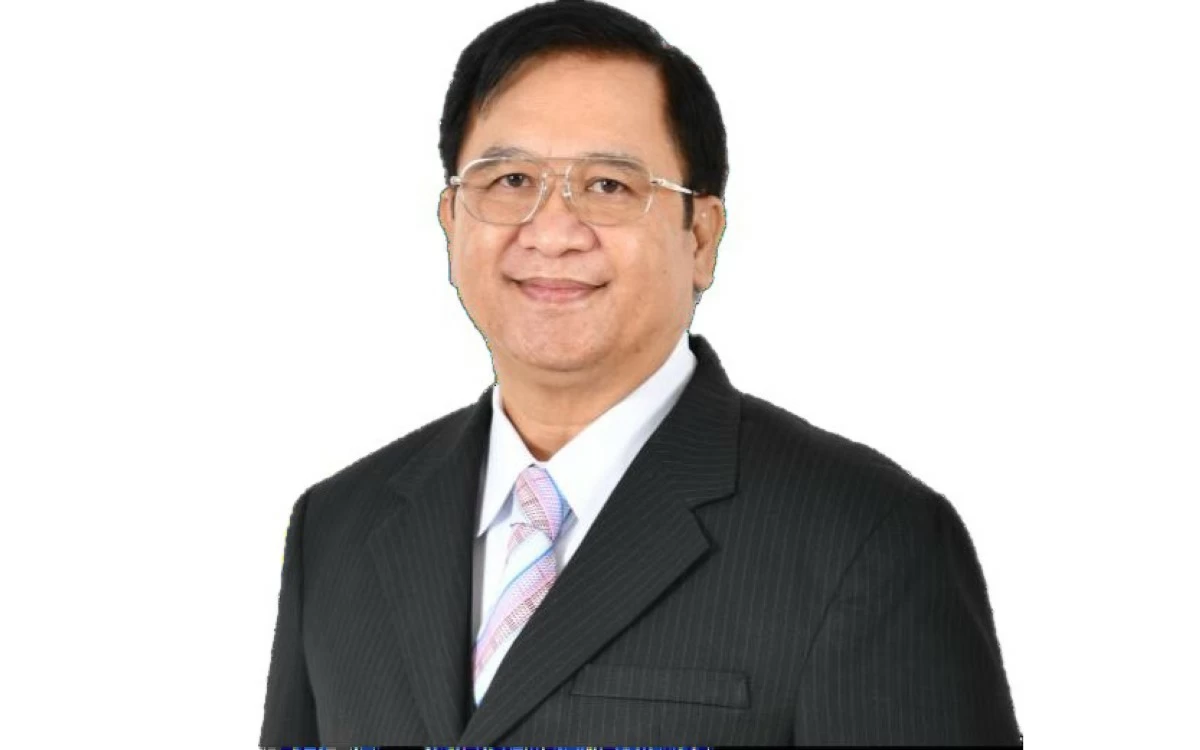
(Lt. Gen. Aurelio B. Baladad (Ret) served as the 8th commander of the Eastern Mindanao Command, the 32nd commander of the 3rd Infantry (Spearhead) Division, and the former deputy chief of staff for Operations, J3 of the AFP. He is now the VP for cooperative planning and marketing of PAFCPIC, a cooperative serving the active and retired AFP personnel.)