ADVERTISEMENT

Philippines faces tough combo of high prices, slow growth

Published Apr 6, 2026 12:00 am  |  Updated Apr 3, 2026 07:59 am
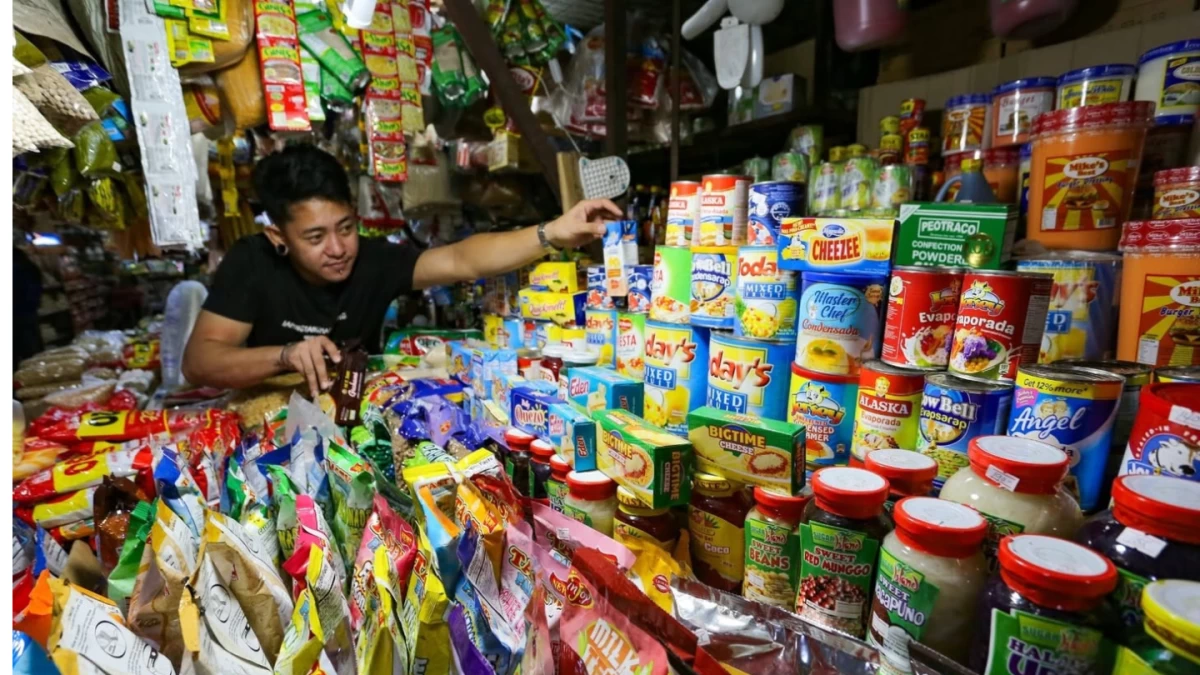
A vendor organizes goods at a public market. Economists warn that the Philippines is at high risk of “stagflation,” where the prices of basic goods continue to rise even as the country’s overall economic growth begins to slow down. (Photo by Santi San Juan I MB)
The Philippines is more vulnerable to “stagflationary” shock than any of its Southeast Asian neighbors as surging energy costs and cooling domestic demand squeeze the country’s economy, according to Oversea-Chinese Banking Corp. (OCBC)
In a research note published last week, OCBC economists warned that the Philippines faces the highest risk within the Association of Southeast Asian Nations (ASEN) of entering a period of stagnant growth coupled with high inflation.
“We assess that the risks of a stagflationary scenario are highest for the Philippines within the Association of Southeast Asian Nations (ASEAN) region,” economists at OCBC wrote in a commentary.
Stagflation refers to an economic condition characterized by stagnant or sluggish growth alongside higher inflation.
OCBC noted that, as a net energy importer, the Philippines is highly vulnerable to rising oil prices amid the military conflict in the Middle East. This translates into a more direct pass-through of global inflation to retail fuel prices, as well as second-round effects on producer and wholesale prices.
Citing oil supply and price shocks, OCBC raised its 2026 inflation assumption to 3.9 percent from 2.5 percent previously.
Similarly, Fitch Solutions unit BMI revised its inflation forecast to 3.6 percent from 3.2 percent. Both remain within the government’s 2–4 percent target band.
On output growth, OCBC lowered its projection from 5.5 percent to 4.8 percent, while BMI cut its forecast from 5.1 percent to 4.7 percent, citing weak government spending.
“Furthermore, the United States (US)-Iran conflict darkens our outlook for the rest of the year,” BMI said, adding that the domestic economy likely grew 3.6 percent in the first quarter, up from a flat 3 percent in the fourth quarter of 2025.
Both revisions suggest the Philippines may again fall short of its annual growth target after expanding 4.4 percent in 2025.
OCBC expects this could prompt a BSP policy hike, which recently held its key rate at 4.25 percent as inflation expectations remain well-anchored and pressures remain largely supply-driven.
While the BSP’s mandate is to maintain stable inflation, Governor Eli M. Remolona has emphasized that policy adjustments are effective only when inflation risks stem from shifts in consumer demand.
“We have removed rate cuts across the region and see risks of hikes from the BSP, Bank of Thailand (BoT), and Bank Indonesia (BI) should oil prices remain elevated,” OCBC said, noting that “the room to maneuver is limited for fiscal and monetary policies.”
“BSP will abandon its loose policy bias, but will be challenged by the negative growth impact. We do not rule out the possibility of rate hikes if higher oil persists into the second half of 2026,” OCBC added.
Meanwhile, BMI, which had previously forecast further easing, shifted to a more hawkish stance, ruling out any policy cuts in 2026. It echoed the BSP’s signal of close monitoring of inflation pass-through from supply shocks, while noting that the threshold for a rate hike remains high.

Related Tags

GDP Inflation ASEAN economic growth Oil Middle East Bangko Sentral ng Pilipinas (BSP)
ADVERTISEMENT
.most-popular .layout-ratio{ padding-bottom: 79.13%; } @media (min-width: 768px) and (max-width: 1024px) { .widget-title { font-size: 15px !important; } }

{{ articles_filter_1561_widget.title }}

.most-popular .layout-ratio{ padding-bottom: 79.13%; } @media (min-width: 768px) and (max-width: 1024px) { .widget-title { font-size: 15px !important; } }

{{ articles_filter_1562_widget.title }}

.most-popular .layout-ratio{ padding-bottom: 79.13%; } @media (min-width: 768px) and (max-width: 1024px) { .widget-title { font-size: 15px !important; } }

{{ articles_filter_1563_widget.title }}

{{ articles_filter_1564_widget.title }}

.mb-article-details { position: relative; } .mb-article-details .article-body-preview, .mb-article-details .article-body-summary{ font-size: 17px; line-height: 30px; font-family: "Libre Caslon Text", serif; color: #000; } .mb-article-details .article-body-preview iframe , .mb-article-details .article-body-summary iframe{ width: 100%; margin: auto; } .read-more-background { background: linear-gradient(180deg, color(display-p3 1.000 1.000 1.000 / 0) 13.75%, color(display-p3 1.000 1.000 1.000 / 0.8) 30.79%, color(display-p3 1.000 1.000 1.000) 72.5%); position: absolute; height: 200px; width: 100%; bottom: 0; display: flex; justify-content: center; align-items: center; padding: 0; } .read-more-background a{ color: #000; } .read-more-btn { padding: 17px 45px; font-family: Inter; font-weight: 700; font-size: 18px; line-height: 16px; text-align: center; vertical-align: middle; border: 1px solid black; background-color: white; } .hidden { display: none; }
function initializeAllSwipers() { // Get all hidden inputs with cms_article_id document.querySelectorAll('[id^="cms_article_id_"]').forEach(function (input) { const cmsArticleId = input.value; const articleSelector = '#article-' + cmsArticleId + ' .body_images'; const swiperElement = document.querySelector(articleSelector); if (swiperElement && !swiperElement.classList.contains('swiper-initialized')) { new Swiper(articleSelector, { loop: true, pagination: false, navigation: { nextEl: '#article-' + cmsArticleId + ' .swiper-button-next', prevEl: '#article-' + cmsArticleId + ' .swiper-button-prev', }, }); } }); } setTimeout(initializeAllSwipers, 3000); const intersectionObserver = new IntersectionObserver( (entries) => { entries.forEach((entry) => { if (entry.isIntersecting) { const newUrl = entry.target.getAttribute("data-url"); if (newUrl) { history.pushState(null, null, newUrl); let article = entry.target; // Extract metadata const author = article.querySelector('.author-section').textContent.replace('By', '').trim(); const section = article.querySelector('.section-info ').textContent.replace(' ', ' '); const title = article.querySelector('.article-title h1').textContent; // Parse URL for Chartbeat path format const parsedUrl = new URL(newUrl, window.location.origin); const cleanUrl = parsedUrl.host + parsedUrl.pathname; // Update Chartbeat configuration if (typeof window._sf_async_config !== 'undefined') { window._sf_async_config.path = cleanUrl; window._sf_async_config.sections = section; window._sf_async_config.authors = author; } // Track virtual page view with Chartbeat if (typeof pSUPERFLY !== 'undefined' && typeof pSUPERFLY.virtualPage === 'function') { try { pSUPERFLY.virtualPage({ path: cleanUrl, title: title, sections: section, authors: author }); } catch (error) { console.error('ping error', error); } } // Optional: Update document title if (title && title !== document.title) { document.title = title; } } } }); }, { threshold: 0.1 } ); function showArticleBody(button) { const article = button.closest("article"); const summary = article.querySelector(".article-body-summary"); const body = article.querySelector(".article-body-preview"); const readMoreSection = article.querySelector(".read-more-background"); // Hide summary and read-more section summary.style.display = "none"; readMoreSection.style.display = "none"; // Show the full article body body.classList.remove("hidden"); } document.addEventListener("DOMContentLoaded", () => { let loadCount = 0; // Track how many times articles are loaded const offset = [1, 2, 3, 4, 5, 6, 7, 8, 9, 10]; // Offset values const currentUrl = window.location.pathname.substring(1); let isLoading = false; // Prevent multiple calls if (!currentUrl) { console.log("Current URL is invalid."); return; } const sentinel = document.getElementById("load-more-sentinel"); if (!sentinel) { console.log("Sentinel element not found."); return; } function isSentinelVisible() { const rect = sentinel.getBoundingClientRect(); return ( rect.top < window.innerHeight && rect.bottom >= 0 ); } function onScroll() { if (isLoading) return; if (isSentinelVisible()) { if (loadCount >= offset.length) { console.log("Maximum load attempts reached."); window.removeEventListener("scroll", onScroll); return; } isLoading = true; const currentOffset = offset[loadCount]; window.loadMoreItems().then(() => { let article = document.querySelector('#widget_1690 > div:nth-last-of-type(2) article'); intersectionObserver.observe(article) loadCount++; }).catch(error => { console.error("Error loading more items:", error); }).finally(() => { isLoading = false; }); } } window.addEventListener("scroll", onScroll); });

Sign up by email to receive news.