






Manila Bulletin
 Business
Trade & Industry
Mitsubishi plans to start building hybrid cars in Philippines
Business
Trade & Industry
Mitsubishi plans to start building hybrid cars in Philippines
Business
Trade & Industry
Mitsubishi plans to start building hybrid cars in Philippines
Mitsubishi plans to start building hybrid cars in Philippines
Published Apr 6, 2026 10:53 pm


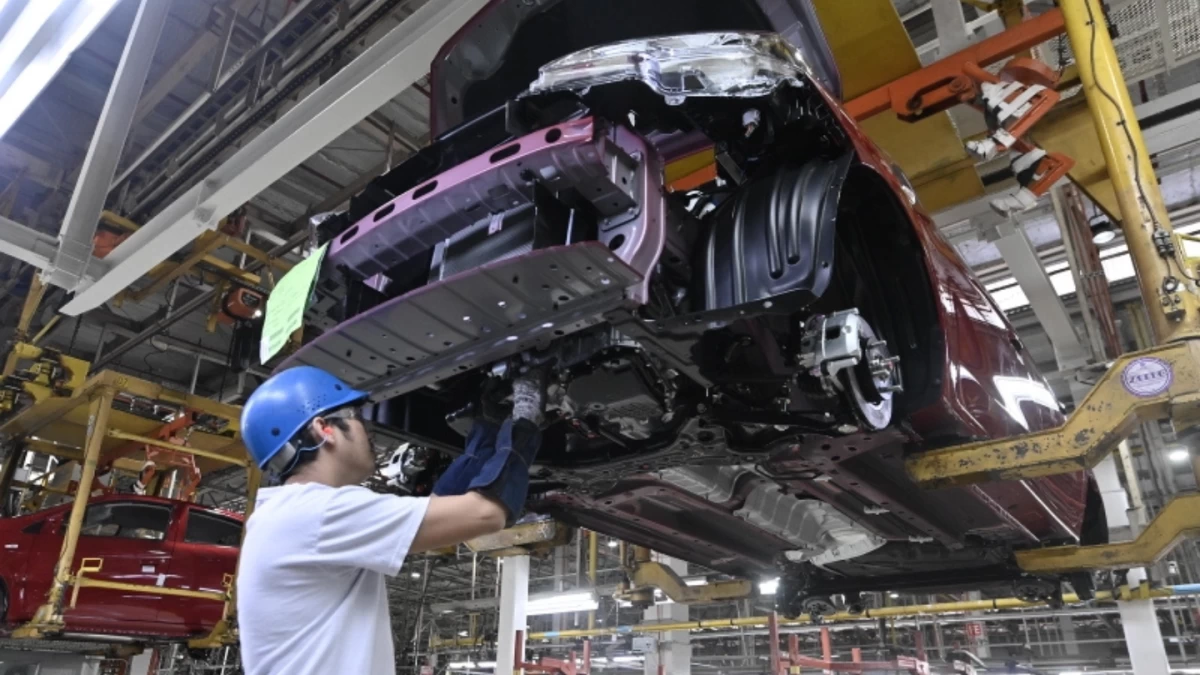
Japanese automotive giant Mitsubishi Motors Corp. (MMC) plans to begin manufacturing hybrid electric vehicles (HEVs) in the Philippines under the government’s EV industry incentive program, a move seen as helping build the country’s resilience against future oil shocks.
MMC, through its local unit Mitsubishi Motors Philippines Corp. (MMPC), intends to produce a new HEV model at its plant in Santa Rosa City, Laguna, starting in mid-2028.
The company is also planning to invest more in the country, including enhancements to its facilities to support electrification efforts.
“These initiatives will contribute to expanding the local supply chain and generating employment opportunities in the region,” said MMC.
MMC’s plans to foray into HEV manufacturing in the country are subject to the approval of its application to join the Electric Vehicle Incentive Strategy (EVIS).
EVIS seeks to provide fiscal and non-fiscal incentives to attract domestic manufacturing of EVs, batteries, electric components and parts, as well as the deployment of charging stations.
Through this program, the government seeks to narrow the cost gap between EVs and traditional motor vehicles, encouraging Filipinos to use EVs.
Expected to begin in 2028, EVIS aims to roll out up to nine million locally made EVs and nearly 400,000 charging stations by 2040.
The Department of Trade and Industry (DTI) estimates that EVIS would encourage around ₱120 billion in investments and generate 680,000 jobs.
At present, the Board of Investments (BOI) is still finalizing EVIS for its endorsement to the Fiscal Incentives Review Board (FIRB) and approval by the President.
MMC chief executive officer (CEO) Takao Kato said the company’s participation in EVIS further affirms its commitment to the Philippines, which he described as “one of our most important markets.”
“In cooperation with the Philippine government, we are honored to contribute to the advancement of vehicle electrification and industrial development through the EVIS program, as well as to support the further growth of the Philippine economy,” he said.
MMPC was among the participants in the Comprehensive Automotive Resurgence Strategy (CARS), a government incentive program aimed at attracting investment to encourage local vehicle manufacturing.
Finance Secretary Frederick Go said MMC’s incoming investment in HEV production would help “redefine” the future of the country’s automotive industry.
He said this is particularly timely as the country grapples with rising fuel prices stemming from supply disruptions caused by the ongoing conflict in the Middle East.
Automotive firms are reporting a surge in EV sales in recent weeks as more consumers shift to electrified alternatives to avoid the burden of fuel costs in conventional vehicles.
“This kind of investment becomes more valuable during times of uncertainty, as it will create more job opportunities for Filipinos, while propelling the nation into a more sustainable and technological future,” said Go.
“By producing HEVs locally, the Philippines can reduce oil import dependence and cut urban emissions,” he added.
Go said the manufacturing plant will also strengthen the country’s export competitiveness, as MMC has relayed plans to ship HEVs and other products from its Laguna plant to overseas markets.