






Manila Bulletin
 Business
The Stock Market
Maya pushes ahead with IPO as Iran conflict threatens timeline
Business
The Stock Market
Maya pushes ahead with IPO as Iran conflict threatens timeline
Business
The Stock Market
Maya pushes ahead with IPO as Iran conflict threatens timeline
Maya pushes ahead with IPO as Iran conflict threatens timeline
Published Apr 6, 2026 12:00 am
|
Updated Apr 4, 2026 09:26 am


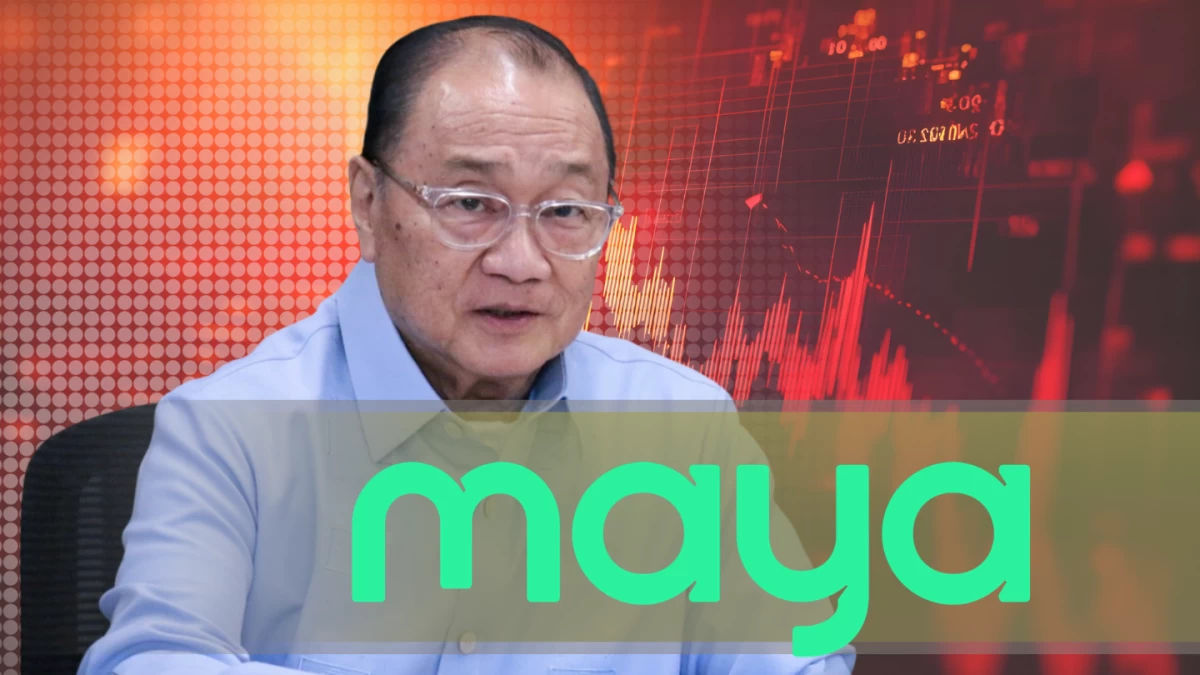
Manuel V. Pangilinan
Maya Innovations Holdings Pte. Ltd., the fintech arm of telecommunications giant PLDT Inc., is maintaining its ambition to pursue a $1 billion initial public offering as early as this year, even as escalating geopolitical tensions in the Middle East threaten to disrupt global capital markets.
Manuel V. Pangilinan, PLDT chairman, president, and chief executive officer, confirmed that while the preparations for the listing are underway, the timing remains sensitive to external shocks.
“It’s” (Maya IPO) hard to say because of Iran. But it’s already in process,” Pangilinan said in an interview.
He noted that the ongoing conflict involving Iran has introduced a layer of uncertainty that makes it difficult to commit to a firm date. While PLDT has penciled in the third quarter of 2026 for the debut, Pangilinan suggested that the volatility triggered by the war could force recalibration of that schedule.
Maya Innovations, formerly known as Voyager Innovations Holdings, serves as the parent company for Maya Bank Inc. and the popular Maya Philippines e-wallet and payments platform.
The shareholder structure is currently led by PLDT with a 40 percent stake, followed by private equity firm KKR & Co. at approximately 30 percent. Chinese tech giant Tencent Holdings Ltd. maintains a 15 percent interest, while the International Finance Corporation holds 10 percent.
The proposed IPO is expected to serve as a primary exit mechanism for several of Maya’s early-stage investors. However, PLDT has signaled a different strategy, expressing an appetite to potentially increase its ownership by acquiring stakes from its co-investors should the opportunity arise.
Internal deliberations at Maya have focused on a dual-listing strategy involving both the Philippine Stock Exchange and a United States (US) bourse.
The company has historically leaned toward a US listing—likely on the Nasdaq—citing deeper pools of capital and more sophisticated valuation models for fintech enterprises.
The Philippine Stock Exchange is attempting to counter this trend of domestic tech firms seeking overseas capital.
PSE President Ramon Monzon has been vocal about the risks of local companies becoming “orphans” in the vast US market, where smaller international firms often struggle to gain the attention of institutional analysts and fail to qualify for major indices.
To keep high-growth companies like Maya and its primary rival, Mynt—the operator of GCash—on local shores, the PSE is developing a specialized financial technology board. This new board is intended to mirror the Nasdaq’s flexibility by relaxing traditional listing requirements, such as immediate profitability, to better suit the lifecycle of technology-driven startups.
Monzon noted that GCash previously weighed a US debut before ultimately favoring a domestic listing. He cautioned that while private equity pressure often drives the push for a US presence, the long-term liquidity for Philippine firms in New York remains a significant concern.
Despite these warnings, Maya’s leadership continues to weigh the allure of a higher valuation against the stability of its home market as it watches the horizon for a stabilization of global geopolitical risks.