






Manila Bulletin
 Philippines
Metro Manila
Malabon administrator showcases smart city innovations at Japan conference
Philippines
Metro Manila
Malabon administrator showcases smart city innovations at Japan conference
Philippines
Metro Manila
Malabon administrator showcases smart city innovations at Japan conference
Malabon administrator showcases smart city innovations at Japan conference
Published Apr 6, 2026 02:26 pm


Malabon City Administrator Dr. Alexander T. Rosete showcased the city’s best practices in digital governance at the 17th International Conference on E-Education, E-Business, E-Management and E-Learning held in Fukuoka, Japan, from April 1 to 4, 2026.
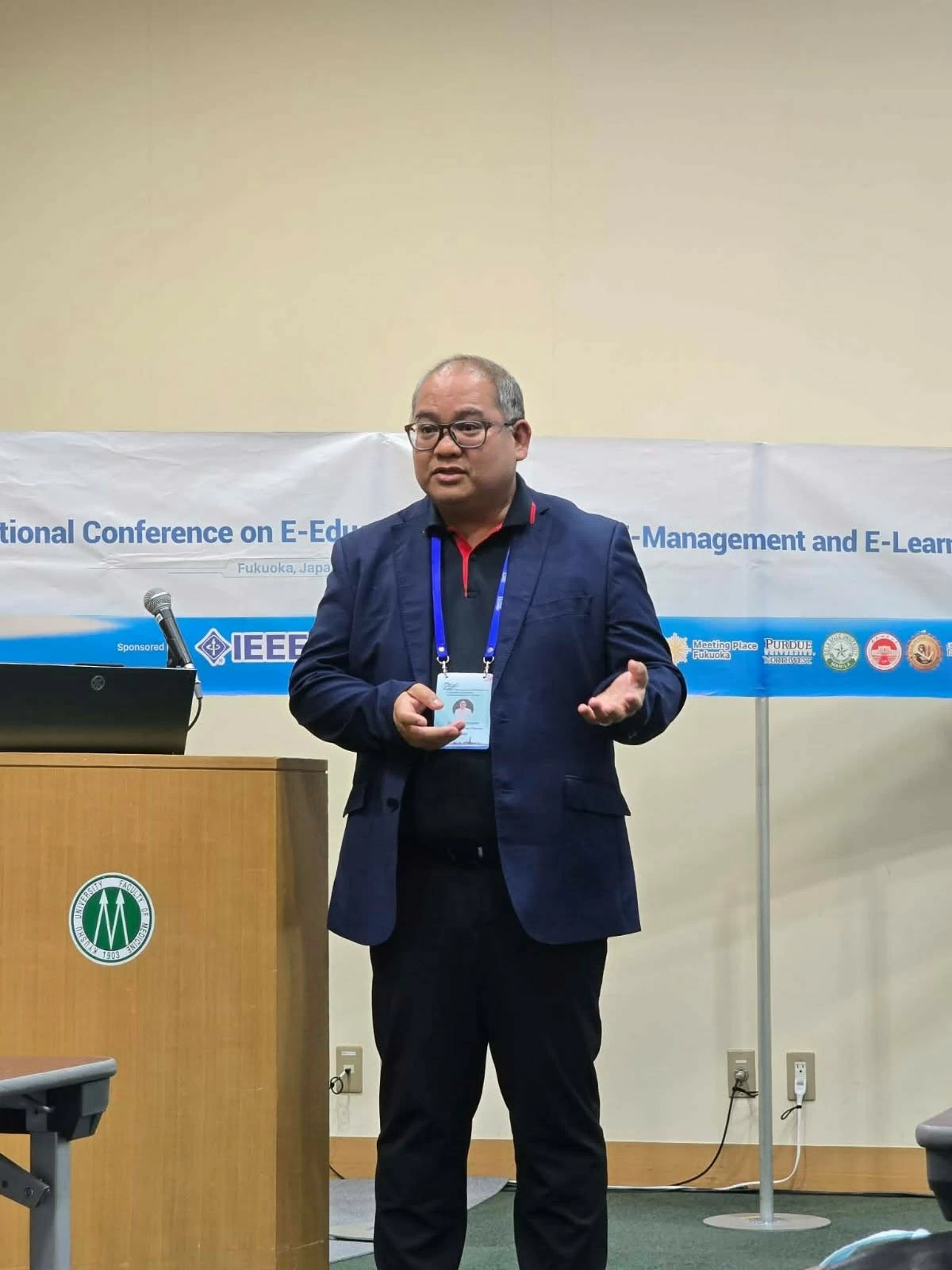
During the conference, Dr. Rosete delivered his presentation titled “Digitalizing Governance: Implementing a SMART City Framework for Enhanced Public Services and Citizen Engagement in Malabon,” highlighting how the integration of technology has strengthened the delivery of essential services in the city.
He stated that a “smart city” is measured not by advanced technology alone, but by how well it improves citizens’ lives.
Rosete said that for developing cities like Malabon, the true challenge is making digital solutions people-centered, inclusive, and responsive, stressing that SMART cities are about people.
“Around the world, cities are rapidly transforming through digital technologies. SMART cities use ICT and IoT to improve services and efficiency. But more than systems or infrastructure, SMART cities are about people. Their success depends on how well they improve everyday life—making services faster, more transparent, and more accessible,” he said.
Among the digital initiatives he presented was the Malabon Ahon Blue Card (MABC), a flagship program of Mayor Jeannie Sandoval that streamlines social service delivery. As of April 1, 2026, the city government has distributed around P632.7 million in financial assistance to 93,728 families through the MABC.
The MABC also includes several sub-projects, such as Burial and Hospitalization Assistance, which has provided P8.6 million to 2,567 beneficiaries; the Eskwela Savings Project, which extended P4.02 million in support to 4,022 Grade 1 students; the MABC for Working Students, granting P54,000 to 54 college students; and the MABC para sa Kababaihan, offering livelihood support to single mothers.
Also featured was the Malabon AHON 24/7 Alert Application, which enables residents to communicate directly with the city government during emergencies.
“Through the app, Malabueños can report incidents, request assistance, and access government services using their mobile devices,” the city government said.
Another initiative presented was the Electronic Business One-Stop Shop (EBOSS) system, which allows business owners to renew permits and process taxes online, making transactions faster, more convenient, and more accessible.
Dr. Rosete also highlighted the city's implementation of the Procurement and Inventory Management System (PIMS), which strengthens transparency and accountability by ensuring that government resources are properly tracked, managed, and accounted for.
He recognized that despite Malabon’s progress in digital governance, challenges remain, particularly in digital literacy and in building public trust regarding data privacy and system security.
Despite these challenges, he noted the growing willingness of citizens to engage with digital platforms, presenting strong potential for continued innovation.
To address it, he recommended strengthening digital literacy programs, expanding infrastructure for inclusive access, enhancing citizen feedback mechanisms, and building organizational capacity across government sectors.
According to him, digital transformation goes beyond adopting new technologies; it is about fostering trust, promoting inclusion, and ensuring that governance systems genuinely serve the people.
“A smart city is not defined by how advanced its technology is, but by how well it improves the lives of its citizens,” he emphasized.