







In conflict, women bear the heaviest cost
PH and Norway reaffirm commitment to Women, Peace, and Security
Published Apr 6, 2026 12:50 pm


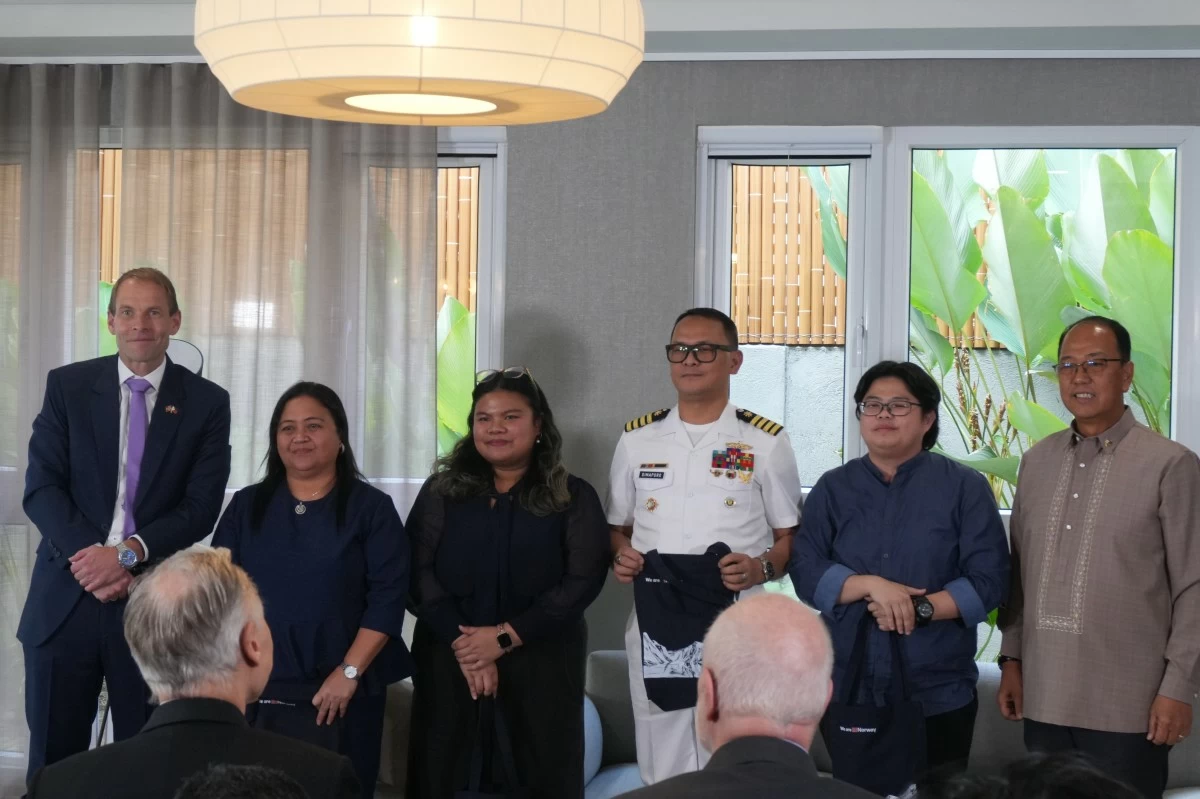
Norwegian Ambassador to the Philippines Christian Halaas Lyster, Bangsamoro Parliament Member Froilyn Mendoza, Frances Therese Zabala, Capt. Norsal Dimaporo, Judith De Guzman, and Presidential Adviser on Peace, Reconciliation, and Unity Carlito G. Galvez Jr. at the Women, Peace, and Security forum
In times of war, instability, and displacement, it is often women and children who bear the heaviest burden. Across conflict zones worldwide, they are more likely to be uprooted from their homes, exposed to violence, and left to navigate the long-term consequences of fractured communities.
According to UN Women, women and children make up nearly 90% of those displaced by conflict globally. Reports from the United Nations also point to rising cases of conflict-related sexual violence, with women and girls disproportionately affected.
Yet despite these realities, women remain underrepresented in formal peace processes. Data from the Council on Foreign Relations shows that between 1992 and 2019, women made up only 13% of negotiators and 6% of mediators in major peace agreements. These gaps continue to shape global efforts to place women at the center of peacebuilding.
On March 25, that conversation took focus in Manila, as the Royal Norwegian Embassy, in partnership with the Office of the Presidential Adviser on Peace, Reconciliation and Unity (OPAPRU), convened a forum on Women, Peace, and Security (WPS) at the Norwegian Ambassador’s residence in Makati.
For Norway, the WPS agenda is not a peripheral issue, but a core part of how security is understood today. “Peace is more durable, more legitimate and more resilient when women are included at all stages of the conflict cycle and at all levels of decision-making,” said Norwegian Ambassador Christian Halaas Lyster.
He noted that as conflicts grow more complex—shaped by geopolitical tensions and climate-related vulnerabilities—the need for inclusive approaches to peacebuilding has only become more urgent.
“Women, Peace and Security is not a side agenda. It’s central to how we understand security today. It’s about whose voices are heard, whose experiences shape decisions, and whose futures are being built,” he added.
The Philippines has long been a key partner in this effort. Norway has supported peace processes in the country for decades, including as a third-party facilitator in dialogue efforts.
“The Philippines holds a special place in Norway’s peace engagement… one lesson has stood out: peace processes are stronger when they reflect the realities and priorities of the whole population, including women,” Lyster said.
For the Philippine government, the WPS agenda has evolved from policy into implementation.
“This forum is a reflection of our shared commitment to advancing Women, Peace and Security efforts… and achieving genuine and long-lasting peace,” said Presidential Adviser on Peace, Reconciliation and Unity Carlito G. Galvez Jr.
He emphasized that the framework is no longer aspirational.
“The Women, Peace, and Security agenda is not only an aspiration—it is now a living framework that bridges national policy with realities on the ground and global commitments with the actual needs of the communities we serve,” he said.
This shift reflects a broader trend in the Philippines’ approach to peacebuilding, which has increasingly focused on localization—ensuring that national strategies translate into tangible outcomes in conflict-affected communities.
Still, challenges remain.
Global data from the World Bank shows that conflict-affected countries often lose decades of development gains, with women disproportionately affected by disruptions in education, livelihoods, and access to services.
Women as agents of peace
In the Philippine context, women have long played a central role in peace efforts—often outside formal structures. Executive Director Susana Guadalupe Marcaida emphasized that this history predates institutional frameworks.
“The story of Women, Peace and Security in the Philippines did not begin with institutions or policies, but with women whose courage and leadership sustained peace long before national frameworks existed,” she said. She added that this foundation continues to shape how peacebuilding is approached today.

The Norwegian Embassy held the discussion over waffles and traditional brown cheese the country is known for
“Peace lasts when it is built with people—grounded in lived realities and sustained through collective action across generations,” she said.
This perspective is increasingly supported by global evidence. Studies cited by UN Women show that peace agreements are 35% more likely to last at least 15 years when women participate meaningfully in the process.
Despite progress, participation remains uneven. Across many conflict-affected areas, women continue to face barriers to justice, safety, and representation in decision-making. These gaps are reflected not only in global statistics, but in lived experiences at the community level.
The forum highlighted the need to strengthen coordination across institutions, deepen localization efforts, and sustain partnerships between government, civil society, the security sector, and international partners.
At its core, the discussion returned to a simple but often overlooked point: peacebuilding is most effective when it reflects the realities of the people it seeks to serve.
Or, as Galvez put it, the goal is to build a society where women are not “on the sidelines,” but “the main architects in shaping their own futures and the futures of their communities.”
More than 25 years after the adoption of the global WPS framework, the challenge is no longer about recognition, but implementation. The forum underscored that progress depends not only on policy, but on sustained collaboration—and on ensuring that women’s participation is not symbolic, but substantive. Because in conflict, the cost of exclusion is clear. And in peace, the value of inclusion is measurable.