






Manila Bulletin
 Business
The Stock Market
Globe joins tech giants to build 8,000-km 'candle' subsea cable
Business
The Stock Market
Globe joins tech giants to build 8,000-km 'candle' subsea cable
Business
The Stock Market
Globe joins tech giants to build 8,000-km 'candle' subsea cable
Globe joins tech giants to build 8,000-km 'candle' subsea cable
Published Apr 6, 2026 12:00 am
|
Updated Apr 4, 2026 08:45 am


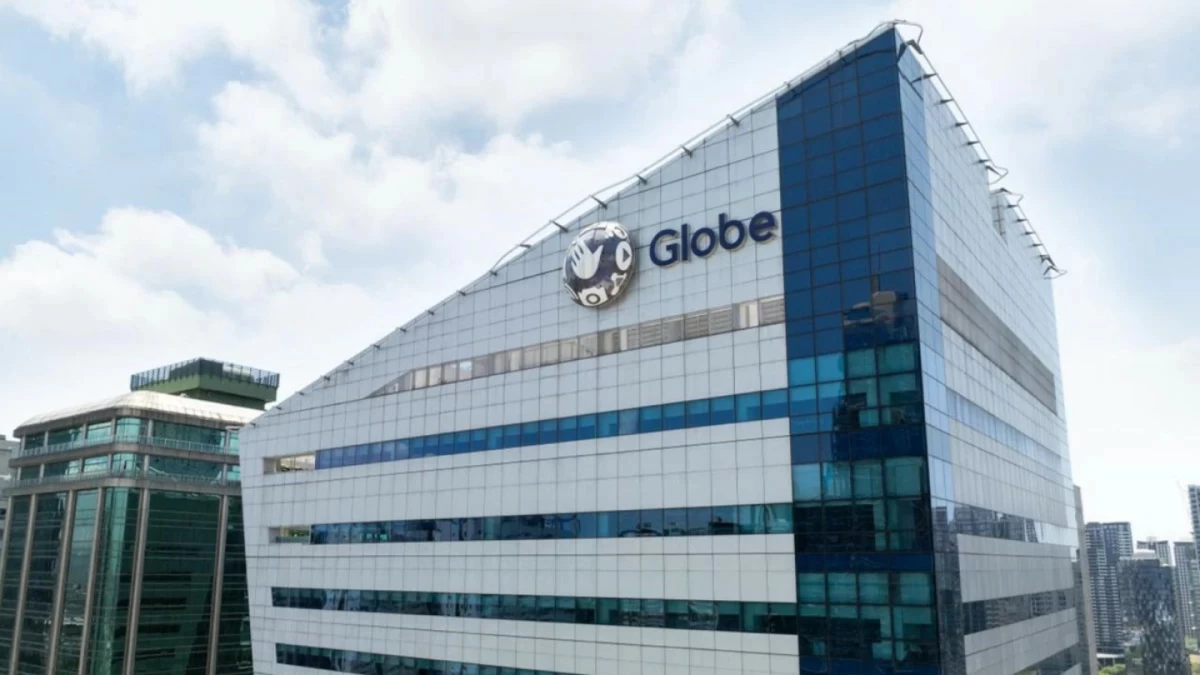
Telecommunications giant Globe Telecom Inc. is going full sprint in its push to meet the connectivity demands of an expanding global digital economy through a new high-capacity submarine cable system.
Globe said it is joining the regional consortium building the Candle Cable System, which is expected to provide up to 570 terabits per second (Tbps) of total capacity, placing it among the highest-capacity systems in the Asia-Pacific region.
With a coverage of 8,000 kilometers, the cable system will directly connect the Philippines to Taiwan, Japan, Malaysia, Indonesia, and Singapore.
Raymond Policarpio, vice president at Globe, said this regional linkage would immediately benefit consumers once integrated into the telco’s domestic fiber network.
“By linking this international capacity into our nationwide infrastructure, we ensure that high-speed and low-latency connectivity supports enterprises, small businesses, and mobile and broadband customers across the archipelago,” he said.
The Candle Cable System uses a 24-fiber-pair configuration, which enables not only higher capacity but also lower latency, meaning connectivity is more responsive.
Globe sees this system as particularly impactful in supporting the growing demand for cloud computing, artificial intelligence (AI) development, and enterprise digitalization in the region.
As both an investor and the landing party, Globe will connect to the cable system through a new landing station in Nasugbu, Batangas. The company will cover the planning, financing, and construction of the station.
The landing branch will complement another station in Baler, Aurora, being developed by IPS Inc. through its local telecommunications unit, InfiniVAN Inc.
Globe vice president KD Dizon, who is also head of Globe Business, said both stations spanning the country’s eastern and western seaboards will ensure business continuity for enterprises even during natural disasters since it reduces single points of failure.
“Businesses cannot afford uncertainty, so our focus is on infrastructure that stays ready even when conditions are tough,” she said.
The Candle Cable System is scheduled to begin operations in 2028, according to Globe.
In developing the project, Globe is partnering with Meta, SoftBank Corp., Telekom Malaysia Berhad, PT XLSmart Telecom Sejahtera Tbk, and IPS Inc. The consortium has tapped Japanese tech firm NEC Corp. as the system supplier.
InfiniVAN, the local unit of IPS, plans to operate its landing station in Baler under an open model, according to the Bases Conversion and Development Authority (BCDA).
Through this model, any submarine cable system will be able to land at the station, allowing multiple backhaul providers to operate within the facility.