






Manila Bulletin
 Business
The Stock Market
Consunji: Replacing us could hike power costs, fuel inflation
Business
The Stock Market
Consunji: Replacing us could hike power costs, fuel inflation
Business
The Stock Market
Consunji: Replacing us could hike power costs, fuel inflation
Consunji: Replacing us could hike power costs, fuel inflation
Published Apr 6, 2026 12:00 am
|
Updated Apr 4, 2026 09:14 am


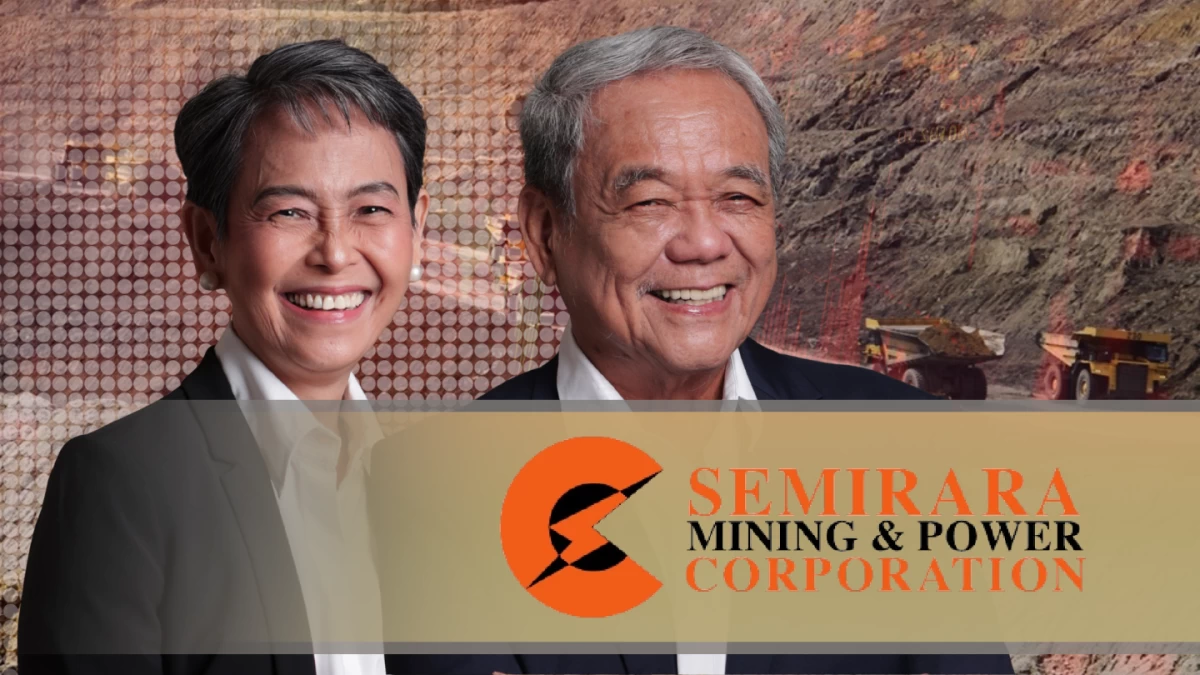
Ma. Cristina C. Gotianun and Isidro A. Consunji
Semirara Mining and Power Corp. warned that any disruption to its operations on Semirara Island would jeopardize 38 percent of the Philippines’ baseload power supply, potentially triggering surge in electricity costs and broader inflationary pressure.
Ma. Cristina C. Gotianun told reporters that an interruption in production—particularly amid geopolitical instability in the Middle East—would remove the country’s cheapest source of continuous energy.
“Any production interruption, especially during these times with the ongoing war in the Middle East, would drastically reduce baseload energy, the cheapest form of power, and therefore jack up electricity costs,” Gotianun said.
She noted that such a gap would necessitate expensive coal imports, draining foreign exchange reserves, weakening the peso, and penalizing a public already struggling with high fuel prices.
The nation’s largest coal producer issued the warning as the Consunji-led firm faces the expiration of its 50-year coal operating contract on July 14, 2027.
The government has rejected Semirara’s bid for an automatic extension, opting instead to hold a public auction to select a contractor based on technical merit and mining plans rather than financial offers alone.
Beyond energy security, Gotianun noted the fiscal impact, noting that a production halt would result in zero royalty payments to the national government at a time when state funds are critical for social safety nets.
Isidro A. Consunji, Semirara chairman, also expressed skepticism about a rival bidder's ability to present a superior or more efficient operational strategy.
He argued that any new entrant would be “starting from zero” in a high-stakes environment where coal reserves are projected to be depleted within 10 years unless new deposits are identified.
The technical hurdles are significant as Consunji pointed to the complexity of the Acacia mine, which sits 350 meters below sea level.
To keep the site viable, Semirara currently pumps out 30,000 cubic meters of seawater per hour—the equivalent of 12 Olympic-size swimming pools. The operation requires 82 specialized pumps powered by a dedicated plant running on unmarketable waste coal.
Consunji estimated that switching to diesel power for these pumps would cost approximately ₱450,000 per hour, assuming a price of ₱100 per liter.
Furthermore, the company utilizes specialized diaphragm wall systems manufactured abroad to withstand the extreme depth. He noted that it would take a new contractor up to eight months just to secure similar equipment.
Logistics present another barrier to entry. Semirara currently operates a fleet of 350 massive dump trucks.
Consunji noted that because manufacturers like Komatsu can only deliver approximately 10 such units per month, it would take a competitor three years to match Semirara’s current hauling capacity.
Despite the government's move toward an auction, Semirara executives said the company remains confident it can submit the most viable mining plan.
The company maintains that its existing infrastructure and technical expertise are the only safeguards against the economic and social downsides of a domestic energy shortfall.