







As stagflation looms, reforms key to shield Filipinos from economic pain
Published Apr 4, 2026 12:05 am
|
Updated Apr 3, 2026 07:07 pm


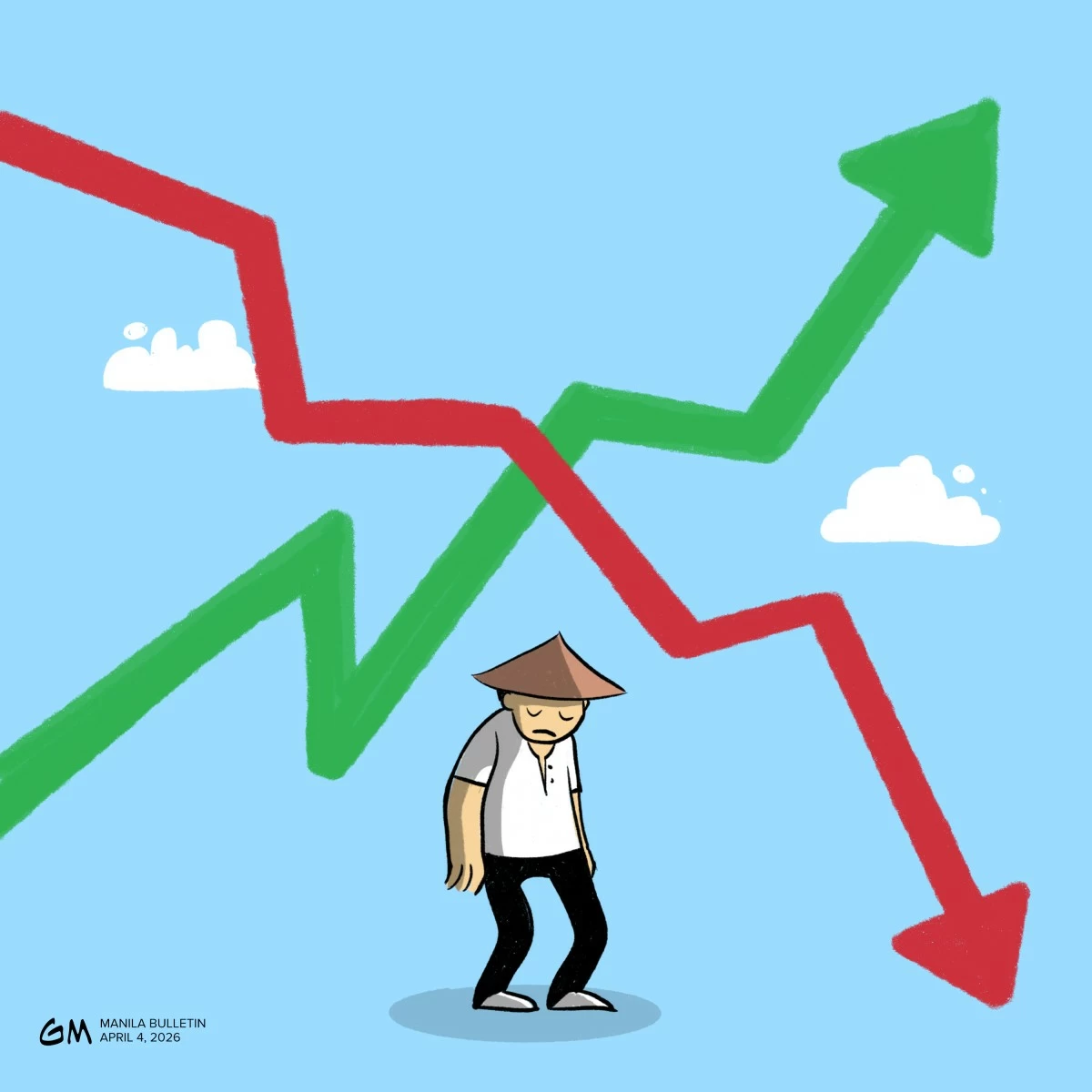
As Filipinos observe the solemnity of Holy Week, one hopes that those in government and politics are also taking this pause to confront a pressing economic risk quietly building on the horizon: stagflation.
Stagflation, a rare but dangerous condition, occurs when high inflation coincides with weak economic growth and rising unemployment. It is particularly difficult to manage because the usual policy tools—such as raising interest rates to curb inflation or stimulating growth through spending—can worsen one problem while trying to solve another.
Recent indicators suggest that the Philippines may already be seeing early warning signs. Inflation has been picking up since the start of the year, with the Bangko Sentral ng Pilipinas (BSP) projecting that the headline rate in March—when the Middle East war began—could hit a 19- to 20-month high. The central bank’s full-year inflation forecast now stands at 5.1 percent—well above the two- to four-percent range considered manageable and supportive of economic growth.
At the same time, labor market conditions are showing strain. Unemployment in January climbed to its highest level under the current administration, signaling that job creation may be losing momentum just as living costs are rising.
Growth, too, is losing steam. Gross domestic product (GDP) expansion in 2025 marked the slowest pace in the post-pandemic period, weighed down in part by the fallout from the flood-control corruption scandal, which dented both public and investor confidence. Looking ahead, economists, banks, and multilateral institutions expect Philippine growth to remain below its estimated potential of around six percent in the near term.
Manila Bulletin recently reported that Philippine companies are growing more optimistic about the broader economic outlook even as they scale back plans to expand operations, citing intense market competition and the lingering weight of high interest rates. According to the BSP’s February Business Expectations Survey (BES), the share of firms planning to expand in the next three months dropped to 11.6 percent from 14.1 percent, while those with expansion plans over the next year declined to 14.2 percent from nearly a quarter previously. Although the overall confidence index improved to 51.1 percent, indicating optimism, businesses reported having more cash on hand while finding it harder to secure loans—suggesting a cautious stance toward growth.
These mixed signals—rising prices, softening growth, and weakening labor conditions—are unfolding against a volatile global backdrop. The ongoing conflict in the Middle East has already driven up oil prices, raising production and transport costs across the economy. For an energy-importing country like the Philippines, such shocks quickly feed into inflation while simultaneously eroding consumer purchasing power and business margins.
In this context, the temptation for policymakers to resort to quick fixes is understandable. But as Makati Business Club (MBC)—whose members include the country’s tycoons and captains of industry—has warned, short-term measures such as suspending fuel excise taxes may do more harm than good. While such a move could provide temporary relief, it would also drain government revenues needed for targeted assistance and long-term investments.
Instead, MBC advocates a more strategic approach: ensuring adequate energy supply, improving market efficiency, and pursuing “enlightened regulation.” The big business group also emphasizes the need to address structural bottlenecks—investing in infrastructure such as cold storage and ports, modernizing logistics through a digital backbone, and strengthening coordination between the public and private sectors.
These recommendations point to a broader principle: resilience cannot be built overnight, nor can it rely on shortcuts. It requires sustained investment, policy consistency, and a willingness to tackle deep-seated inefficiencies that inflate costs and constrain growth.
The declaration of a national energy emergency should therefore not only trigger immediate responses but also serve as a catalyst for reform. Transparent governance, efficient resource allocation, and credible long-term planning will be critical in maintaining investor confidence and supporting job creation.
Ultimately, the risk of stagflation is not inevitable—but neither is it remote. It demands vigilance, discipline, and foresight from policymakers.
The Philippines may not be able to stop a distant war or fully shield itself from global shocks, but it can choose how to respond. The goal must be clear: to prevent the convergence of rising prices, weak growth, and job losses from taking hold—and to spare Filipinos from deeper economic hardship.