ADVERTISEMENT

God's unconditional and undeserved love

Published Apr 3, 2026 12:05 am  |  Updated Apr 2, 2026 02:31 pm
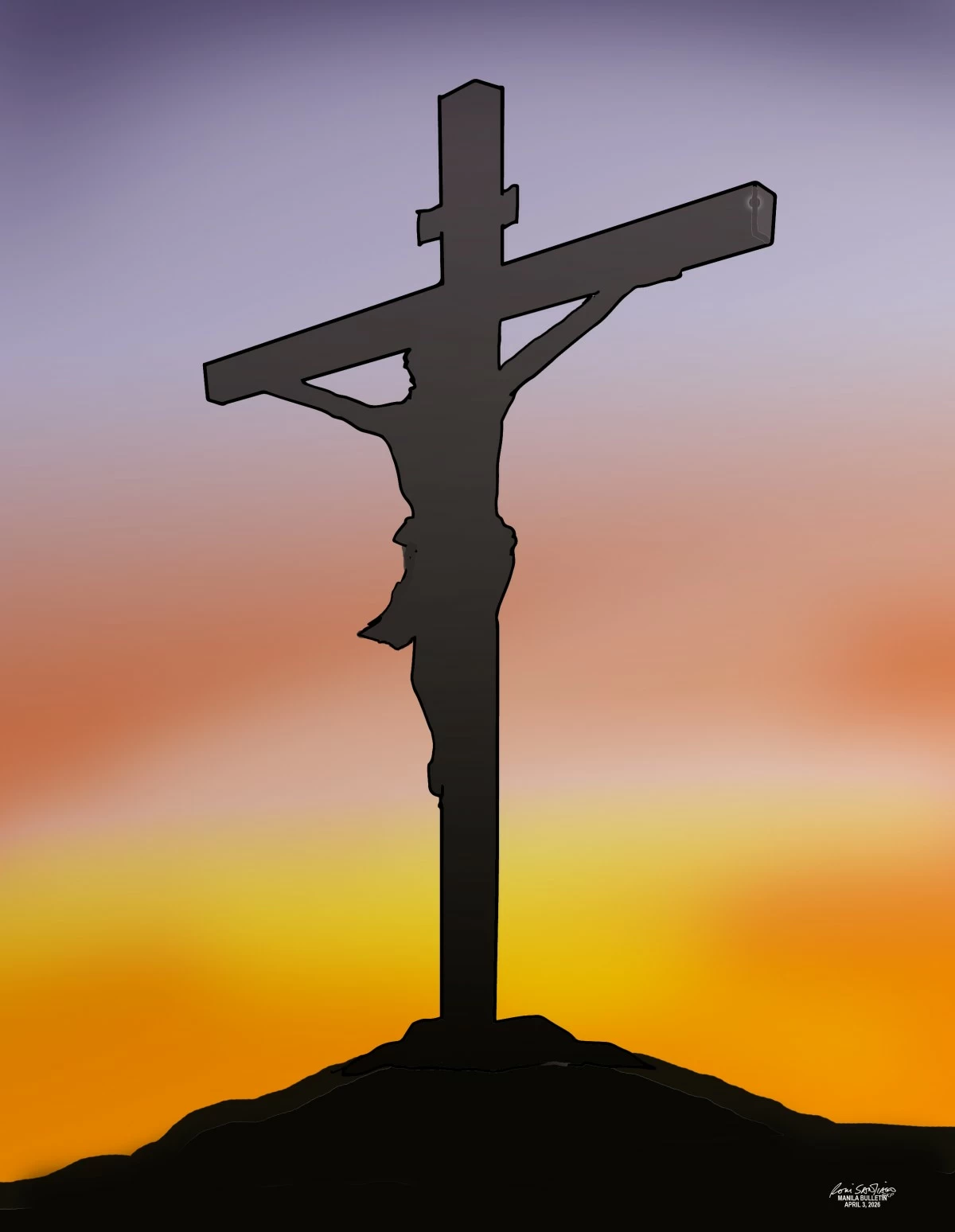
Good Friday stands as one of the most solemn yet profoundly significant observances in human history. It is a compelling proclamation of God’s boundless and sacrificial love, revealed most fully in the crucifixion of Jesus Christ. It underscores that though fallen in sin, God did not abandon mankind.
The crucifixion is the centerpiece of God’s redemptive plan. Scripture reminds us in Romans 3:23, “For all have sinned and fall short of the glory of God.” This is not an accusation directed at a few, but a universal condition. Sin separates humanity from a holy God, creating a divide no human effort, morality, or good works can bridge. Good Friday forces us to reckon with this reality.
Yet, it is precisely within this bleak condition that the brilliance of divine love is revealed.
John 3:16 underscores this immeasurable love: “For God so loved the world that He gave His one and only Son, that whoever believes in Him shall not perish but have eternal life.” The crucifixion is the ultimate expression of this love. Jesus Christ did not suffer as a victim of circumstance, but as a willing sacrifice. As foretold in Isaiah 53:5, “He was pierced for our transgressions, He was crushed for our iniquities… and by His wounds we are healed.” Every nail, every wound, bore the weight of humanity’s sin.
The act was sacrificial and redemptive. In 2 Corinthians 5:21, we are reminded, “God made Him who had no sin to be sin for us, so that in Him we might become the righteousness of God.” The sinless One took upon Himself the full consequence of sin, that the guilty might stand justified. Herein lies the mystery and power of the cross: justice satisfied, mercy extended.
In an age that exalts self-reliance and human achievement, the message of Good Friday speaks clearly. No one can earn salvation; it can only be received. Hebrews 9:22 affirms, “Without the shedding of blood there is no forgiveness.” The death of Christ fulfills this divine requirement completely and eternally. No further sacrifice is needed; none could ever suffice.
Yet, the cross is not merely a declaration of judgment—it is an invitation to grace. When Jesus proclaimed, “It is finished” (John 19:30), He signified the completion of God’s redemption’s work. The veil of separation between God and humanity was torn (Matthew 27:51), opening the way for reconciliation. What was once inaccessible is now freely offered.
The significance of Good Friday for mankind cannot be overstated. It compels us to recognize our sinfulness, yet it does not leave us in despair. Rather, it directs us toward the only source of salvation—Jesus Christ. As Romans 5:8 declares, “But God demonstrates His own love for us in this: While we were still sinners, Christ died for us.” This is love not contingent on worthiness, but grounded in grace.
Thus, Good Friday stands as both a solemn warning and a radiant hope. It reminds us that while we were still sinners, Christ died for us (Romans 5:8). That reveals the gravity of sin, yet it proclaims the triumph of divine love over sin and death. In the crucifixion, God’s justice and mercy converge, offering to all humanity the gift of forgiveness and eternal life.
Now, are you willing to receive the free gift of eternal life? The decision is yours.

Related Tags

Holy Week Good Friday Editorial
ADVERTISEMENT
.most-popular .layout-ratio{ padding-bottom: 79.13%; } @media (min-width: 768px) and (max-width: 1024px) { .widget-title { font-size: 15px !important; } }

{{ articles_filter_1561_widget.title }}

.most-popular .layout-ratio{ padding-bottom: 79.13%; } @media (min-width: 768px) and (max-width: 1024px) { .widget-title { font-size: 15px !important; } }

{{ articles_filter_1562_widget.title }}

.most-popular .layout-ratio{ padding-bottom: 79.13%; } @media (min-width: 768px) and (max-width: 1024px) { .widget-title { font-size: 15px !important; } }

{{ articles_filter_1563_widget.title }}

{{ articles_filter_1564_widget.title }}

.mb-article-details { position: relative; } .mb-article-details .article-body-preview, .mb-article-details .article-body-summary{ font-size: 17px; line-height: 30px; font-family: "Libre Caslon Text", serif; color: #000; } .mb-article-details .article-body-preview iframe , .mb-article-details .article-body-summary iframe{ width: 100%; margin: auto; } .read-more-background { background: linear-gradient(180deg, color(display-p3 1.000 1.000 1.000 / 0) 13.75%, color(display-p3 1.000 1.000 1.000 / 0.8) 30.79%, color(display-p3 1.000 1.000 1.000) 72.5%); position: absolute; height: 200px; width: 100%; bottom: 0; display: flex; justify-content: center; align-items: center; padding: 0; } .read-more-background a{ color: #000; } .read-more-btn { padding: 17px 45px; font-family: Inter; font-weight: 700; font-size: 18px; line-height: 16px; text-align: center; vertical-align: middle; border: 1px solid black; background-color: white; } .hidden { display: none; }
function initializeAllSwipers() { // Get all hidden inputs with cms_article_id document.querySelectorAll('[id^="cms_article_id_"]').forEach(function (input) { const cmsArticleId = input.value; const articleSelector = '#article-' + cmsArticleId + ' .body_images'; const swiperElement = document.querySelector(articleSelector); if (swiperElement && !swiperElement.classList.contains('swiper-initialized')) { new Swiper(articleSelector, { loop: true, pagination: false, navigation: { nextEl: '#article-' + cmsArticleId + ' .swiper-button-next', prevEl: '#article-' + cmsArticleId + ' .swiper-button-prev', }, }); } }); } setTimeout(initializeAllSwipers, 3000); const intersectionObserver = new IntersectionObserver( (entries) => { entries.forEach((entry) => { if (entry.isIntersecting) { const newUrl = entry.target.getAttribute("data-url"); if (newUrl) { history.pushState(null, null, newUrl); let article = entry.target; // Extract metadata const author = article.querySelector('.author-section').textContent.replace('By', '').trim(); const section = article.querySelector('.section-info ').textContent.replace(' ', ' '); const title = article.querySelector('.article-title h1').textContent; // Parse URL for Chartbeat path format const parsedUrl = new URL(newUrl, window.location.origin); const cleanUrl = parsedUrl.host + parsedUrl.pathname; // Update Chartbeat configuration if (typeof window._sf_async_config !== 'undefined') { window._sf_async_config.path = cleanUrl; window._sf_async_config.sections = section; window._sf_async_config.authors = author; } // Track virtual page view with Chartbeat if (typeof pSUPERFLY !== 'undefined' && typeof pSUPERFLY.virtualPage === 'function') { try { pSUPERFLY.virtualPage({ path: cleanUrl, title: title, sections: section, authors: author }); } catch (error) { console.error('ping error', error); } } // Optional: Update document title if (title && title !== document.title) { document.title = title; } } } }); }, { threshold: 0.1 } ); function showArticleBody(button) { const article = button.closest("article"); const summary = article.querySelector(".article-body-summary"); const body = article.querySelector(".article-body-preview"); const readMoreSection = article.querySelector(".read-more-background"); // Hide summary and read-more section summary.style.display = "none"; readMoreSection.style.display = "none"; // Show the full article body body.classList.remove("hidden"); } document.addEventListener("DOMContentLoaded", () => { let loadCount = 0; // Track how many times articles are loaded const offset = [1, 2, 3, 4, 5, 6, 7, 8, 9, 10]; // Offset values const currentUrl = window.location.pathname.substring(1); let isLoading = false; // Prevent multiple calls if (!currentUrl) { console.log("Current URL is invalid."); return; } const sentinel = document.getElementById("load-more-sentinel"); if (!sentinel) { console.log("Sentinel element not found."); return; } function isSentinelVisible() { const rect = sentinel.getBoundingClientRect(); return ( rect.top < window.innerHeight && rect.bottom >= 0 ); } function onScroll() { if (isLoading) return; if (isSentinelVisible()) { if (loadCount >= offset.length) { console.log("Maximum load attempts reached."); window.removeEventListener("scroll", onScroll); return; } isLoading = true; const currentOffset = offset[loadCount]; window.loadMoreItems().then(() => { let article = document.querySelector('#widget_1690 > div:nth-last-of-type(2) article'); intersectionObserver.observe(article) loadCount++; }).catch(error => { console.error("Error loading more items:", error); }).finally(() => { isLoading = false; }); } } window.addEventListener("scroll", onScroll); });

Sign up by email to receive news.